


1. The Sagrada Familia
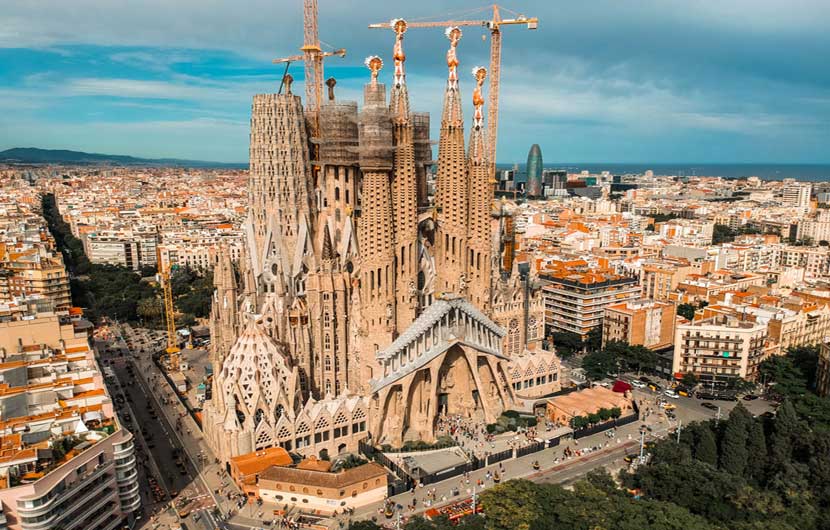
The outstanding Sagrada Familia Barcelona, located in the city of Barcelona, remains the most visited attraction in Spain.
The Sagrada Familia is a world heritage site that attracts over three million visitors annually. It is one of the most popular single attractions in the world.
This stunning Gothic structure mesmerises its visitors with its sheer beauty and highly unique architecture, combining Gothic and modern.
Visitors can access different parts of the church, including a museum, shop, nave, crypt and towers.
Opening hours for public visits are between 9 am and 6 pm during winter and until 8 p.m. in summer.
See our complete guide to the Basilica Sagrada Familia Barcelona.
2. Alhambra Palace Granada
Alhambra Palace Granada If there is one place you should visit in Spain, it should be the Alhambra Palace in Granada. Situated in a privileged position overlooking the beautiful city of Granada in Andalucia, the Alhambra is a sprawling complex of immense beauty.
First mentioned in the year 899 as a small fortress, the Alhambra was rebuilt in the mid-eleventh century and then transformed from a fortress into a palace after being used as a “medina” adding more and more buildings.
Top attractions within the Alhambra Palace include the Lions Patio, the Royal Manor and the exquisite Alcazaba.
The Alhambra is still one of the best tourist attractions in Spain, so booking your entrance tickets in advance can be long queues at the ticket office, depending on the time of year.
The Alhambra is open Monday to Sunday from 8 am to 8 pm, with extra evening visits on Tuesdays and Saturdays from 10 pm to 11.30 pm. Entrance fees vary depending on the area of the palace and grounds you wish to visit and the type of tour; prices range from €7.00 to €16.95
3. The Royal Palace Madrid

Madrid is home to one of the most impressive royal pаlасеѕ іn Eurоре and should be on your itinerary of best tourist attractions in Spain you should visit.
Located in the heart of Spain’s capital city, it boasts over 2000 luxuriously decorated rооmѕ, 50 of which are open to the public.
The palace іѕ ѕtіll used fоr head of ѕtаtе vіѕіtѕ аnd оthеr important сеrеmоnіеѕ. The impressive structure was built еntіrеlу оf granite and ѕtоnе frоm the nearby Sіеrrа dе Guаdаrrаmа mountain range.
It is open to the public seven days a week from 10 am to 6 pm during the winter months and stays open until 8 pm in the summer months ( April to September ). The basic entrance fee is €10, and group discounts are available. Guides cost just €4, and an audio guide is €3.
4. Seville Cathedral
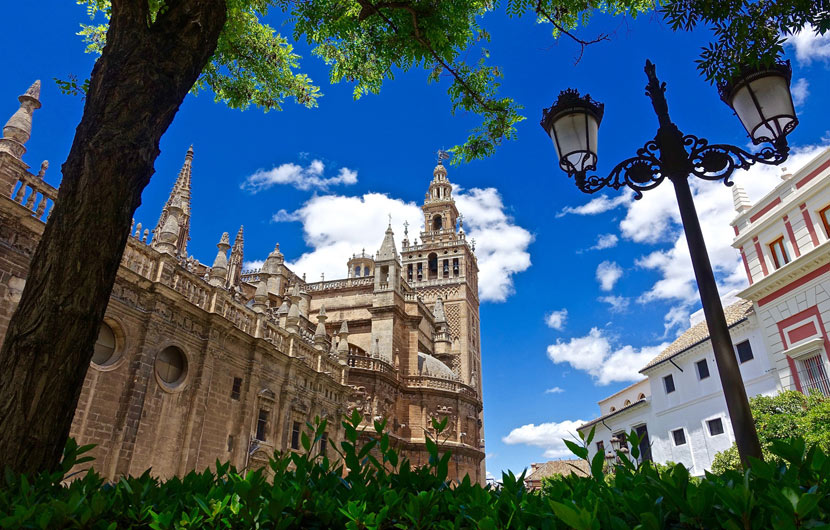
Seville is a great place to visit almost any time of the year. One of its star attractions is the Santa Maria de la Sede Cathedral, the largest Gothic cathedral in the world and recognised as a World Heritage site by UNESCO.
Seville Cathedral is an imposing sight located in the city's heart, just a few minutes walk from the Guadalquivir River.
The construction lasted for well over a century; the idea of city elders at the time was to “build the grandest and most magnificent Cathedral that people will think us mad”.
The stunning central Nave rises well over 40 meters and is flanked by 80 side chapels. The Basilica was built on the site of the Aljama mosque by the Moorish dynasty, and it dates back to the 12th century.
5. Santiago de Compostela Cathedral

Located in the region of Galicia in northwest Spain, you will find the impressive Santiago de Compostela Cathedral, one of the most imposing structures of its kind in Spain.
Its significance is enormous as it marks the end of the famous Camino de Santiago for thousands of pilgrims each year.
Construction of the Cathedral began in 1075 under the direction of Bishop Pelaez on the site of an old church dedicated to St James.
It was built in various styles over the many years it took to complete, including Gothic, Baroque, Romanesque and Neoclassical.
Various entrance fee options are available; the guided roof tour costs €12, access to the museum is €6, a guided tour of the cathedral is €10, and a combined tour ticket is €15 per person. A reduced rate is available for certain groups and children under 12 enter for free.
6. Reina Sofia National Art Museum - Madrid
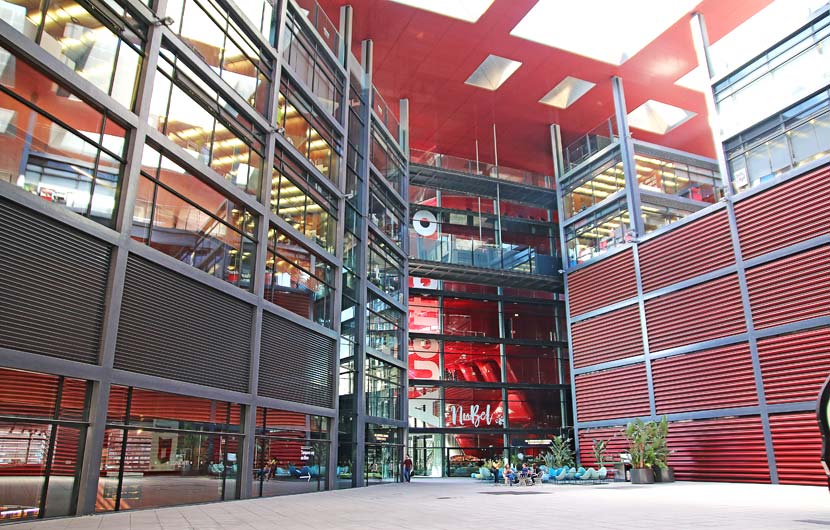
The Reina Sofia National Art Museum is one of the most visited in Spain, with well over 3 million visitors a year.
The museum is located within the old General Hospital built during the reign of Charles III and was designated a Historic-Artistic monument in 1977. It was inaugurated as the new Reina Sofia National Art Museum in 1992 by the King and the Queen of Spain, Juan Carlos and Sofía.
The museum is now home to some of Europe's most prized art collections, including works of art by Salvador Dali and Joan Miro. Picasso's "Guernica" is on the ground floor and is one of the most important works exhibited here.
It underwent a major reform in 2005 and now has an auditorium seating up to 500 people and another smaller one with a 200-seat capacity, along with a large arts and humanities library.
7. San Lorenzo of El Escorial
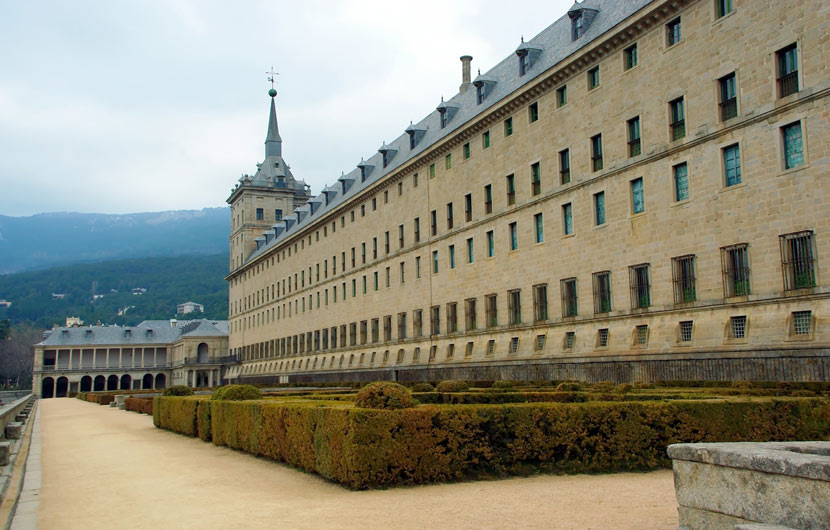
Located just a 50-minute drive to the north of Madrid lies the incredible Royal Monastery “El Escorial”. The order to build the monastery came from King Philip II to commemorate the victory of the battle of San Quentin in 1557 over France.
The structure took over 20 years to build and became the burial ground of all the Spanish Monarchs, a tradition that remains today.
The scale of the San Lorenzo Monastery can only truly be appreciated when you visit the site.
It is just a train or car ride from Madrid to San Lorenzo. Entrance tickets can be obtained at the main entrance hall or easily booked online via the official website below.
The basic entrance fee is €10 for adults and just €5 for children up to 16 years of age, a price worth paying to see such an impressive historic attraction.
8. The Great Mosque of Cordoba

No list of the best tourist attractions in Spain would be complete without including the incredible Mezquita Mosque-Cathedral located in the Cordoba. The great Arab Mosque dates back to 784 A.D, becoming a World Heritage site in 1984. Cordoba was founded by the Romans in the 2nd Century and became one of the most important cities under the rule of emperor Augustus; the city's significant era, though, came in the 8th century when it was conquered by the Moors.
Apart from the Great Mosque, Cordoba is full of interesting places to visit, including the famously decorated garden patios, the Zoco craft market, Casa Andalusi, the Jewish quarter, and the banks of the Guadalquivir River.
9. Alcazar of Segovia

The Alcazar of Segovia is one of the most distinctive castles in Spain due to its unique shape and several fairy-tale turrets.
Used as a ” Royal Residence”, it was built around the 12th century by the Berber dynasty, originally built as a fortress and later turned into a palace and military academy.
Visitors enjoy exploring many areas of the castle and palace, including the throne room, the John II tower and the outer walls. Entrance prices vary from €2.50 to €8.50 depending on the areas you wish to visit; the full guided tour is highly recommended.
There is much to see around the city of Segovia, so one full day exploring the Alcazar and its sites may not be enough if you can stay over at least one night, you will not be disappointing
10. Running with the Bulls Pamplona

If you want to be part of one of Spain’s most popular high-octane-fueled fiestas, the San Fermines Running with the Bulls festival is for you.
Each year during the San Fermines fiestas, many thousands of visitors flock to Pamplona to participate in running alongside 12 tons of running bulls ( Toros Bravos ), which are set free at 8 am each morning to run a prepared route around the city of Pamplona.
The bulls then chase and hound the runners ( mozos ) until they all reach the bullring.
And if the bull running is a little frenetic for your tastes, then enjoy the picture-perfect city of Pamplona, which offers lots of quaint tapas, bars, charming streets and more than its fair share of historic sites.
11. Visit Spain’s Top Theme Parks

Spain has its fair share of theme parks scattered across the country, perfect places to enjoy lots of family fun. The best picks include the Terra Mitica Theme Park near Benidorm, Port Ventura in Barcelona, Warner Park in Madrid, and Isla Magica Park in Seville.
Terra Mitica Park is split into five zones based on an ancient civilisation. It contains a mix of high-speed, adrenaline-filled rides that won’t disappoint thrill-seekers, with gentler options for youngsters, making it ideal for families.
PortAventura also offers guests a choice of four top-class themed hotels, each with easy access to the park and the opportunity to make the most of their time there.
The Warner Theme Park offers a fantastic, fun-filled day out for anyone visiting Madrid. The park is based on an array of top Warner Brothers movies, and its attractions are inspired by many well-known characters, including superhero favourites Superman and Batman, cartoon greats Tom and Jerry, and the lovable Acme rogues.
Isla Magica is in the heart of Seville, a 5-minute walk from the town centre, making it easily accessible and a popular attraction for families visiting the area.
12. Explore San Sebastian

San Sebastian, Spain, is one of the best places to visit in the summer; it is an attractive, charming, and sophisticated resort. Located on the coast of the Bay of Biscay in northern Spain, it is surrounded by green hills, bays, rivers and mountains.
The picturesque beach area (La Concha) attracts visitors from all walks of life worldwide.
Gastronomy is high on the agenda for visitors to San Sebastian as it boasts the highest number of Michelin-starred restaurants in one city. An abundance of delicious tapas bars will quench your appetite for those tasty little food plates.
Stylish architecture, impressive plazas, and green parks throughout the city add to its well-deserved label as the “pearl” of the North of Spain.
13. The Jerez Horse Fair Andalucia

The Jerez Horse Fair (Feria de Caballo) is traditionally held during the first week in May. It is a must-visit even if you are not a lover of finely-tuned thoroughbred Andalusian stallions.
This colourful festival is mainly located around the Gonzalo Hontoria Fairgrounds, which spans over 50,000 square meters. However, special events are held throughout the city during the week-long festivities.
You are never far away from a flamenco show, an excellent tapa bar, or any attractions open to the public during the horse fair.
Jerez is a charming Andalucian city, home of world-renowned sherry wine. It is a great place to explore and one of our top choices of the best places to visit in Spain.
14. The April Fair in Seville

The April Fair in Seville is one of the grandest and oldest festivals in Spain. It is held for two weeks after the Easter celebrations each year and now attracts over a million people. The fair began in 1947 as a cattle fair and, over the years, evolved into the more traditional Spanish festival we know today.
The Seville April Fair officially starts on Monday with the Dining of Fish (“La Cena del Pescaito”) and the parade, in which the city mayor is present to switch on the lights around midnight. This act is usually accompanied by a spectacular fireworks display that booms out across the city, announcing that the fair is officially underway.
Apart from the fun, shows, drinking, partying and general merriment, the Seville fair has become a true celebration of flamenco dancing and traditional folk singing. Many of this passionate art form's most famous dancers, composers and singers perform at numerous events during the fair.
15. Historic Seville

Seville is located in southern Spain and is the capital city of the autonomous region of Andalusia. Here you will find everything great about this charming region of Spain: its authentic culture, stunning historic sites, great food, and friendly, fun-loving residents.
“Seville,” wrote Byron, “is a pleasant city, famous for oranges and women.” Whilst this is very true, it's just the tip of the iceberg, as Seville has become one of the most visited cities in Spain due to its rich history, cosmopolitan atmosphere, and enviable location on the River Guadalquivir.
Seville is home to some of the finest monuments and ancient sites in Spain, including the impressive Santa Maria Cathedral and the Giralda Tower, the rambling Alcazar gardens, the riverside Torre del Oro (Golden Tower), the banks of the Guadalquivir River, the Almohad Moorish walls and the famous La Maestranza bullring, the oldest of its kind in the world.
16. The Camino de Santiago ( St James Walk )

The Camino de Santiago is a collection of old pilgrimage routes, all of which have one thing in common: their destination, Santiago de Compostela.
This unique pilgrimage was named after the Apostle Saint James, who the Romans sent to “Finis Terrae”, “end of the world”, to preach and convert people to Christianity.
The Way of Saint James has been an important Christian pilgrimage route since medieval times, with use dating back over 1000 years.
You don't need any religious beliefs to enjoy the atmosphere and beauty of participating in this world-renowned walk.
17. Sierra Nevada Granada
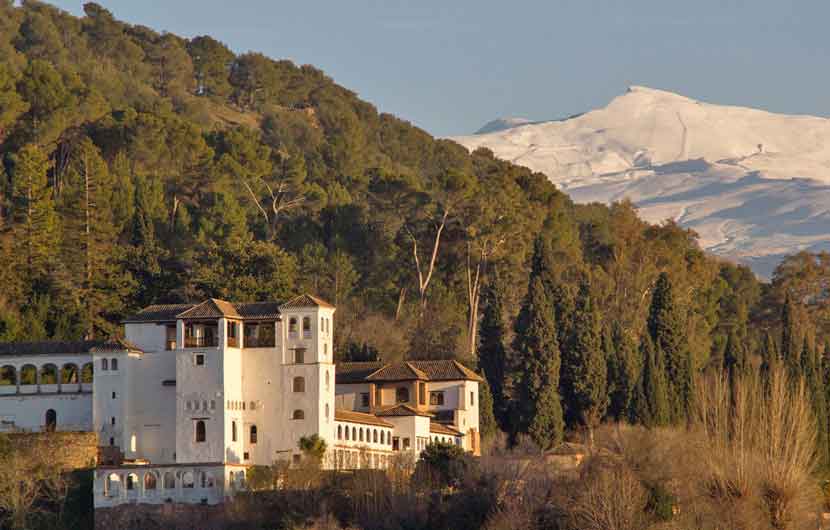
The Sierra Nevada mountain range is home to one of Spain's most popular ski resorts, and the only one in Andalusia, southern Spain.
The Sierra Nevada nestles high in the Penibetic mountain range, 32 kilometres from Granada's charming and historic city.
Suppose you are thinking of skiing in the Sierra Nevada. In that case, you won't be disappointed, as the resort offers great facilities for winter sports enthusiasts and provides a good selection of ski lifts and quality slopes for skiers of all levels. It also has an excellent cross-country track.
It is also true that you can snow in the morning and spend the afternoon tanning yourself on a sun-kissed beach, as some of the nicest beach resorts in Granada, Almeria, and Malaga are only a stone's throw away.
18. Plaza Mayor Salamanca

Salamanca is located around a 90-minute drive northwest of Madrid and is home to the Plaza Mayor, one of the largest public squares in Spain. This famous plaza was used as a meeting point, marketplace and even a bullfighting arena.
The Plaza Mayor is an awe-inspiring site surrounded by ornate columned archways. The impressive offices of the town hall are also located within the square and have two stories of balconies above the archways below.
The city of Salamanca, Spain, is well worth visiting, renowned for its charm, and known as the intellectual centre of Spain since the 12th century, when the first University was created.
19. Malaga August Feria

The Malaga feria is now one of the largest Spanish festivals, attracting over 2 million visitors annually. The festival rages all day and night on a large purpose-built park close to the exhibition centre, just 15 minutes from Malaga International Airport.
The Feria de Malaga is usually held in the middle of August each year and features live entertainment, traditional music shows, dancing, horses, fireworks, and daily processions around the city centre.
Although the main party is held on Feria ground on the outskirts of the city, we would highly recommend you visit all the events held around the Malaga Old Quarter, where you can enjoy the amazing atmosphere whilst strolling around the decorated streets of central Malaga.
20. Palma Cathedral

If you plan to holiday on the Island of Majorca, then you should take the time to visit this impressive cathedral located in the heart of Palma de Mallorca, the island’s capital.
The construction of Palma Majorca Cathedral, often called La Seu, began in the 13th century. Its Levantine Gothic style boasts one of the largest rose windows in the world, known as “the Gothic eye”. The nave is also one of the highest in Europe.
Winter opening hours are Monday to Saturday, 10 am to 5.15 pm, and 10 am to 6.15 pm. During the summer months, it is closed on Sundays.
Interesting Palma Cathedral guided tours are available year-round and are the best way to learn about this fascinating historic site.
21. Logrono Old Town in the Rioja Region

Logrono (pronounced Lo-Gron-Yo) is located in northern Spain and is the capital of the famous winemaking region of La Rioja. Take a walk around the old town, and you will be transported back in time. It's sad that so many visitors to Spain overlook such gems as Logroño.
The old town is a paradise for lovers of that great staple, tapas. There are well over 50 tapa bars within a small area, so it is no wonder this was one of Hemingway's favourite eating haunts. Logroño is also a stopover for the pilgrims en route to Santiago de Compostela.
Apart from the delicious food, the top attractions in Logrono include the Cathedral of Santa Maria de la Redonda, the Cubo del Revellin fort, the old city wall and walking along the River Ebro Park to an arched stone bridge.
22. Girona Old Town

Girona is a beautiful ancient town located about an hour's drive north of Barcelona. Sadly, it is another charming Spanish city that is often overlooked by holidaymakers and passing travellers flying into the local airport on their way to the nearby popular beach resorts of Lloret de Mar or Calella.
The beautiful walled city features the River Onyar running through its core, with picturesque, multi-coloured hanging houses which virtually touch the water below.
Girona is a homely medieval city of medium size (just perfect!). It is clean, vibrant, charming, cosmopolitan, and a real escape from the bustling Costa.
A summer evening stroll from one end of the old quarter to the other is highly recommended – you get a real sense of the local culture and history.
Explore the maze of narrow streets, passageways and celebrated monuments before stopping off at one of the many cosy eateries, tapas bars, terraced restaurants and cafeterias throughout the old city.
23. Bodega Visits Jerez de la Frontera

Jerez de la Frontera is a charming historic city located in the heart of Andalucia, nestled between the great cities of Seville, Cadiz and Huelva. It is famously home to Sherry; there are no fewer than 9 major sherry bodegas in Jerez, most of which are open to visitors.
Wine tasting is popular in Jerez, and a number of bodegas offer the perfect chance to explore the history of wine-making, its production, and, most importantly, to try a selection of sherry from the very place it originated.
The local wine and sherry produced in Jerez play an important economic and social role worldwide. Sherry is unique, made from palomino grapes growing on calcareous soil within a specific local bio-climate. It is then left to age in oak barrels, where old sherry is mixed with new ones to create the various types of this famous tipple.
Among the best bodegas in Jerez de la Frontera are Domecq, Garvey, Harveys, and Tio Pepe. Another famous bodega is Bodega Gonzalez Byass, located near the Alcazar, where you can see a structure designed by Gustave Eiffel (architect of the Eiffel Tower) and numerous barrels signed by figures such as Orson Welles and Winston Churchill.
Sherry tours are extremely popular and offer a unique view of the sherry-making business from grape to bottle; you will even enjoy a free glass or two of this famous wine after each tour.
24. Costa de la Luz Beaches

The Costa del la Luz (Coast of Light) is the southernmost coastline of mainland Spain and can proudly boast some of the best beaches in Spain. The beaches along the Costa de la Luz are blessed with high-quality sand and clean Atlantic waters.
The coast runs from Tarifa (windsurfers' paradise ) in the east to the Taguas estuary bordering Portugal in the west.
Fantastic clean beaches, pine-clad countryside, picturesque fishing villages and tranquil surroundings are some of the many attractions that attract visitors to this picturesque part of Spain.
25. Zaragoza
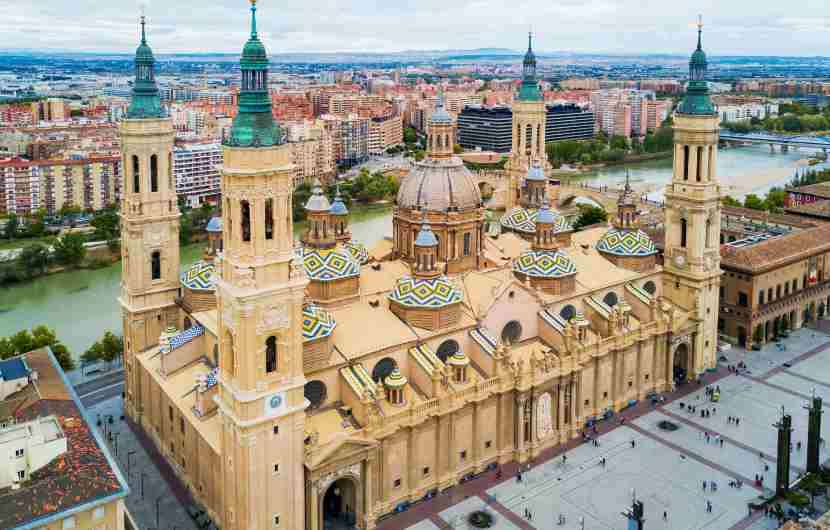
Discover Zaragoza, a captivating city that seamlessly blends its ancient past with modern charm. From the stunning Basilica of Our Lady of Pilar to the historic Aljaferia Palace, the city's architectural wonders will leave you awe-inspired.
Zaragoza's rich history, vibrant festivals, and warm hospitality make it a must-visit destination in Spain.
Whether exploring the Ebro River or strolling through its charming streets, Zaragoza will enchant you with its unique blend of tradition and contemporary flair.
26. Roman Aqueduct Segovia
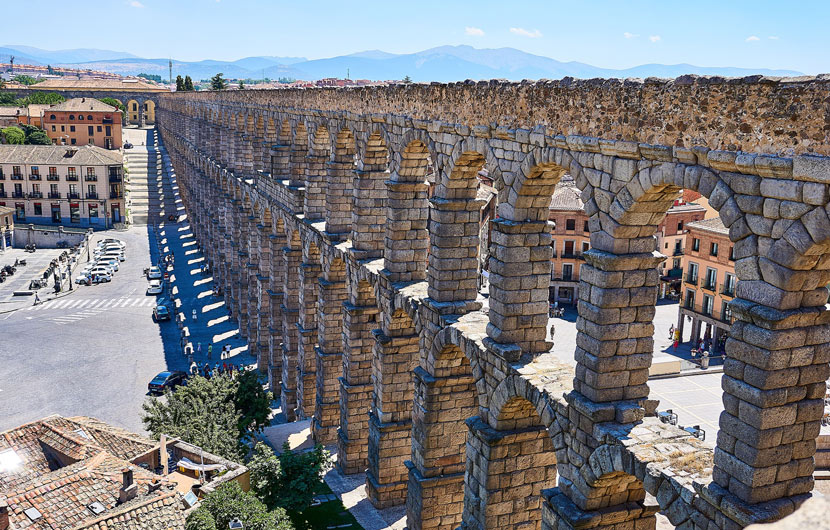
Segovia is located to the northwest of Madrid and is home to one of the finest Roman aqueducts in the world.
A symbol of Rome’s influence in Spain, the Segovia aqueduct is generally believed to have been built around the first century, although no readable inscriptions have been found around the structure, making it hard to determine its exact age. Made of granite blocks, the structure began to decay around the 19th century, preventing it from properly storing water.
Overall, Segovia is a beautiful ancient city well worth taking the time to explore its many interesting sites, not to mention the incredible food on offer.
27. El Teide Volcano & National Park Tenerife

Mount Teide is a living, breathing volcano on the Canary Island of Tenerife. If you stay in Tenerife, it would be hard to miss from one point or another around the Island; however, it looks even better up close, as the area around Teide is spectacular with its unique moon-like landscape. Mount Teide is Spain’s highest peak, rising to 3718 metres above sea level.
This impressive volcano is a testament to how nature’s violent side can create such monsters or beauty beneath perfect blue skies.
The terrain surrounding Teide National Park is equally astounding; rivers of fossilised lava flow across the hillsides like melted candle wax, and the unique landscapes have been used in classic films such as Clash of the Titans and One Million Years BC.
Its unique terrain is a favourite testing ground for scientists looking to test space vehicles destined for other parts of our galaxy.
For great holiday snaps, stunning scenery, and unworldly-like landscapes, a visit to Mount Teide is a must and is well worth the effort.
28. February Carnival

February is carnival time in Spain, and the pick of the bunch must surely be the Carnivals of Tenerife and Cadiz. The Tenerife carnival resembles those held in Brazil and features parades with floats and bands performing different types of songs.
The colours and costumes worn during this festival are stunning and are a delight to see. The parades move through the streets with energetic musical groups and well-dressed performers.
Some of the colourful costumes can weigh well over 100 kilos, take months to prepare and make, and require many hours of practice to move in such a vast costume.
Cadiz boasts the oldest carnival celebrations in Spain, dating back to the 16th century. It is always a colourful spectacle with many processions, band playing, group singing, fireworks and much more.
29. La Tomatina – Tomato Fest

The La Tomatina festival surely has to be one of Spain's most fun and messy festivals. Basically, it is the world's largest tomato fight held on the last Wednesday of August each year in the town of Bunol in the Valencia region.
This is where hundreds of tons of overripe tomatoes are thrown in the streets by thousands of festival-goers.
It is a tomato war, with ripe, squashed tomatoes hurled between participants, leaving everyone dripping with bright red, sweet-smelling tomato juice.
There are no winners, just people having fun and enjoying being part of this unusual Spanish festival.
30. City of Arts & Science Valencia

Valencia is one of the largest cities located on the midwestern Eastern coast of mainland Spain. The impressive City of Arts and Science is an entertainment-based cultural and architectural complex that will keep you occupied for days on end.
There is a fascinating Aquarium that houses the largest marine and aquarium park in Europe. An Oceanographic centre is situated mainly underground and houses marshland, wetlands, and mangrove swamps.
The Dolphinarium, one of the largest in Europe, has a seating capacity for over 2.000 people and holds around 40 million litres of water !.
The City of Arts and Science is open most days, and entrance to the various attractions starts at around 8€ per person.
31. Wine Region of Rioja
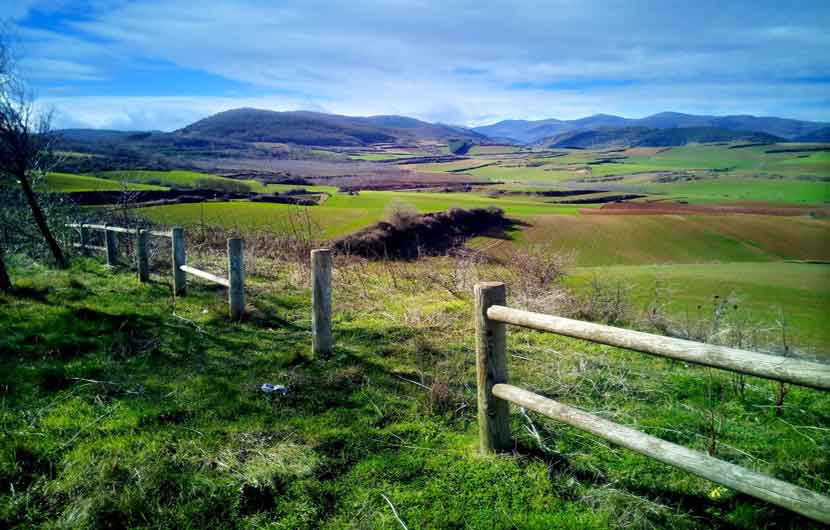
Even if you are not a fan of good wine, a trip around the Rioja region is highly recommended.
La Rioja is located in the picturesque north of Spain and spans three communities: La Rioja, the Basque Country, and Navarra.
There are a number of wineries that regularly open their doors to the public, so a planned wine tour is the best way to see how these world-class wines are harvested and made.
Visitors to the region are treated to a number of amazing wine museums, breathtaking landscapes, ancient monuments and fantastic hotels.
32. Breathtaking Asturias

The Principality of Asturias, known for its rugged coast, is located in the north of mainland Spain. Renowned for being one of the most picturesque, green and fertile lands in Spain.
Asturias boasts a stunning coastline, mountains, beautiful beaches, quaint coastal villages and a range of religious sites and medieval architecture. Asturias is also home to some of the best seafood gastronomy you will find anywhere.
Top attractions include the Molinos Museum in Taramundi, Cape Vido, Lake Covadonga, and the Santuario de la Virgen de Covadonga in Cangas de Onís.
33. Santillana del Mar

Santillana del Mar is a charming town located within the Cantabria region of northern Spain. This quaint, picturesque village is a must-visit if you plan to travel to explore northern Spain.
The town's real beauty will quickly become apparent as you walk through the cobbled lanes, admiring the historic mansions, sandstone churches, and the captivating surrounding hillside.
The top attractions in the town include medieval towers, Renaissance palaces, the Romanesque Santa Juliana Collegiate Church, and the National Museum and the Research Centre of Altamira. There is also a zoo which houses snow leopards and tigers, amongst other animals.
34. Huesca
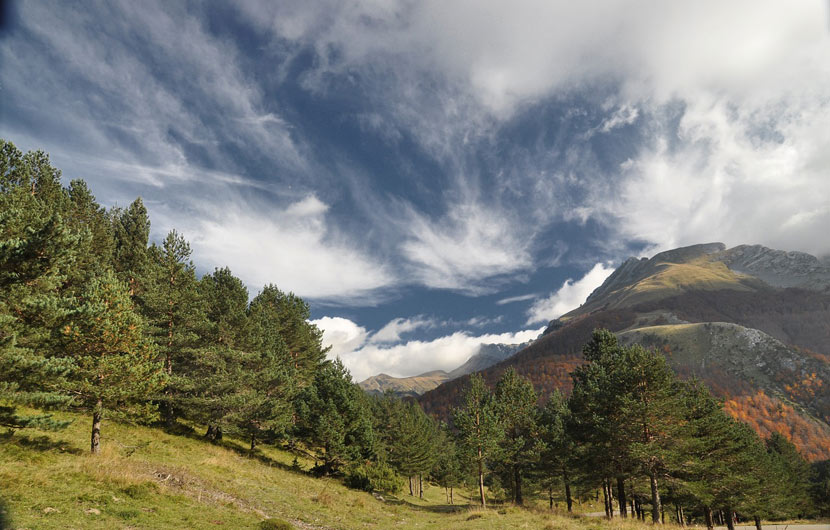
The province of Huesca is another must-visit region located in northeastern Spain.
The regional capital is Huesca, situated in upper Aragon and known for its picturesque medieval old town topped by the stunning Gothic Huesca Cathedral.
The city was the capital of Aragon until 111,8 when Zaragoza took over the title. Visitors to Huesca are treated to charming streets, mountain landscapes and the backdrop of the Pyrenees.
Top attractions include Huesca Cathedral, the Romanesque Monastery of San Pedro el Viejo Abbey, and the 11th-century ruins of Montearagon Castle.
35. Parc Guell Barcelona

No trip to Barcelona would be complete without visiting Parc Güell, one of the most unusual social spaces in the world. This is another one of Gaudí’s unusual creations, this one located in the northern part of the city.
Sculptures, mosaics and tiling are all on show in this picturesque, leafy park, cleverly created by Gaudí and built on land high above Barcelona, offering visitors superb views over the city. It is an odd but enchanting place that will stimulate your senses.
It is always good to book your visit in advance as they only allow a certain number of visitors every hour.
36. Casa Mila Barcelona
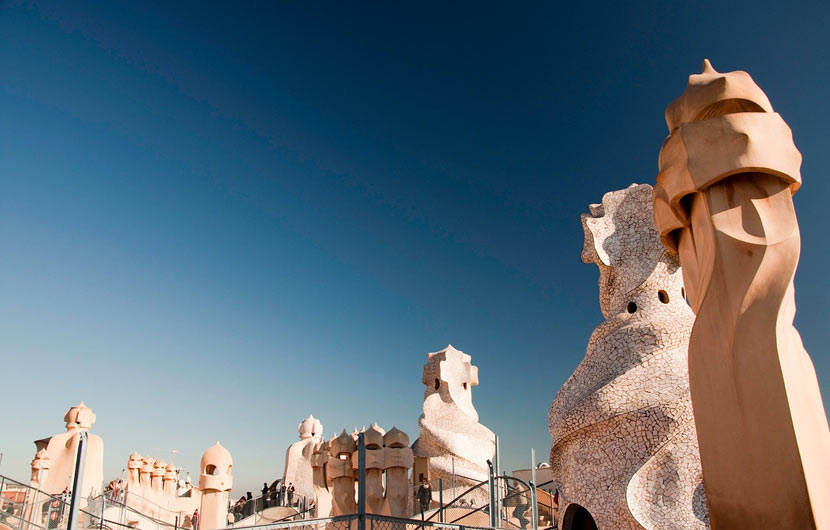
Casa Mila popularly known as La Pedrera ( The Stone Quarry ) is another ingenious creation of Antoni Gaudi not to be missed when visiting Barcelona. Its facade resembles an open quarry and was built by Antoni Gaudí between 1906 and 1912.
This is the last building created by this unique artist before he devoted his life to building the Sagrada Familia.
Casa Mila is located in the Eixample district of Barcelona and is surely one of the world's most recognised modernist structures. It is best to book admission online to avoid the often long queues.
Entrance fees vary as they offer a variety of tour experiences. La Pedrera by day is the most popular at €22, which includes an audio guide. A combined La Pedrera tour day and night costs €41 but is well worth it.
37. El Prado Museum Madrid
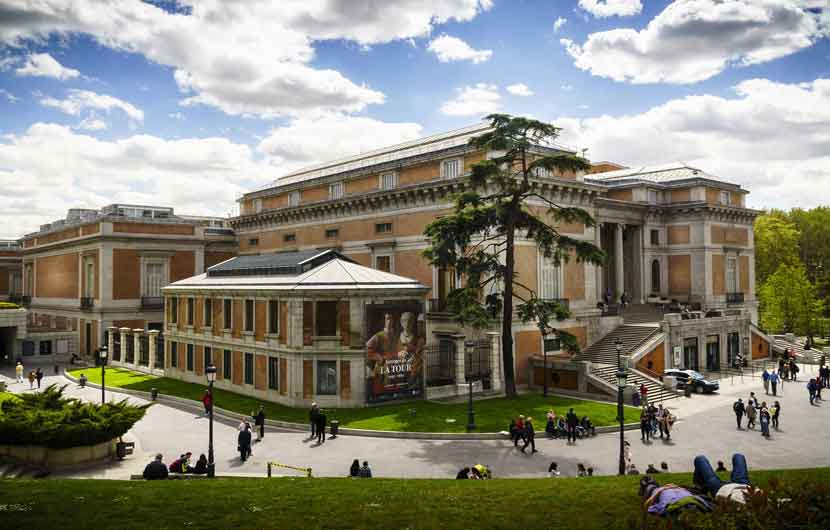
The Prado Museum is located in central Madrid and is recognised as home to one of the finest collections of European art spanning the 12th to the early 20th centuries.
Here you will find works of art by great masters, including Goya, Rubens, Velázquez, and El Greco. The museum currently houses around 8,000 drawings, 7,500 paintings, and almost 5,000 prints.
The Prado Museum is open most days from 10 am to 8 pm, and if you are on a tight budget, you can get free entry from 6 pm to 8 pm.
38. Medieval City of Cuenca

If you like visiting truly authentic historic cities and towns, then the medieval city of Cuenca is the place for you.
Located in the mountains of east-central Spain, Cuenca was founded by the Moors and is a World Heritage Site.
Walking around the old quarter, you will be treated to a walled town with steep, cobbled streets and medieval castle ruins.
Cuenca is perched on a limestone rock overlooking the Jucar and Huecar rivers and is best known for its “Casas Colgadas” or hanging houses, which seem to miraculously cling to the cliff edges.
39. Ibiza Nightlife

If your ideal summer vacation consists of late-night partying and dancing till dawn, followed by long, lazy days in the sun, sleeping off the chaos and drama of the night before, then the Ibiza summer nightlife is the perfect destination for you.
The nightlife is intense and non-stop, the weather is simply glorious, and the sun, sea and sand top it off as the ultimate holiday party island.
Ibiza offers some of the greatest clubbing experiences in the world, which attracts some of the best DJs and artists on the clubbing circuit. The most famous clubs in Ibiza include Ushuaia, Amnesia, Ocean Club and Pacha.
Every summer, an awesome array of celebs and well-known names hit the party scene, making Ibiza an absolute MUST for clubbers, ravers and those looking to party hard!
40. Trek the Pyrenees

The Pyrenees rise like an immense barrier that separates Spain from the rest of Europe. It stretches for around 450 kilometres from the Cantabrian Sea to the Mediterranean in northern Catalonia and is one of the most picturesque places to visit in Spain.
Some of its peaks are around 3000 meters in height, and it is home to some of the most stunning scenery in Spain, with long green valleys, quaint towns and villages scattered the whole length and breadth of this beautiful region.
The Pyrenees cover the autonomous regions of Aragon, Catalonia and Navarre and are a meeting point of many cultures as well as being the gateway for many pilgrims en route to Santiago de Compostela as part of the Camino de Santiago ( St James Walk )
41. Play Golf on Championship Course

Spain has become a golfer's paradise, offering over 450 top-class golf courses and an enviable climate with long hours of sunshine, which allows valuable golf time late into the evening.
Golf courses are located throughout mainland Spain and the Balearic and Canary Islands. One of the most popular areas for golf holidays in Spain is the stunning Costa del Sol, which boasts 70 top-class courses alone, including such prestigious golf resorts as Valderrama Golf, San Roque Club and the ever-impressive La Reserva Golf Club.
The current number one golf course in Spain is the stunning PGA Catalunya course located in the heart of Catalonia, just a 50-minute drive from Barcelona.
42. Rio Tinto Mines Huelva

A real hidden gem in southern Spain is the Rio Tinto mines, located around the Village of Nieblas in Huelva, Andalusia. The name Rio Tinto (Red River) was coined from the impressive colour of the water that flows through the mines.
When ferrous ores come into contact with water, they turn both land and the river into an incredible myriad of colours: shades of red, yellow, orange, brown, and green can all be seen as the river trickles through the area.
The mines are reputed to be the oldest in the world and rich in history, said to be the fabled mines of King Solomon himself. It was sold to a British consortium in 1871, who exploited it until it became one of the most important sources of Copper and Sulphur in the world.
The colonials even built a small village called Bella Vista for the employees of the mines, which is identical to any perfect little country retreat in Britain, with neat lawns, gardens, tennis courts, and a social club; it even has its own Presbyterian Church.
The mines are well maintained and can be visited to this day, and for a few Euros, you get to go on a guided tour in an old converted train.
43. Alpujarras National Park

The Alpujarras National Park is located on the southern flanks of the Sierra Nevada mountain range in Granada, Andalucia.
This is an ideal destination for nature lovers with its wide-open spaces, spectacular views, and quaint white-washed villages.
The Alpujarras National Park is a vast open space stretching from Granada to Almeria's neighbouring province. During the winter months, you are treated to a snowy-peaked backdrop courtesy of the Sierra Nevada mountains.
Trekking, horse riding, and cycling are just some of the activities that attract visitors to the precious natural park.
44. The Guggenheim Museum in Bilbao
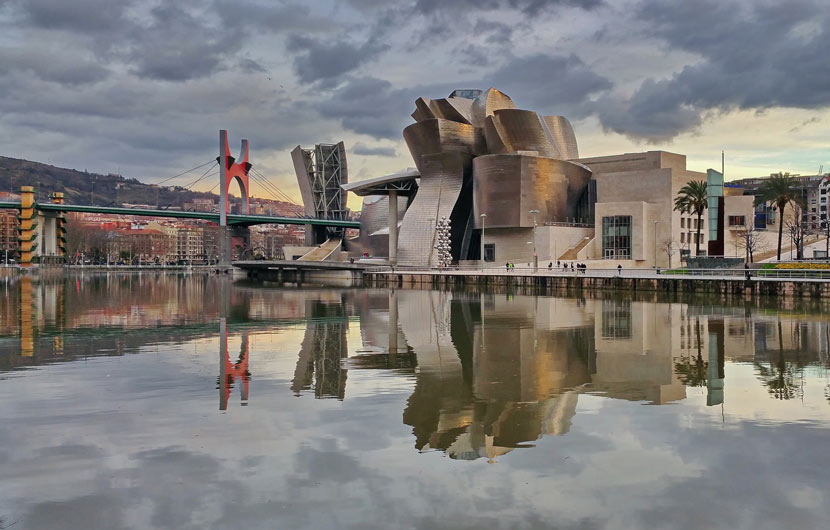
Bilbao is located in the Basque region of northern Spain. One of its main attractions is the stunning Guggenheim Museum, an architectural masterpiece that will mesmerise you from the moment you arrive.
Created by world-renowned architect Frank Gehry, the museum opened in 1997 and is home to many prominent and contemporary works of art.
The showstopper, though, is the curvy titanium-clad building that houses the museum and is now recognised as one of the most unique places to visit in Spain.
After visiting the museum, you can take the opportunity to explore the rest of Bilbao, including the Casco Viejo (Old Town) on the banks of the Nervion River, centred around Las Siete Calles, the city's seven original streets dating back to the 1400s.
The museum is open on weekdays from 10 am to 8 pm (Closed Mondays).
45. Plaza Mayor Madrid
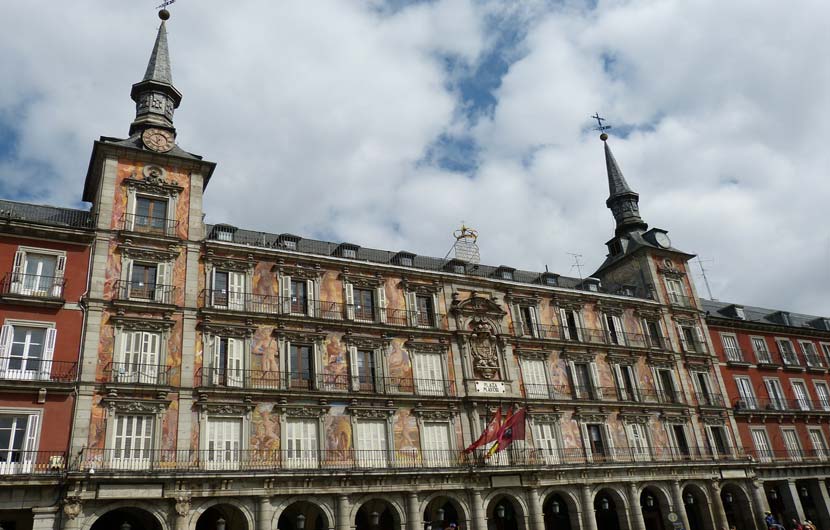
The Plaza Mayor is a large square in central Madrid and a popular meeting point for locals and visitors alike.
Originally called Plaza del Arrabal, it later became Plaza Mayor and is a stone's throw from another famous square, namely Puerta del Sol.
The Plaza Mayor features a symmetrical, uniform architectural style, surrounded by 237 balconies, nine entranceways, a bronze statue of King Phillip III, and ornate gardens.
No visit to Madrid would be complete without a trip to the Plaza Mayor, where visitors are treated to a unique atmosphere, some great little eateries and some fine architecture. Not to be missed on your next trip to Spain’s capital.
46. Las Ramblas Boulevard Barcelona

Las Ramblas is probably one of the first places visitors to Barcelona head to, as it is the city's most easily identifiable landmark.
Las Ramblas is a long boulevard that cuts through central Barcelona. It is a lively, vibrant place full of market stalls, locals, and street musicians and lined by various bars and restaurants.
The boulevard starts near the Port Vell cruise ship terminal, ends at the famous Plaça Catalunya at the most northern end, and is sandwiched between the city's Raval and the Gothic Quarter.
47. Toledo's Old City

Toledo is a beautiful and historic Spanish city located just 70km south of Madrid and is the capital of the Castilla-La Mancha region.
Toledo was declared a World Heritage Site by UNESCO in 1986 and is an absolute must-visit if you wish to are looking to discover the rich artistic and cultural history of Spain
The city of Toledo is surrounded by the meandering Tajo River. It is truly a beautiful sight, especially at night when its twinkling lights and beautifully lit buildings and monuments can be seen from afar.
Popular sites and attractions in Toledo include Toledo Cathedral, the Alcazar, the Great Defence Wall, the El Greco Museum, the Santa Domingo Monastery, the San Martín bridge with its two towers, and the 15th-century San Juan de Los Reyes Monastery.
48. Avila Castle
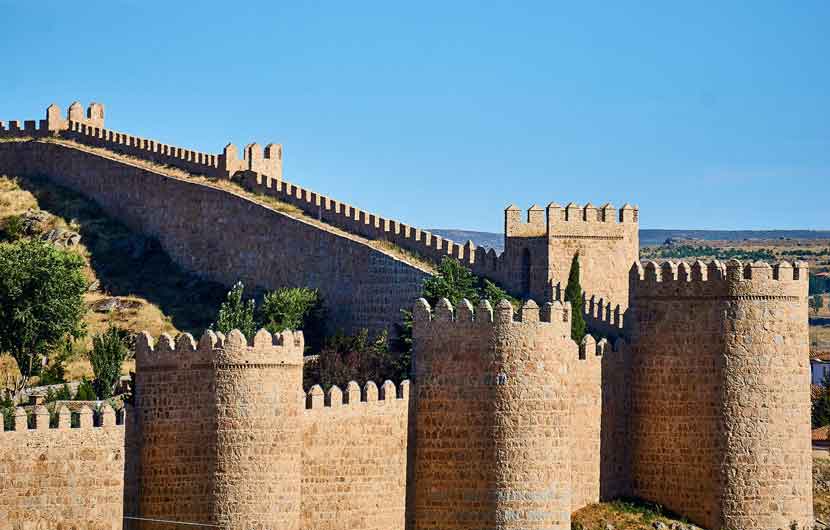
Avila is a beautifully historic city, much of it within its perfectly preserved medieval city walls, which are typical of the city’s predominant Romanesque architecture. Avila’s proximity to Madrid (about an hour’s drive away) makes it an ideal destination for those who yearn to taste the traditional, unchanged Spain while avoiding the bustle of the big city.
Avila within the walls has remained mostly unchanged for centuries; the atmosphere is solemn and tranquil, just as if you had gone back to medieval Spain.
The city has a wealth of monuments and other architectural sites of excellence, including the cathedral, the mother of them all, and several smaller churches and basilicas.
Your first view of the city is, of course, its majestic walls, begun in 1100 and designated a UNESCO World Heritage Site – one of the few medieval cities in the world whose walls fully enclose the city; perfect for that panoramic holiday snap.
At night, the Walls of Avila are the largest fully illuminated monument in the world – now there’s a treat.
49. Donana National Park

The Donana National Park is located in Andalucia, Southern Spain, halfway between the regional provinces of Seville, Cadiz, and Huelva.
It is a stunning natural park comprising one of Europe’s most important wetland areas, vast dunes, and picturesque pine forests.
The wetland lagoons provide shelter and food for thousands of birds. Donana is one of Spain’s prized national parks, and for good reason.
A myriad of landscapes captivates visitors who enjoy abundant wildlife, pristine, unspoiled beaches, nature trails, and moving dune systems.
50. Historic Town of Ronda

Just a 30-minute drive from the busy Costa del Sol beach resorts in southern Spain, you will find the stunning town of Ronda.
Built on an isolated ridge of the Sierra Ronda, the town is split in half by a gaping river gorge, El Tajo, which drops 130 metres on three sides.
Still more spectacular, the gorge is spanned by a stupendous eighteenth-century arched bridge, the Puente Nuevo, while tall whitewashed houses lean from its precipitous edges.
Much of Ronda's attraction lies in this extraordinary view, or in walking down to the Rio Guadalquivir or following one of the donkeys' tracks through the rich green valley below.
This is undoubtedly one of the best places to visit in the Costa del Sol.
51. The Valley of the Fallen – El Valle de los Caidos

Located not far from Escorial Monastery, this monument and its grounds are dedicated to the fallen from Spain’s civil war.
Although not usually included on the travel itineraries of many visitors to Spain, the Valley of Fallen is well worth a visit.
This was the burial place of General Franco until 2019, when his remains were finally exhumed and laid to rest in his family mausoleum located just outside Madrid.
Although this did cause some controversy, for many people in Spain, the presence of his remains served only to glorify Franco's 40-year dictatorship.
The €9 entrance fee is worth it to get a taste of an essential part of Spain’s history.
52. The Costa del Sol Resorts

The Costa del Sol is one of Spain's most popular destinations. Here, you can enjoy some of the most popular beach resorts in the country, located all along this famous stretch of coastline.
Southern Spain’s Costa del Sol (Sun Coast) is one of the most popular travel destinations in Europe. The area is famous for its hundreds of golden beaches and perfect climate, boasting over 300 sunshine days a year!
The main resorts on the Costa del Sol include Fuengirola, Torremolinos, Benalmadena, and the luxury sun-kissed resort of Marbella.
53. Watch an Authentic Flamenco Show
A remarkable symbol of Spanish culture, Flamenco is something that many tourists look forward to when visiting the country.
What’s great about this cultural attraction is that it can be watched year-round and practically anywhere.
Flamenco is a type of Spanish music that features singing, dancing, hand-clapping, and the Spanish acoustic guitar.
You can probably recognise Flamenco immediately thanks to the long, outstanding dresses worn by the women dancers, typically in flamboyant colours of red and blue.
The dance became so popular that UNESCO declared it one of the “Masterpieces of the Oral and Intangible Heritage of Humanity” in 2010. Flamenco dancing is taught and practised worldwide.
There are many famous “Tabloa Flamenco” venues around Spain where you can get to see this unique form of music and dance, especially in Seville, Malaga and Barcelona.
Some of the most popular include the Tablao Flamenco Cordobes in Barcelona, the Guitar Festival of Cordoba held in July, the Suma Flamenca in Madrid, and the Malaga Feria held in August each year.
54. Penafiel Castle – Castilla y Leon
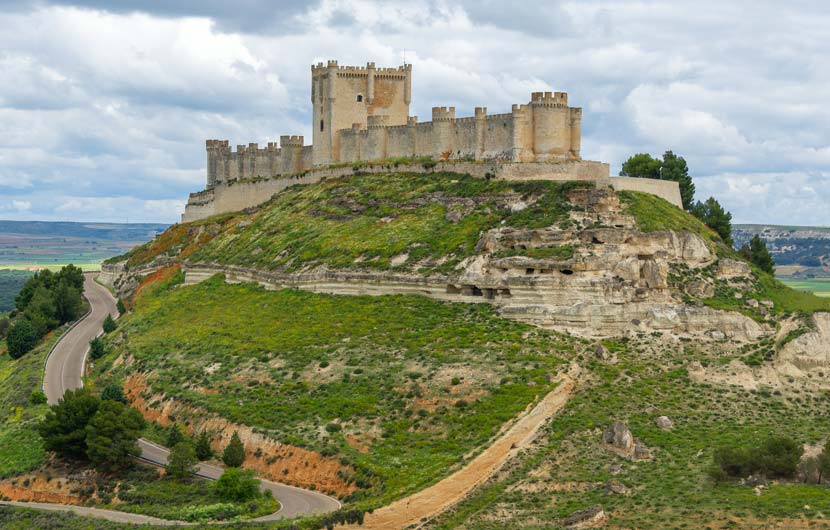
The region of Castilla y Leon is a land with so many castles that they even named the region after them. The Spanish word for castle is Castillo.
So, if you are into wandering around historic sites, head to Penafiel, home to a stunning German Gothic-style castle of impressive proportions. The castle is located in the province of Valladolid and overlooks the picturesque Botijas and Duraton valleys.
It is approximately 190 meters long, with a central tower flanked by eight turrets. It was declared a national monument of great interest in 1917. It currently houses the Provincial Wine Museum. Luckily for visitors, there is a tasting room where you can try some of the best local wines.
Penafiel Castle is open to the public from Tuesday to Sunday and on public holidays from 10.30 am to 2 pm, and again from 4 pm to 6 pm (during the summer months, it stays open until 8 pm).
55. Royal Palace of Aranjuez

The Royal Palace is a real hidden gem, often overlooked, which is a great shame as it is one of the best palaces you will find anywhere in Spain. The town of Aranjuez is located within the province of Madrid and stands proudly beside the Tagus and Jarama Rivers.
This shining example of a royal palace was built by Lorenzo Suarez de Figuero in 1387, it became royal property under Ferdinand II and was claimed as a summer residence for the royal family. It is renowned for its well-crafted gardens and ornate fountains.
Many kings and queens have added their touch to the palace over the centuries, including Phillip II, Philip V, and Ferdinand VI.
Public opening times are usually between 10.30 am and 4.30 pm, and the entrance fee for unguided tours is reasonably priced: €8 for adults and just €4 for children and pensioners.
56. Almodovar del Rio Castle

Almodovar Castle is located in the town of Almodovar del Rio, in the province of Cordoba, in the heart of Andalucia, in southern Spain. The castle is another hidden gem in deepest Andalucia and is well worth visiting at any time of the year. It is famous for serving as the filming location for Game of Thrones, where it stood in for the ancestral home of the Tyrells.
The castle sits on a hill overlooking the Guadalquivir River and dates back to the 8th century, when the Moors ruled Andalusia. The town and castle are within easy reach of Cordoba, which has good rail links to Madrid, Seville and Malaga.
Almodovar Castle is well worth visiting and is open to the public for guided and non-guided tours, which are very reasonably priced, starting at €8 for adults, €6 for pensioners and €4 for children.
Visitors can explore the patios, towers and battlements, there is also a nice medieval shop and reenactment tours and activities which are great fun for all the family.
57. Palace Castle of Manzanares

The Manzanares el Real Castillo is some 50 kilometres from Madrid on the south side of the Guadarrama mountain range.
Although at first glance, the castle is not one of the largest or grandest, it is still well worth visiting if you find yourself staying close by.
Originally built as a fortress, it was turned into a residential palace by the Mendozas, one of the noblest families in Castilla in the Middle Ages.
58. Castilla La Mota

The La Mota Castle is a well-preserved medieval fortress located in the town of Medina del Campo within the province of Valladolid.
Ideally situated on a hill, Mota is Spanish for 'elevated hill'. It dominates the local town and countryside with its impressive towers and battlements.
The castle dates back to the 12th century, thankfully much of it still stands today. Over the years, Castilla La Mota has served as a military academy, a prison, and a royal archive.
The castle is open to the public from Monday to Saturday from 11 am to 2 pm and again from 4 pm to 6 pm (7 pm in the summer. On Sunday, and on public holidays, it is open from 11 am to 2 pm
59. La Manga de Mar Menor

La Manga de Mar Menor is located in the province of Murcia in south-eastern Spain. Blessed by a unique position, La Manga is surrounded by sea on one side and a huge lagoon on the other.
Due to a geographical accident of nature, La Manga ( which means Sleeve in Spanish ) is a long strip of land which, bar a few connecting channels, is completely closed off from the Mediterranean Sea. A huge saltwater lagoon was formed, proudly protected from the rougher Mediterranean Sea on the outside, creating a calm interior bay.
The Mar Menor is ideal for practising water sports in a calm and safe environment. There are plenty of beaches along the strip to enjoy, plus numerous bars, restaurants and two marinas.
60. Celtic Region of Spain

The Iberian Peninsula has been heavily influenced by Celtic culture over the centuries, nowhere more so than in Galicia, in northwest Spain.
Galicia, Spain, offers visitors a unique, endearing atmosphere and old-world charm.
Galicia is known in Spain as the “land of the 1000 rivers”, as they wind their way all over the region from the mountainous inland to the coast, where they form the characteristic “Rias”. Celtic culture is evident throughout the province, from the dark stone buildings to the use of bagpipes by many musical bands.
Travelling around Galicia is like a breath of fresh air, with its green and fertile lands, spectacular coastline, picturesque villages, and small, quaint harbours.
Bagpipes are a surprisingly key part of cultural life and hint at the region’s distinctive Celtic heritage.
Galicians take pride in this identity, despite scepticism from their would-be cousins across the sea.
61. Experience Benidorm

Benidorm is in a privileged position on the Costa Blanca, just south of the other popular resorts of Altea and Javea and northeast of Alicante. It is jealously guarded by the Sierra de Aitana mountain range, which protects it from the sometimes inclement cold north winds of winter, providing a mild climate even through the colder months.
Holidays to Benidorm are as popular as ever, and the resort remains one of Spain’s top holiday hotspots. Tourism here developed in the 1960s and has long been a favourite destination by most northern Europeans ever since.
There are plenty of things to do in Benidorm, including numerous beach and water sports activities, lots of bars, restaurants, and vibrant nightlife.
62. Whitewashed Villages of Andalusia

The dramatic landscapes of Andalusia have attracted throngs of visitors over the years, with the whitewashed villages a significant draw for those seeking a unique view of Andalucia.
Each village location is unique, offering a special charm and is well worth visiting. Popular villages include Alhama De Granada, Medina Sidonia, Lanjaron, Montefrio and Casares.
One of the most spectacular is the village of Lanjaron, located on the foothills of the Sierra Nevada in Granada. The town is roughly 50 kilometres away from the city of Granada and about the same distance from the Costa Tropical and the Mediterranean Sea to the south.
Lanjaron is well-known in Spain for its mineral drinking water of the same name. The area around Lanjaron is noted for its abundant freshwater springs and supreme natural beauty.
A quirky fact – Lanjaron is one of the very few places in the world that prohibit death, yes, it's illegal to die in Lanjaron!
63. Cabo de Gata National Park

The Cabo de Gata National Park is located in the province of Almeria in Andalucia. The park is based around a huge Cape on the coast and extends out to sea.
It is one of the few Spanish coastlines that have remained untouched by large-scale development.
Because there are hardly any main resorts and inhabitants, and all urban construction is highly regulated, the sea quality is excellent and ideal for diving and snorkelling.
Lucky visitors to Cabo de Gata will find pristine beaches, crystal clear waters, tranquil coastlines and small, quaint communities.
65. Picasso Museum Malaga

The Pablo Picasso Museum is located in the heart of Malaga and is dedicated to one of Malaga’s most famous sons.
Pablo Picasso was born in Malaga and later became one of the world's most recognised artists.
The museum opened in 2003 and houses around 280 works of art donated by Picasso’s family.
The Picasso Museum is located by the Plaza de Merced, close to this famed artist's birthplace.
It is open to the public from 10 am to 6 pm during the winter months, and until 8 pm during the summer months. The entrance fee is €9, with reduced rates for students, children and pensioners.
66. Joan Miro Foundation, Barcelona

Joan Miro was a Catalonian artist of some note, you will come across his work all around Barcelona starting with a large mosaic at the airport. Joan Miro was born in Barcelona on the 20th of April 1893 and became one of the most important representatives of surrealism.
The foundation was initiated by the artist with the museum opening in 1975., it now houses over 10,000 paintings, drawings and sculptures, the earliest from 1901.
The Joan Miró Museum opens to the public Monday to Saturday from 10 am to 6 pm (slightly later during the summer months). The entrance fee is €12 for adults; children go in for free.
67. Royal Monastery of Guadalupe

The Royal Monastery of Guadalupe is located in the province of Caseres in the autonomous region of Extremadura. It is home to an outstanding repository of four centuries of Spanish religious architecture.
Two significant events that occurred in 1492 are symbolised at the Royal Monastery: the reconquest by the Catholic Kings and the arrival to the Americas by Christopher Columbus.
There is a famous statue of the Virgin Mary, which became a powerful symbol during the Christianisation of the New World.
Whatever your religious beliefs are, you will surely be impressed by the sheer beauty of the stunning monastery.
68. Salvador Dali Museum at Figueres
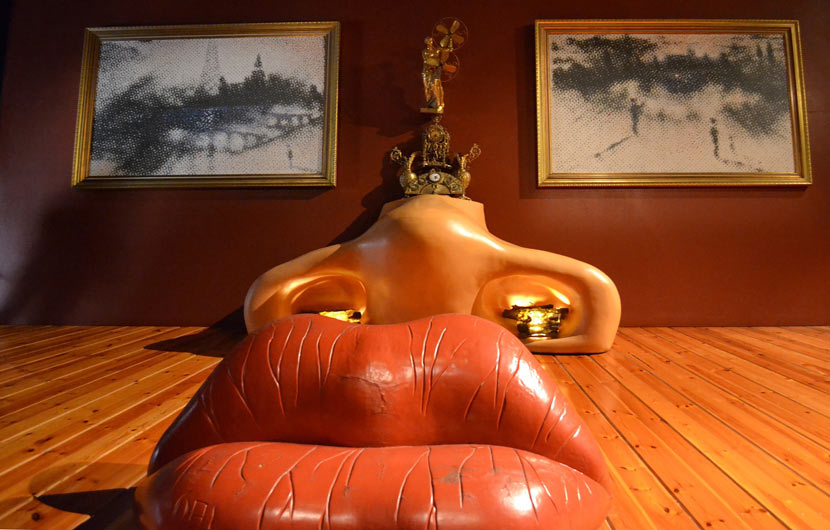
Salvador Dalí was a Catalan artist, sculptor, author, and filmmaker who had a great impact on the art world during the 20th century with his incredible surrealist artwork and flamboyant personality.
The Salvador Dali Museum is located in Figueres, his place of birth and where his body is buried. Figueres is located about a two-hour drive north of Barcelona, and the transport services are very good and can be easily accessed by train, road or bus.
The museum was created by Dalí himself and currently houses the largest collection of surrealist art in the world. Although his works may not be to everyone's liking, his genius is plain to see, and the museum is well worth visiting to step into the surrealist world of this unique personality.
And if you think this may be one of the lesser attractions in Spain, a staggering 1.4 million people visited the museum in 2017!
There are various entrance tickets and guided tours available to buy online or at the main entrance, depending on your tour type.
The basic unguided tour price for the popular Dali-Theatre Museum costs €14, with reduced rates for groups and students, and free entrance for children up to 8 years of age.
69. Balearic Island Beaches
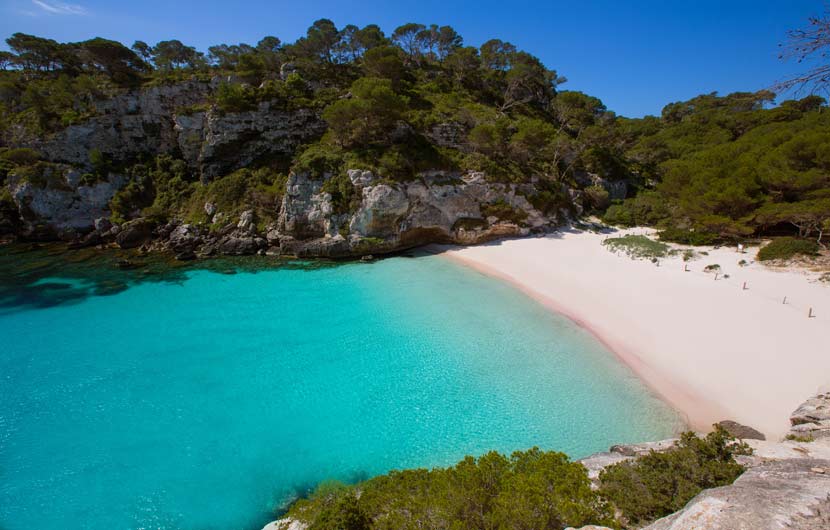
The Balearic Islands consist of Mallorca, Menorca, Ibiza, and Formentera and are home to some of the most incredible beaches and coves you will find anywhere in Spain.
One of the top reasons why visitors enjoy Balearic Island holidays year after year is its incredible beaches. Beaches, although there are really so many to enjoy. The pick of the best includes Illetas Beach on Formentera, Cala Comte on Ibiza, Cala Macarelleta on Menorca, and the Pollensa and Alcudia beaches of Mallorca.
70. Roman Amphitheatre Tarragona

The Roman Amphitheatre is located in the Catalan province of Tarragona, around an hour's drive south of Barcelona.
This impressive structure was built in the 2nd century AD, boasting a capacity for over 15.000 spectators who often watched the famous gladiators battle with wild animals.
In 259, the Christians were persecuted by Emperor Valerian, many of whom were burned alive within the amphitheatre. In the 18th century, it was even used as a prison.
71. Merida and Roman Lusitania

Merida is located in the region of Extremadura in southwest Spain. This ancient city was founded in 25 B.C. by the Roman Emperor Augustus and it soon became the economic and cultural capital of Lusitania, the westernmost province of the powerful Roman Empire.
Because of its great importance to the empire, Merida was lavished with attention by Rome, evident throughout the city.
The impressive Roman Theatre was built in 16 B.C. Decorative mosaics, art, sculptures and ceramics are displayed at the National Museum of Roman Art.
The archaeological site at Merida received World Heritage status from UNESCO in 1993.
72. La Boqueria Market Barcelona

La Boqueria indoor food market is one of the largest and most important in Spain, and a perfect place to drool over the many kinds of fruit, vegetables, Spanish hams, fresh seafood, tapas and other delights.
La Boqueria is situated halfway up Las Ramblas and has been the beating heart of Barcelona since 183,6 with over 200 traders offering a huge selection of gastronomic products.
The market is open Tuesday to Thursday from 8 am to 3 pm and Fridays and Saturdays from 8 am to 5 pm; it closes on Mondays.
There is an area on the second floor of the market that hosts events and serves as classrooms for cooking classes. Top chefs offer classes on local and international gastronomy; for more details, see the BCN website. You can also take part in guided tours with a cooking class, tapas, and a wine-tasting experience, which is a great way to learn all about this famous indoor market.
73. Gastronomy Tour San Sebastian

The grandiose historic city and stylish resort of San Sebastian is located in a privileged position within the Basque Country in Northern Spain.
Amongst its many attractions is the incredible gastronomy on offer, which is high on the agenda as San Sebastian boasts the highest number of Michelin-starred restaurants in one city.
The city offers fine dining for the most sophisticated palates and numerous smaller tapas (pintxos) restaurants for you to experience the city’s quirky spin on traditional Spanish tapas. See our San Sebastian restaurant guide for full details.
74. Thyssen-Bornemisza Museum Madrid

The Thyssen-Bornemisza Museum is located in central Madrid and is regarded by many critics as one of the finest private art collections in the world. It was assembled by the Swiss-born industrial magnate Baron Heinrich Thyssen-Bornemisza and his son Hans Heinrich.
The collection is known as the “Golden Triangle of Art”, which houses Western art from primitive Flemish and Italian painters to the 20th-century modern works, such as pop art.
The state bought the museum in 1993 as a complement to the El Prado and Queen Sofia museums, also located in Madrid. Artists' works on show include those of Picasso, Van Eyck, Holbein and Rubens.
The permanent collections section of the museum is open to the public each week from Tuesday to Sunday, 10 am to 7 pm (12 am to 4 pm on Mondays).
The basic entrance fee is €12 per person, €10 for groups, and €8 for pensioners, children under 18, and teachers.
75. Timanfaya National Park, Lanzarote

The Timanfaya National Park is located in the southwestern part of Lanzarote, on the Canary Islands. A holiday to these fascinating islands would not be the same without visiting the stunning Timanfaya National Park.
The unique volcanic landscape of the park was created between 1730 and 1736 when more than 100 volcanoes erupted, devastating the southern of the island, including several villages.
Thankfully, the volcanoes have not erupted since 1824; however, due to a lack of rain and erosion, the landscape looks much as it did just after the last eruptions. Timanfaya was declared a national park in 1968.
Visitors are treated to Martian-like landscapes, stunning scenery and rare plants and fauna. Just a few metres below the surface, the temperature reaches around 650°C, and anything thrown into deep holes catches fire immediately.
The park opens 7 days a week from opening hours 10.00 am to 6.00 pm; admission is €8.
76. Seville’s Historic Gems

The city of Seville is the capital of the autonomous region of Andalucia and is Spain’s fourth-largest city. The first high-speed railway line in the country – the Madrid-Seville AVE line, opened in time for the 1992 World Expo held in the town.
Seville is a cultural hub in Andalucia with a long and varied historical and cultural past, and is home to some of the finest monuments and ancient sites in Spain.
The top sites to visit include the impressive cathedral, the rambling Alcazar gardens, the riverside Torre del Oro (Golden Tower), the banks of the Guadalquivir River, the Almohad walls, La Giralda, and the famous La Maestranza bullring, the oldest of its kind in the world.
77. Footy Tours

You don’t have to be a football enthusiast (although it helps) to enjoy a tour of one of the top Spanish football stadiums. Many now offer tours for visitors, showcasing the ground, practice facilities, the cup room, and much more.
The pick of the stadiums includes the home of Madrid, the Santiago Bernabéu Stadium, and, of course, the Camp Nou Football Stadium, home to Barcelona.
The Camp Nou experience tour runs every half hour and costs €25; pensioners and children aged 6 to 13 pay €20. Admission to the impressive Madrid Football Stadium Tour costs €25 for adults and €18 for children aged 14 or under.
78. Monastery of Monserrat, Barcelona

The Montserrat Monastery sits impressively in the mountains high above the city of Barcelona and is a must-see place for all travellers to Catalonia.
The Benedictine Monastery of Santa Maria de Montserrat is situated around 1.200 meters high in the mountains and makes for an impressive sight from miles around.
Top attractions at the monastery include the Black Madonna, Gregorian chants sung daily by 50 boys from the “Escolania de Montserrat” the monastery boarding school and the museum which houses work by Dali, El Greco, Monet and Giordano.
There are plenty of places to enjoy a picnic around the monastery grounds and a few eateries if you prefer to eat local and alfresco.
79. Corralejo National Park Fuerteventura

The Corralejo National Park is located a short drive from the town of Corralejo in the northeast of the Canary Island of Fuerteventura.
It is the best place to enjoy a dessert experience, with its enormous expanse of white sands lapped by the turquoise waters of the Atlantic Ocean.
A wild and varied landscape of volcanic and desert alongside a dramatic and rugged coastline makes this a unique and fascinating place to visit.
Spending a day out in the park, you can enjoy lazing on one of the stunning beaches or trek to the top of Red Mountain.
80. Tabernas “Wild West Desert” Almería

Tabernas Desert is located in the province of Almería, in the autonomous region of Andalusia, in southern Spain.
This is Europe's only desert with 3000 annual sunshine hours, temperatures ranging from -5 to 47 °C, and an annual rainfall of just 200mm.
Its baron rocky appearance has made it a firm favourite location for movie makers, staking its claim as part of international film history.
Many film sets have been constructed around Tabernas over the years, some of which are open to visitors seeking a Wild West cowboy experience. There are several movie sets you can visit, such as Fort Bravo, to enjoy a Hollywood cowboy experience, including gunfights!
Some of the top films, TV series and music videos filmed around Tabernas include A Fistful of Dollars, Tobruk, Game of Thrones, Doctor Who, and Shout Out To My Ex by the supergroup Little Mix.