


Sagrada Familia Barcelona - Spain´s Most Famous Monument

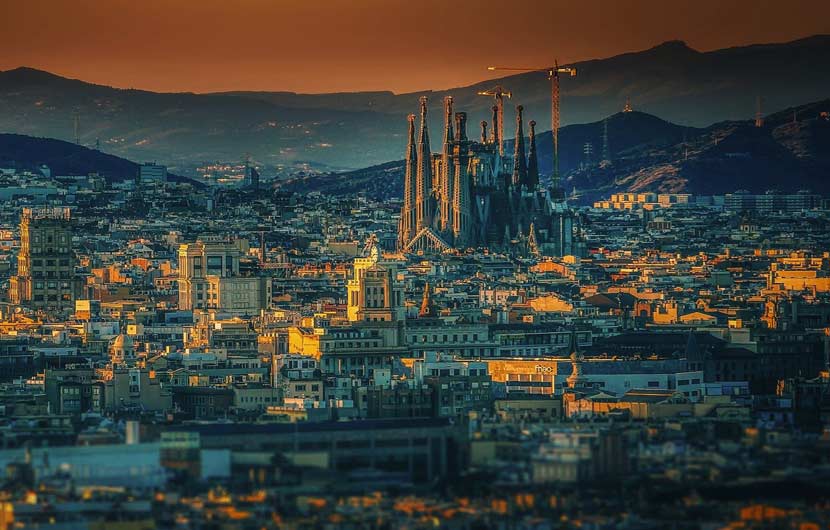
The Sagrada Familia Barcelona is the most visited attraction in Spain, and for good reason.
It will amaze you on so many levels; its unique style is a testament to the genius of its architect, Antoni Gaudi.
No trip to the popular city of Barcelona would be complete without discovering the wonders of this world-renowned religious site.
» Check out the most popular Sagrada Familia Guided Tour with Audio Guide.
The Sagrada Familia History

Initially, it was the work of architect Francisco de Paula del Villar, who envisioned a Gothic-style church consisting of three-nave elements, exterior buttresses and a high spire, all of which were typical of Gothic architecture at that time.
The construction of the Sagrada Familia Barcelona was thought to have started in August 1882 and was handed over to the enigmatic young Architect Antoni Gaudi at the end of 1883; he was just 31 years old.
Antoni Gaudi completely changed the architecture, and the building soon started to take on the unique style for which he was world-renowned. He knew it would take many years to finish and worked tirelessly on the project until he died in 1926.
The Sagrada Familia was intended to be a universal masterpiece embracing all symbols of Christianity. It is an expiatory temple, a place to commemorate the repatriation of sins made against God or the church's laws.
All work on this enormously complicated project is financed by donations from locals and visitors, which explains its slow progress.
It is due for completion in 2026, a symbolic date as it celebrates 100 years since the death of Gaudi.
The Project
Gaudi was highly religious and incorporated his faith throughout the Sagrada Familia Barcelona.
He only completed the plans for the most important parts: the central nave, the sacristan, and the glory façade. His plans, though, have been used to inspire the further construction of the other naves, facades and towers.
The Naves

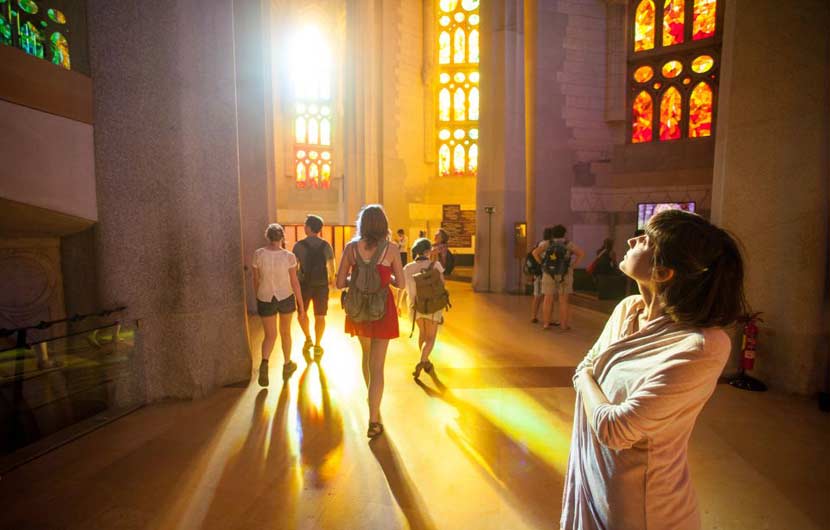
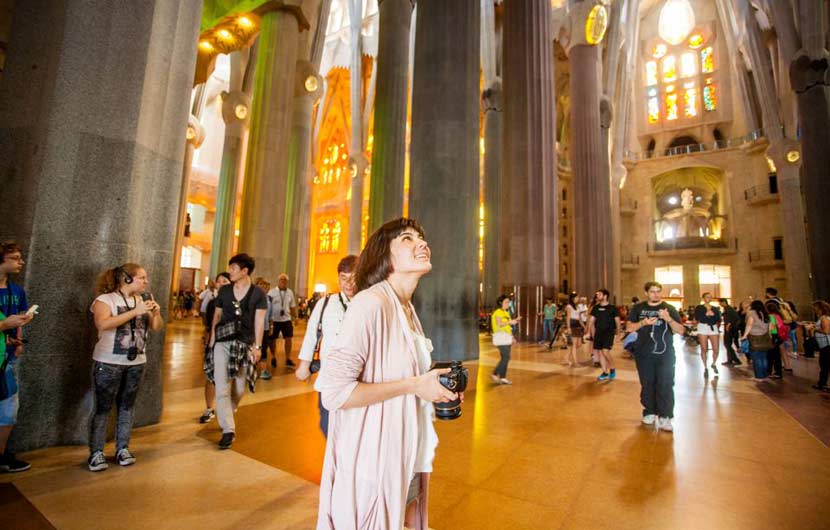
The interior of the Sagrada Familia contains a forest-like array of soaring columns dividing the space into distinct naves, each with unique architectural and decorative details.
The central Nave of Jesus Christ features the basilica's greatest height and width. Its massive 52-meter-tall columns slope outward and bifurcate like tree,s reaching up to support the vaulted ceiling—diffused light filters down through the canopy-like structure, symbolizing the crossing from Earth to the eternal realm.
On each side lie additional naves dedicated to themes like the saints and virtues. The Nave of Faith features leaner Gaudinian columns in an undulating shape. The hexagonal columns of the Nave of Hope take inspiration from the natural world.
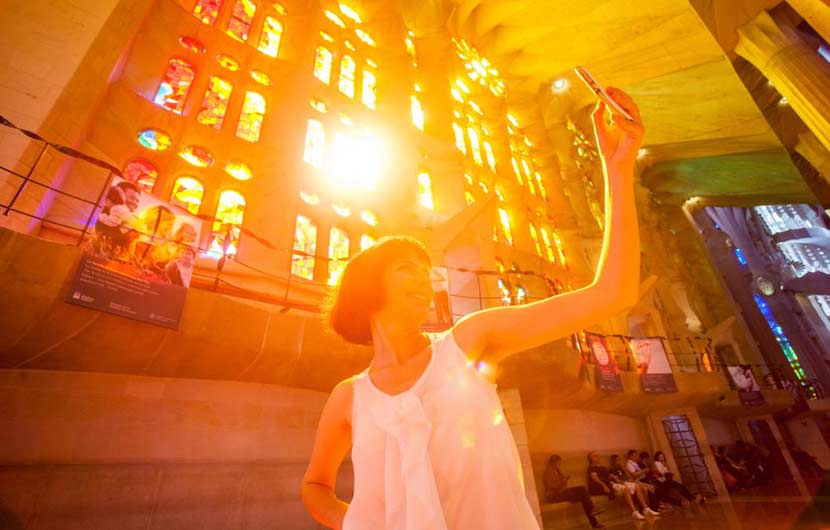
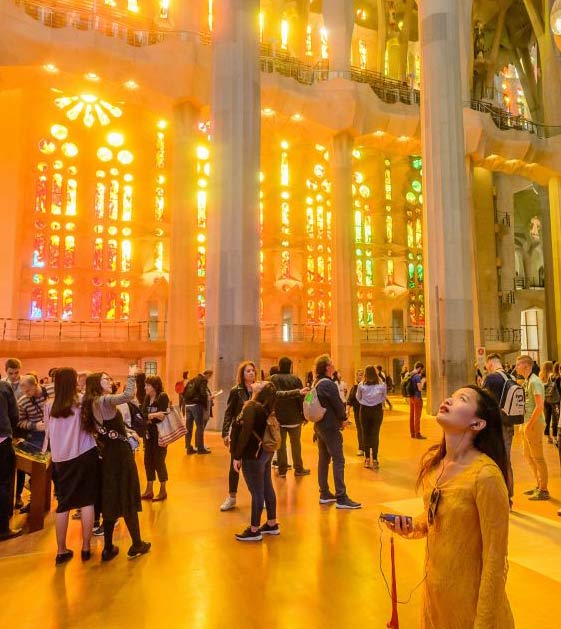
Every surface showcases Gaudí's artistry through ornate decorative flourishes, stained glass, and hand-crafted details ,including fruit shapes and words carved into the stone. The structural columns take on organic, spiritual forms representing everything from the Holy Family Tree to angelic trumpets heralding Christ's triumph over death.
The expansive naves come together in a soaring celebration of nature, engineering, symbolism and the divine. You can spend hours appreciating the intricacy surrounding them in all directions. The magnificent naves provide an awe-inspiring representation of man's journey toward salvation.
The Facades
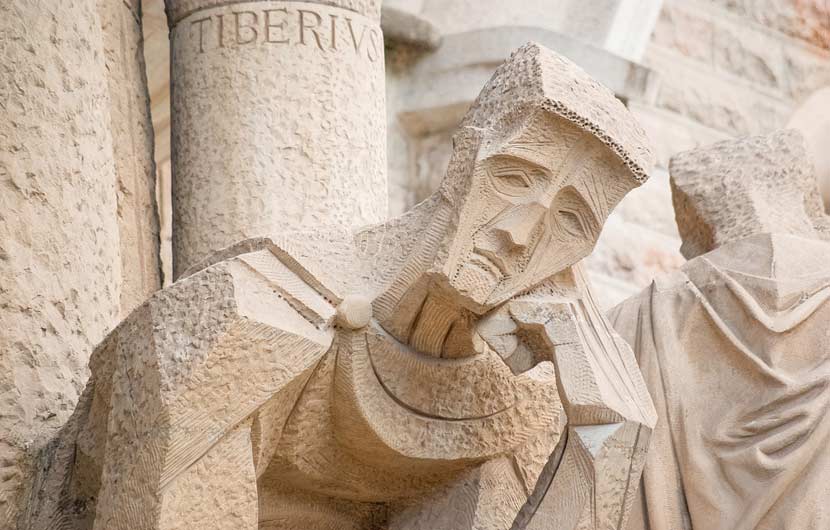
The exterior has three facades, each one depicting a moment in the life of Jesus Christ, they are the Nativity, Passion and Glory facades
» Nativity Facade
The Nativity Facade of the Sagrada Familia is an explosion of ornate decoration celebrating the birth and early life of Jesus Christ. Designed by Antoni Gaudí, its exuberant sculptures and carvings depict scenes from Christ's infancy and family life.
The lower portico features columns that blossom into palm trees, representing the Tree of Life.
Detailed biblical scenes carved in high relief, like the Annunciation and Visitation, lead up to the birth of the infant Jesus adored by angels in the central portion.
Above, the four bell towers represent Jesus, Mary, Joseph and John the Baptist. Intricate symbology fills every element, from cypress trees signifying death to lilies portraying purity.
Statues of playful geese, floral motifs, and starry constellations create a lively, joyous composition full of movement.
The kaleidoscopic stained glass adds vibrant color befitting a celebration.
Compared to the stark Passion Facade, the Nativity Façade composition overflows with ornate craftsmanship conveying the wonders of Christ's birth through Gaudí's signature decorative style.
» The Passion Facade
The Passion Facade of the Sagrada Familia dramatically depicts the suffering, crucifixion and death of Jesus Christ through symbolic architecture and sculpted scenes. The austere facade was completed in 1930 under architect Josep Maria Subirachs to represent Christ's sacrifice and road to martyrdom.
Angular columns covered in blood-red brick rise up like bones, with emaciated Biblical figures looking on solemnly. Intricate scenes carved in high relief recount Christ's last days - the Last Supper, Judas' kiss, and a distressed Virgin Mary witnessing the crucifixion.
At the top, the Crucified Christ on an ornate cross is flanked by the thieves crucified alongside him. The facade's harsh lines and gaunt figures create an agonized, mournful tone befitting of Christ's passion. Abstract shapes suggest tears, bones, and shrouds, revealing the facade's Modernisme style.
Through its bold, figural sculpture and raw materials, the Passion Facade provides an evocative counterpoint to the Nativity Facade's joy and vibrancy. Its anguished composition immerses visitors in Christ's sacrifice and the sorrowful mystery of his death which led to resurrection and salvation.
» The Glory Facade
The Glory Facade will be the largest and most monumental of the three main facades decorating the Sagrada Familia. Designed by Antoni Gaudí as the entrance for major ceremonial events, it glorifies Jesus Christ through vivid symbolism and artistry.
At the center will be a portico featuring the ascending Christ, atop a large colonnade surrounded by sculptures of children, angels, and saints paying homage.
Four sloping pyramids will direct eyes upwards to the central dome and massive towers soaring above.
The intricately decorated Door of Heaven will welcome worshippers within the temple, flanked by bronze doors dedicated to the sacraments.
Flowing shapes, dove motifs, cypress trees, and ascending forms will exalt the resurrection into the kingdom of heaven.
The Sagrada Familia Towers

The Sagrada Familia towers are one of the most distinctive and awe-inspiring aspects of Antoni Gaudí's masterpiece. In total, there are 18 towers planned for the basilica, each with unique architectural details and religious symbolism.
The 4 completed towers representing the Four Evangelists - James, Luke, Mark, and Matthew - are the tallest structures, towering over the apse at over 200 feet tall. Their intricate facades depict scenes from the gospels and are topped with sculptures of the evangelists and their symbolic animals.
The Nativity Facade contains four towers dedicated to Jesus, Mary, Joseph and John the Baptist. These celebrated towers feature ornate decoration and are dedicated to the birth and early life of Christ. The Passion Facade will likewise have four towers focused on the crucifixion.
The central Jesus Christ tower will be the tallest upon completion at over 550 feet, topped with a cross and Jesus sculpture visible across Barcelona. Its height pays tribute to Christ's resurrection reaching towards heaven.
The slender towers are filled with symbolism, from the triangular shapes pointing to the Holy Trinity, to the helical coils inspired by the perfection of nature. The tower soaring above each facade provides vertical accents contrasting with the horizontal expanse of the basilica.
The dizzying heights and intricate details visible up close allow visitors to appreciate Gaudí's ambitious vision and remarkable technical achievements.
When complete, the 18 towers will make the Sagrada Familia's iconic skyline recognizable across the globe as a masterpiece of human creativity and engineering.
Visiting the Sagrada Familia
Due to the enormous number of visitors each year entry tickets are limited so be sure to book early whenever possible.
If you turn up on the day to buy entrance tickets you may spend hours queuing only to find there are no more slots available for the day.
To avoid disappointment it is advisable to buy entrance tickets at least 5 days or more in advance.
Tickets are available to buy up to two months in advance and are allocated based on a system of 15-minute time slots so its very important you arrive in plenty of time.
The cheapest entrance ticket is the Sagrada Familia Basic Ticket which is available two hours before closing time and does not include an audio guide. It does include visiting the basilica and museum.
There are a number of different entrance options so it’s well worth checking to find the best one that suits you.
Opening Hours
- November through February: Monday through Saturday 9:00 am to 6:00 pm. Sundays 10:30 am to 6:00 pm.
- March and October: Monday through Saturday 9:00 am to 7:00 pm. Sundays 10:30 am to 7:00 pm.
- April through September: Monday through Saturday 9:00 am to 8:00 pm. Sundays 10:30 am to 8:00 pm.
The opening times and days may occasionally change if special events taking place inside the Basilica.
Special opening hours
- On 25th and 26th December, 1st and 6th January, opening hours will be from 9:00 am to 2:00 pm.
Phone service hours:
- November to February: 9:00 am to 6:00 pm.
- March to October: 9:00 am to 7:00 pm.
- April to September: 9:00 am to 8:00 pm.
Getting There
By Car
Get Directions
Sagrada Familia Guided Tour
Useful Resources

» Barcelona Hotel Comparison
» Where to Stay In Barcelona
» Travel Resources
» Free Barcelona Tourism Brochures
» Barcelona Metro
» Hola Barcelona Travel Card
» Best Specialty Coffee Shops in Barcelona
» Best Cathedrals & Beautiful Churches in Barcelona
» A Weekend in Barcelona
» Learn Spanish in Barcelona
» Free Walking Tour Of Barcelona
» The Sagrada Familia
» Must See Attractions In Barcelona
» Flamenco Show Barcelona
» Getting Around Barcelona
» Barcelona FC Stadium Tour
» Gaudi´s La Pedrera
» Gaudi´s Casa Batllo
» Why Barcelona is a Perfect City To Learn Spanish
» 11 Fun Things To Do In Barcelona For Couples
» 26 Best Things To Do In Barcelona for 2023
» A Guide to Spending 6 Days in Barcelona
» 9 Amazing Things To Do In Barcelona
» Learn Spanish in a Homestay