



UNESCO World Heritage Sites in Spain - All You Need To Know
From the soaring heights of the Teide National Park to the Mediterranean city of Cordoba, Spain has an array of World Heritage Sites to explore.
Not only are the Alhambra Palace Granada and the works of Antoni Gaudi renowned all over the world such as the Sagrada Familia Church, but there are also many lesser-known sites in Spain that deserve a visit.
From the Garajonay National Park on the Canary Islands to the stunning Doñana Natural Park in Andalusia, there are so many unique places to explore. Make sure to check out the Santiago de Compostela Cathedral, the historic walled city of Cuenca, or the Old Town of Avila while you’re in Spain.
With an impressive 49 properties listed on the World Heritage List, Spain is home to some of the most beautiful and historically significant sites in the world.
You’ll be sure to leave with unforgettable memories of Spain’s incredible culture, history, and natural beauty.
Here is our pick of the top 18 best UNESCO World Heritage sites in Spain:
1. The Alhambra, Generalife & Albayzin - Granada
The stunning Alhambra palace and castle sits high atop a plateau, offering visitors spectacular views of the city below.
The Alhambra in Arabic “Qal’at al-Hamra” means red fort was built by the Nasrid Dynasty between the 13th and 15th centuries.
It was once a fortress that was turned into a palace by Muhammad ibn Yusuf ibn Nasr, known as Mohamed I in 1232. Construction of the great court complex soon followed.
After the conquest of the Moors in 1492 by Charles V, much of the palace interiors were removed or ruined with some parts being totally destroyed to make way for new Christian royal palaces.
This is one of the top tourist destinations in Spain so if you are planning a visit it´s certainly a good idea to buy your entrance tickets beforehand to avoid any disappointment on the day.
2. Santiago de Compostela Old Town & Cathedral

The Cathedral of Santiago de Compostela is one of Spain’s most visited tourist sites, and once you have visited this extraordinary historic site you will understand why.
The beauty of its architecture is undeniable as it sits divinely within the region of Galicia in north-western Spain. It is clear why this architectural marvel continues to draw thousands and thousands of visitors worldwide.
Besides being one of Spain’s most important religious structures, it is also surrounded by several remarkable and historic buildings like the Gelmirez Palace, Rajoy Palace, Catholic Kings Hostal, and San Jeronimo College.
3. Cathedral, Alcazar and Archivo de Indias in Seville

Seville is an astonishing place to visit any time of the year and one of its star attractions is the Cathedral of Santa Maria, the largest Gothic cathedral in the world and recognised as a World Heritage site by UNESCO.
Seville Cathedral is an imposing sight, located in the heart of the city just a few minutes walk from the Guadalquivir River.
The construction lasted for well over a century, the idea of city elders at the time was .. “to build the grandest and most magnificent Cathedral that people will think us mad”.
The stunning central Nave rises well over 40 meters and is flanked by 80 stunning side chapels.
The Basilica was built on the site of the Almohad mosque by the Moorish dynasty which dates back to the 12th century.
4. Historic Walled Town of Cuenca

Cuenca is an incredibly beautiful and historic city with a fascinating story. The Moors initially built it in the 12th century as a defensive position, but then it was conquered by the Castilians and converted into a bishopric and royal town.
It is home to some of the most important buildings in Spain, including the first Gothic Cathedral of Spain and the famous hanging houses.
The town is remarkably well-preserved and a UNESCO World Heritage Site, making it a must-see for anyone interested in Spanish history and architecture.
5. Works of Antoni Gaudí
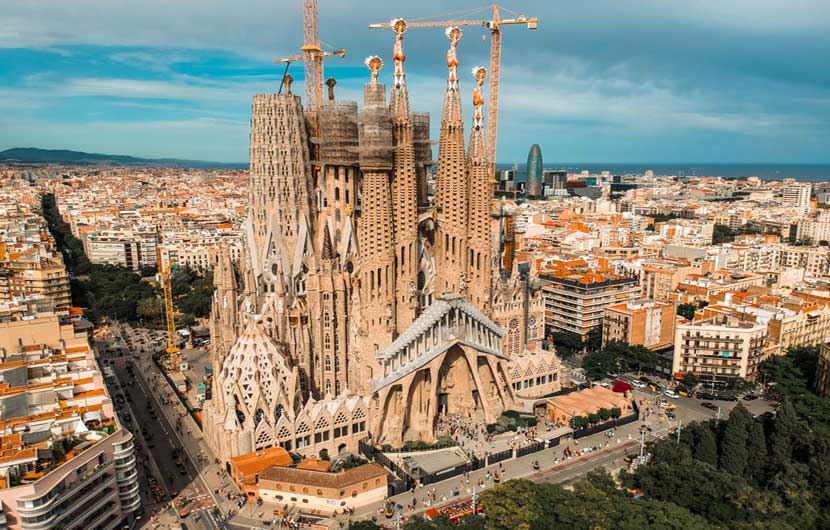
Gaudi was a craft master, and his works in Barcelona, Spain, remain a testament to his genius and creativity.
Some of his most renowned works are Palacio Guell, Parque Guell, Casa Vicens, Casa Mila, Crypt in Colonia Guell, Casa Batllo, and his works on the Nativity façade and Crypt of La Sagrada Familia.
Every one of these sites is a stunning example of Gaudi's unique style, combining elements of nature and the Art Nouveau movement in a truly unparalleled way.
Gaudi's vision and works of art continue to be admired and appreciated worldwide today.
6. Archaeological Ensemble of Merida

The Archaeological Ensemble of Merida is an amazing site with a deep history and significance.
Located in Extremadura, Spain, the city was founded in 25 BC when Augustus conquered the North of Hispania. It was designed as an idealized model of Rome and became the capital of Lusitania, the westernmost province of the Roman Empire.
After Diocletian's reforms, it served as the capital of the Diocese of Hispania. It was also a royal seat for two Germanic peoples, the Suebi and the Visigoths. During the Arabic dominion, it was one of the three border capitals of Al-Andalus alongside Toledo and Zaragoza.
Visiting the Archaeological Ensemble of Mérida is an incredible opportunity to explore the fascinating history and culture of the area.
7. Doñana National Park

The Doñana National Park in Andalusia is a spectacular site, too. This immense park is home to 500,000 waterfowl each winter, making it one of the largest heronries in the Mediterranean region.
The park is made up of dunes, marshlands, lagoons, maquis, and scrub woodland and is also home to five threatened species of birds.
The configuration of the Doñana National Park is due to the delta of the Guadalquivir River, which had only one outlet to the sea below Sanlucar de Barrameda.
Over time, a huge sandbar has blocked this delta, and winds have shaped the dunes. Behind this sandbar lies the marshlands.
It is truly a remarkable natural wonder and a great place to explore.
8. Historic Centre of Cordoba
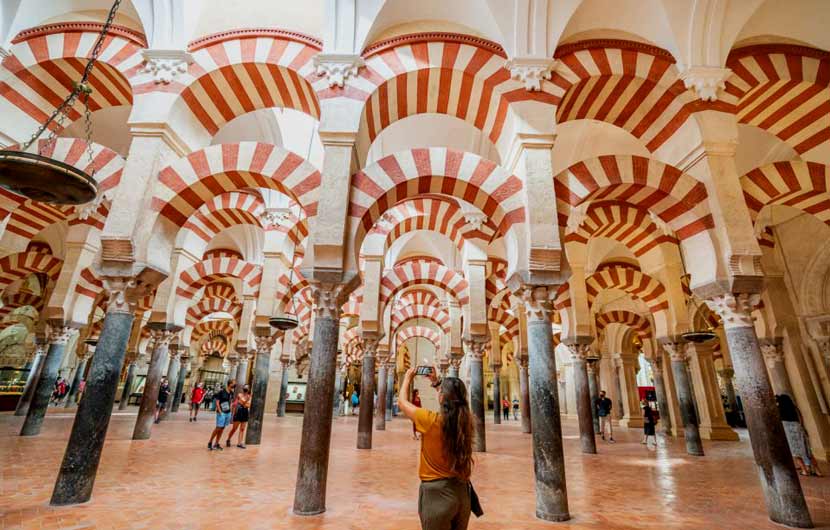
The Historic City Centre of Córdoba is a remarkable site and a must-see for any traveller.
With its mix of cultures, monuments, and stunning views of the River Guadalquivir, it is no wonder that it was declared a UNESCO World Heritage site in 1984.
The Historic Centre of Cordoba comprises the streets and parcels of land surrounding the Mosque-Cathedral, stretching south to the riverbank, east to Calle San Fernando, north to the commercial centre, and west to include the Alcazar de Los Reyes Cristianos and San Basilio quarter.
Cordoba is an incredible place to explore and experience the diverse history of an ancient city.
9. Cultural Landscape of the Serra de Tramuntana

The Sierra de Tramuntana is a stunning mountain range in Mallorca with a long and rich history. Its early inhabitants have left evidence of their activity in the form of dry-stone wall constructions, terraces, and carriageways, among other traces.
A drive through the 19 municipalities of the Sierra reveals an array of historical remains, from medieval defence towers to monasteries and Talayotic villages.
The Tramuntana Sierra achieved UNESCO World Heritage status in 2011, not just to preserve its cultural heritage but also its natural landscape.
It is an awe-inspiring place that deserves to be recognised and preserved.
10. Monastery and Site of the Escorial, Madrid
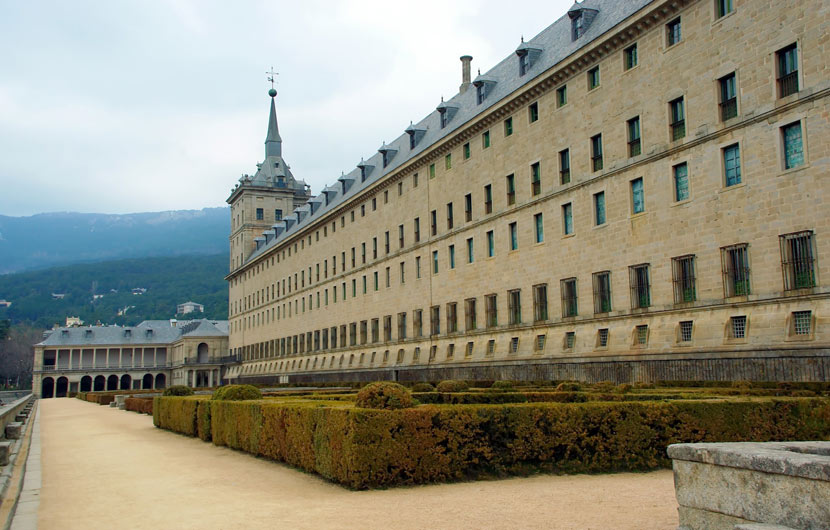
Located just a 50-minute drive north of Madrid lies the incredible Royal Monastery “El Escorial”. The order to build the monastery came from King Philip II to commemorate the victory of the battle of San Quentin in 1557 over France.
The structure took over 20 years to build and, over time, became the burial ground of all the Spanish Monarchs, a tradition that remains today. The scale of the San Lorenzo Monastery can only truly be appreciated when you visit the site.
It is a short train or car ride from Madrid to San Lorenzo. Entrance tickets can be obtained at the main entrance hall or quickly booked online via the official website below. The basic entrance fee is €10 for adults and just €5 for children up to 16 years of age, a price worth paying to see such an impressive historic attraction.
11. Old City of Salamanca

Salamanca is a beautiful and unique city with a rich history and cultural heritage that dates back centuries.
When visiting, you will see a variety of palaces, convents, churches, and squares that exemplify the Spanish Renaissance style.
The city was declared a UNESCO World Heritage Site in 1988 and a European Capital of Culture in recognition of its importance.
Salamanca has a long and important history, dating back to 1254 when Alfonso X of Castile founded the first university in Spain and one of the four oldest in the world. This university has been a cornerstone of the city's development. It has helped to make it an ideal space for cultivating mind and spirit, and a tolerant and open melting pot.
Whether you want to explore its historic heritage or take in the stunning architecture, there is something for everyone in Salamanca.
12. Royal Monastery of Santa María de Guadalupe

Guadalupe is a historic town rich in religious significance and culture. According to legend, a shepherd found a statue of the Virgin of Guadalupe
near the river in the 12th century, and a chapel was built in her honour. Over the centuries, the chapel was converted into the impressive monastery we see today, blending Gothic and Neoclassical styles.
Visitors to Guadalupe can explore the Gothic Church, two stunning cloisters, and the Capilla de la Virgen, an ornate octagonal building with paintings by Italian artist Luca Giordano.
The monastery complex consists of four parts: the temple-basilica, the auditorium, the Mudejar cloister, and the Gothic cloister. The Santa Ana and Portería towers are two of the most impressive towers, and the high altar is a sight to behold, with its wooden altarpiece.
Guadalupe is a fascinating destination for anyone exploring its rich history and culture.
13. Old Town of Segovia and its Aqueduct
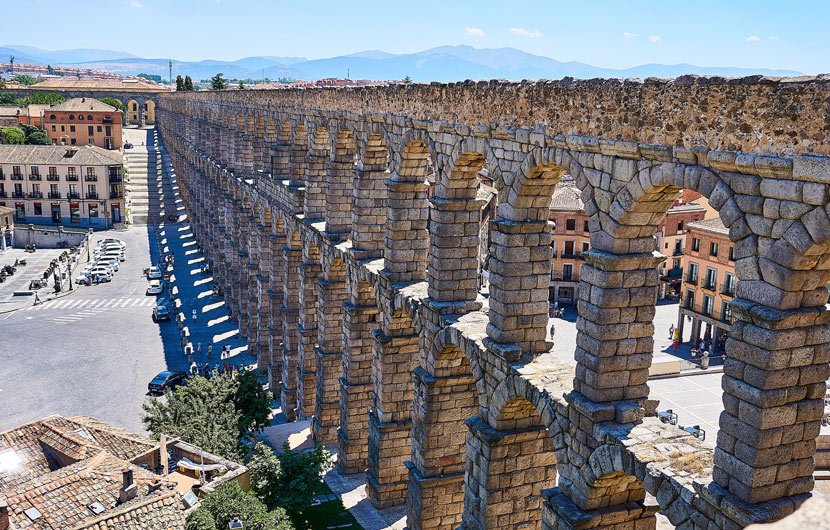
The Aqueduct of Segovia is an impressive Roman-era structure.
Its 28.5-meter-tall arcades, built with solid blocks of stone and carefully fitted together with little or no mortar, are a testament to the engineering skills of the Roman Empire.
The Aqueduct is 14 kilometres of rolling landscape, adjusting to the contours of the valley, hills, and city and is a reminder of the expansion and power of the Roman Empire during the 1st century A.D., and stands today as a monument to its remarkable engineering and aesthetic capabilities. It is an incredible sight and a symbol of the Empire's legacy.
14. Teide National Park

Teide National Park is an incredible example of natural beauty and geological history.
It was inscribed on UNESCO's World Heritage List in 2009 for meeting two key criteria: demonstrating exceptional natural beauty and aesthetic importance and representing major stages of Earth's history.
The park is home to various species and geological features and is an important part of the Canary Islands' history and culture.
Here, you will also find the country's highest mountain, El Teide, one of Tenerife's most impressive natural wonders.
This (still active!) volcano is the centre point of the park and the island itself. It is surrounded by a volcanic landscape with several hiking routes, allowing you to discover the park's unique flora and fauna.
Teide National Park is a remarkable example of the importance of preserving our natural heritage.
15. Poblet Monastery

The Royal Monastery of Santa Maria de Poblet is an incredible example of religious architecture and one of Europe's most significant abbey complexes.
It was founded in 1151 by Ramon Berenguer IV, Count of Barcelona, and ceded to the Cistercian order.
From the end of the 14th century to the 15th century, the monastery served as the royal pantheon of the Crown of Aragon and reached its peak, making it a major cultural centre.
It was declared a UNESCO World Heritage Site in 1991 and consists of three well-defined enclosures intercommunicating through doorways, with the central enclosure constituting the monastery itself.
The buildings date from the 13th to the 15th centuries, and the library was particularly famous.
The monastery of Poblet is a beautiful and valuable monument worth visiting.
16. Renaissance Monumental Ensembles of Ubeda and Baeza

Úbeda and Baeza are two fascinating towns located in the province of Jaén that are truly a sight to behold. With their churches, palaces, and stately homes, it is no wonder they have been designated as a UNESCO World Heritage Site.
The architecture is a testament to the incredible talent of Renaissance-era architect Andrés de Vandelvira, who left an impressive mark on the region.
The beauty of Úbeda's townscape is breathtaking, with its olive groves and carved stone facades.
Plaza de Vázquez de Molina Square has some of the most impressive buildings, such as El Salvador Chapel, Santa María de Los Reales Alcázares Church and Las Cadenas Palace.
Returning in time, visiting these two Renaissance gems that have been poetically referred to as the “queen” and “lady” by the well-known Spanish Author Antonio Machado.
17. Catalan Romanesque Churches of the Vall de Boí

The Vall de Boí and its Romanesque churches are a sight to behold.
The Descent from the Cross at Santa Eulàlia d’Erill la Vall is a great example of Romanesque Catalan art, and the six-storey belfry is a magnificent sight.
The church of Sant Joan de Boí is particularly remarkable for its mural paintings depicting scenes of the stoning of Saint Stephen and other stories.
Other outstanding churches on the trail include Sant Climent de Taull and Santa Maria de Taüll.
No wonder this area was declared a World Heritage Site by UNESCO in 2000.
Anyone who visits the Vall de Boí will be impressed by the unique beauty of the Romanesque churches and find the experience truly unforgettable.
18. Monuments of Oviedo and the Kingdom of the Asturias

The monuments of Oviedo and the Kingdom of the Asturias are fascinating examples of the pre-Romanesque architectural style.
The Gothic cathedral of San Salvador, also known as Oviedo Cathedral, is a stunning example of this style and a significant stop for pilgrims on the way to Santiago de Compostela. It includes a tower, cloisters, and a chapterhouse. Even more impressive is the Cámara Santa, a holy house built in the 9th century and declared a World Heritage Site by UNESCO.
These monuments are an important link to the past and a reminder of the beauty and significance of pre-Romanesque architecture.