


The Seville April Fair is held around two weeks after Easter each year and now draws over a million people.
A large number of visitors come from across Spain and around the world to enjoy one of Spain’s most colourful festivals.
The fair began in 1947 as a cattle fair and, over the years, took on the more typical Spanish festival feel we know today.
Beyond the fun, shows, drinking, partying, and general merriment, the fair has become a true celebration of flamenco dancing. Many of the most famous dancers, composers and singers of this passionate art form come from Seville.
Although the festivities are spread throughout the city, the fair takes place mainly in a specially prepared area near the Guadalquivir River, in a huge temporary city made of hundreds of colourful tents.
The make-shift “marquee tents” are known in Spanish as “Casetas,” and they divide the land into different halls and private areas used for dancing, parties and shows and are filled each evening until the early hours of the following morning.
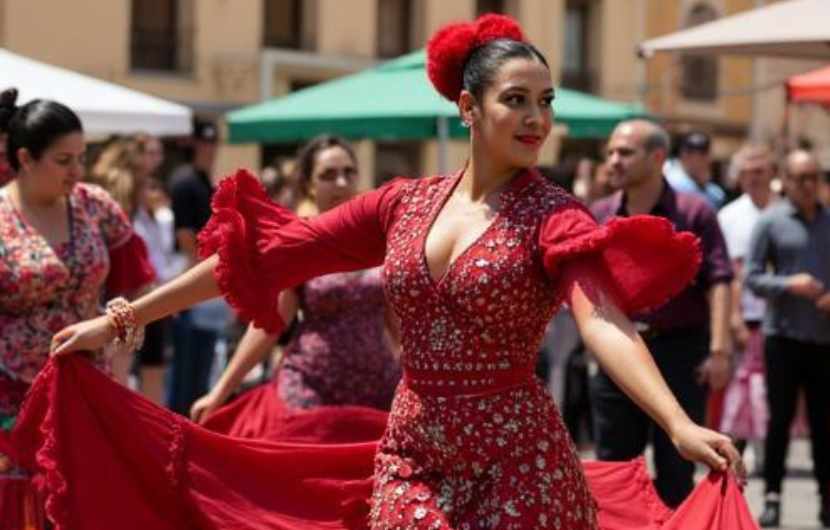
The local ladies, young and old, dress in spectacularly colourful Flamenco dresses and gowns, inspired by Gypsy fashion. Traditional folk music, dressing up in colourful costumes, amazing all-night parties, and much fun are high on the agenda for most locals and visitors.
The Casetas are a focal point of all Andalucian festivals and this one is no different, only on a much larger scale, many are hosted by wealthy families from Seville, politicians, large companies, official city organisations and trade unions. Each one is set up and decorated differently depending on who the host is and many are private and by invitation only.

There are enough public casetas though open for visitors to enjoy the special atmosphere of these colourful marquees which are the central focal point of the non-stop activities during the week's festivities.
If you take the time to learn the basic steps of the famous Sevillanas, a twirling traditional dance from Sevilla, you will enjoy the fair even more as this is performed and danced by the young and old, rich and poor and men and women throughout the week in every corner of the city.

There are spectacular daily parades of hundreds of ornate and flower-decked horse-drawn carriages that run through the city centre to the main fairgrounds. And for the younger ones, the street of hell ( Calle del Infierno ) is a must-visit, albeit a noisy one. The streets are full of attractions, from merry-go-rounds to stomach-churning rides.
The fair has undoubtedly become an important tourism attraction, with visitors now flying in from all over the globe, which fills the myriad of affordable Seville hotels, hostels, restaurants, and tapas bars throughout Seville.
Although its commercial importance is significant for the local economy, the fair has retained its traditional and cultural roots, allowing everyone to fully enjoy the vibrant, friendly Andalucian heritage.