



Spanish food takes you on a journey to a special place full of delightful flavours, colours, and textures that are as diverse as the amazing regions they originate from.
From the bustling streets of Barcelona to the sun-soaked coasts of Andalusia, and the rustic heartlands of Castilla y Leon, Spanish food is as captivating as its history.
Spanning from iconic tapas to hearty stews, fresh seafood to sizzling grilled meats, and sweet delights to fine wines, Spanish cuisine is a true celebration of the senses.
Each dish has often been influenced by centuries of tradition.
Whether you're a seasoned foodie or a curious traveller, this compilation is a gateway to discovering the spectrum of flavours that make Spain's culinary scene a world-renowned treasure.
So, prepare to embark on a delectable journey, one bite at a time, through the many tempting tastes of Spanish food.
Without further ado, here is our list of the top 61 delicious Spanish dishes that you should try.
1. Jamon Iberico

Jamon Iberico, or the coveted "pata negra" cured ham is a masterpiece born from the ancient traditions of the Iberian Peninsula and the undisputed king of Spanish food offerings.
Picture thin, velvety slices of delicious cured ham that practically melt on your tongue, releasing an explosion of flavours that range from nutty to buttery.
The marbled texture, thanks to acorn-fed Iberian pigs, imparts an unrivalled richness that lingers long after each bite.
2. Paella Valenciana
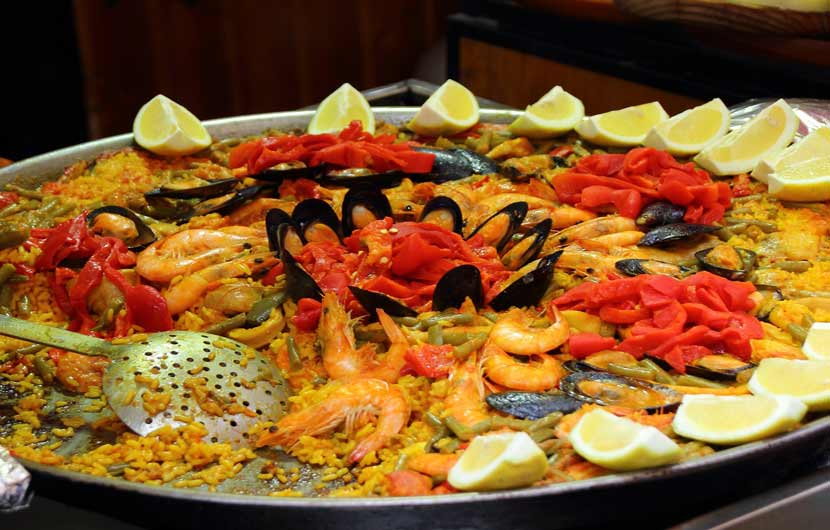
The iconic Paella Valenciana is probably one of the best-known Spanish foods known around the world.
This classic dish originates from the Valencia Region of Eastern Spain and is made of succulent chicken, tender rabbit, fresh vegetables, Spanish Paprika ( Pimenton ) and the finest Bomba short grain rice.
But what really steals the show is the saffron-infused rice, soaking up all the savoury goodness from the broth.
3. Pescaito Frito

Pescaito Frito is a Spanish fried fish sensation!
Fresh fish fillets are coated in a delicate batter and plunged into sizzling hot oil, creating a golden and crunchy exterior that's simply irresistible.
With every bite, you're met with a burst of flavours that transports you to the sunny shores of Southern Spain.
Squeeze a bit of lemon for that zesty kick, and you've got a perfect match made in culinary heaven.
Pescaito Frito is the ultimate beach bar snack food and one of the all-time most popular dishes from the Andalucia region of Spain.
4. Gambas al Ajillo

Gambas al Ajillo is another popular Spanish food dish that's a must-try for seafood lovers!
Juicy plump prawns are sizzled in a heavenly blend of extra virgin olive oil, garlic, and a sprinkle of hot paprika ( pimenton picante ) and chilli flakes for an extra touch of heat.
With each succulent bite, the prawns absorb the rich garlic essence, creating a symphony of taste that dances on your palate.
Pair this dish with a slice of fresh crusty bread to soak up every drop of the savoury sauce.
5. Tortilla Española

Tortilla Española is the iconic Spanish omelette and a staple Spanish food in every household in Spain.
This simple yet delectable dish is a delightful marriage of tender potatoes and eggs, creating a tasty blend of flavours and textures.
Served hot or cold, each slice unveils a golden, satisfying delight. Whether enjoyed as a tapa or as part of a main meal, its clever simplicity speaks volumes.
With just a few humble ingredients, Tortilla Española captures the essence of Spanish cuisine – rustic, comforting, and utterly delicious.
6. Gazpacho

Gazpacho is the Spanish food answer to refreshing soups. This delicious tomato-based soup is blended with peppers, cucumbers, onions, and a good amount of garlic.
A splash of extra virgin olive oil and vinegar elevates its tangy goodness.
Served ice-cold. Gazpacho is the ultimate cool companion on scorching days.
7. Patatas Bravas

Patatas Bravas are deep-fried golden potato chunks drizzled with a hot tomato-based sauce, it's got just the right kick of spice.
Whether you're out with amigos at your local tapas bar or simply craving a solo snack, Patatas Bravas is a favourite among locals and visitors to Spain.
8. Churros

Churros are a true Spanish comfort food captivates taste buds around the world.
These golden-brown, crispy treats are created from a choux dough mixture of flour, water, and salt, piped into hot oil in long, star-shaped forms before being fried to perfection.
Churros are particularly popular in Andalusia where they are mostly eaten for breakfast.
Served piping hot, dusted with sugar, and often accompanied by a rich chocolate sauce for dipping, churros offer a delectable combination of crunchy exteriors and soft interiors.
9. Albondigas

Albondigas, is a classic Spanish dish of savoury balls of meat that have captured the hearts of foodies worldwide.
Made by combining minced meat (usually a mix of beef and pork) with breadcrumbs, eggs, garlic, herbs, and spices, these tasty meatball bites are gently simmered in a rich tomato-based sauce.
With origins dating back centuries, Albondigas has evolved into a beloved comfort food found across Spain and beyond.
10. Croquetas

Croquetas are small, crispy bites consisting of a creamy mixture typically made from ingredients like cooked ham, chicken, or cod, blended with a thick bechamel sauce and seasoned.
The mixture is then shaped, coated in breadcrumbs, and deep-fried until golden brown.
Hailing from various regions across Spain, croquetas have become a staple in Spanish cuisine, popular as tapas.
11. Pulpo a La Gallega

Pulpo a la Gallega, or Galician-style octopus, is a mouthwatering Spanish dish known for its simple yet delightful flavours.
Originating from the Galicia region in northwestern Spain, this dish features tender octopus slices seasoned with paprika, olive oil, and coarse salt.
The octopus is traditionally boiled until tender, then sliced and drizzled with olive oil and sprinkled with paprika.
Served on a wooden plate, Pulpo a la Gallega captures the essence of Galician coastal cuisine, highlighting the ocean's bounty with its tender, flavourful octopus and rustic seasonings.
12. Migas

Migas, a beloved Spanish dish, is a rustic creation that transforms humble ingredients into a simple but tasty dish.
Originating from the Extremadura and Castilla-La Mancha regions, this dish repurposes day-old bread into a hearty meal.
The bread is crumbled and sauteed with ingredients like garlic, chorizo, bacon, and olive oil.
The result is a satisfying medley of flavours and textures, often accompanied by grapes, melon, or fried eggs.
With its origins rooted in rural traditions, migas showcase the resourcefulness of Spanish cuisine, turning basic staples into a delightful culinary experience that embodies the spirit of the countryside community.
13. Bacalao a la Riojana

Bacalao a la Riojana, a renowned Spanish dish, showcases the rich flavours of the La Rioja region.
This traditional recipe features cod fish prepared in a hearty stew with a tomato-based sauce, red peppers, onions, and spicy chorizo sausage.
Originating in the northern part of Spain, Bacalao a la Riojana reflects the area's agricultural heritage and skilful use of local ingredients, creating a delightful blend of tastes that represent the essence of this picturesque region.
14. Callos

Callos, a Spanish delicacy, is a hearty stew known for its unique combination of flavours and textures.
This dish primarily consists of tripe, chorizo sausage, and morcilla (blood sausage), simmered with a medley of vegetables and aromatic spices.
Hailing from the Castilla y Leon region, Callos is particularly popular in Madrid.
This savoury dish is a testament to the rich gastronomic history of Spain and its ability to transform simple ingredients into a culinary masterpiece.
15. Tarta de Santiago
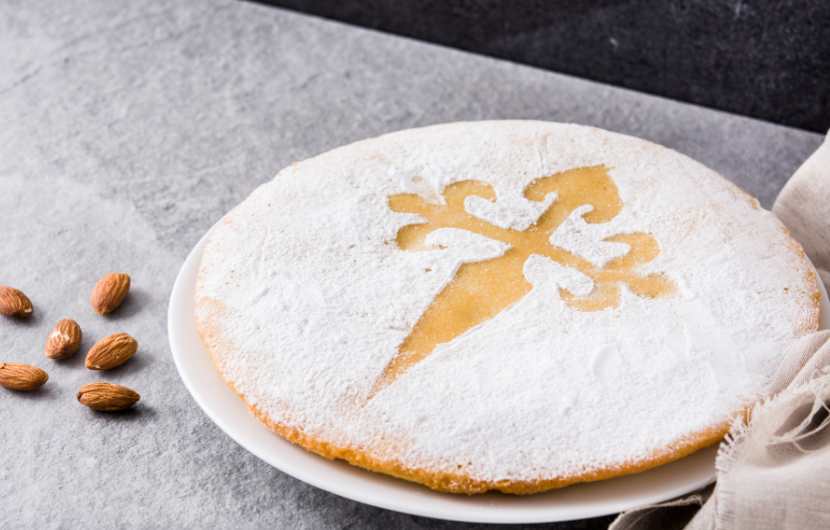
Tarta de Santiago is a renowned Spanish dessert, a delectable almond cake hailing from the Galicia region in northwest Spain.
The cake features a moist almond base, typically adorned with the iconic cross of St. James powdered with sugar.
It originated in the medieval town of Santiago de Compostela, a significant pilgrimage site for centuries.
The cake's main ingredients include ground almonds, eggs, sugar, and lemon zest.
Tarta de Santiago pays homage to Galicia's rich culinary heritage and is a sweet symbol of the region's history and traditions.
16. Manchego Cheese

Manchego Cheese is a beloved Spanish delicacy hailing from the La Mancha region, known for its vast plains and iconic windmills.
Crafted from the milk of Manchega sheep, this cheese boasts a distinct crisscross pattern on its rind, reflecting the moulds used during production.
Its taste varies, with young Manchego offering a mild, nutty flavour, while aged varieties develop deeper complexities and sharpness.
With a rich history dating back to ancient times, Manchego Cheese is a culinary gem often enjoyed alongside quince paste and quality red wine.
17. Pimientos de Padron
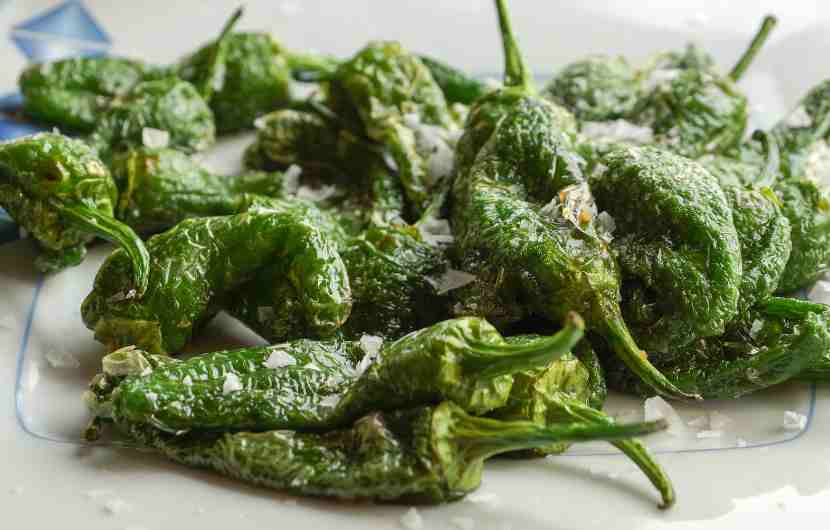
Pimientos de Padron are small green peppers known for their surprise factor.
Popular in Galicia, these peppers are typically mild in flavour, but every now and then, you'll encounter a spicy one that adds a playful twist to the dish.
They're often fried until blistered and sprinkled with sea salt, making them a delicious tapa.
Originating in the town of Padron in Galicia, these peppers have become a beloved tradition in Spanish cuisine.
18. Tapas

Tapas hold a very special place within the Spanish culinary tradition.
Consisting of small, flavourful dishes that are perfect for sharing with friends at the local tapas bar.
Originating in the Andalusian region of Spain, These bite-sized delights can range from simple olives and cheese to more elaborate dishes like patatas bravas, croquetas, and grilled seafood.
The social ritual of enjoying tapas with friends and family is common across Spain, where bars and restaurants offer an array of these delectable creations.
19. Salmorejo

Salmorejo is a creamy and refreshing cold soup originating from the Andalusian region of Spain.
A close relative of gazpacho, it's a blend of tomatoes, bread, olive oil, garlic, and vinegar, resulting in a rich and velvety texture.
Hailing from the city of Cordoba, salmorejo is a popular dish during the hot summer months.
It's often garnished with hard-boiled eggs and jamon serrano.
20. Arroz Con Leche
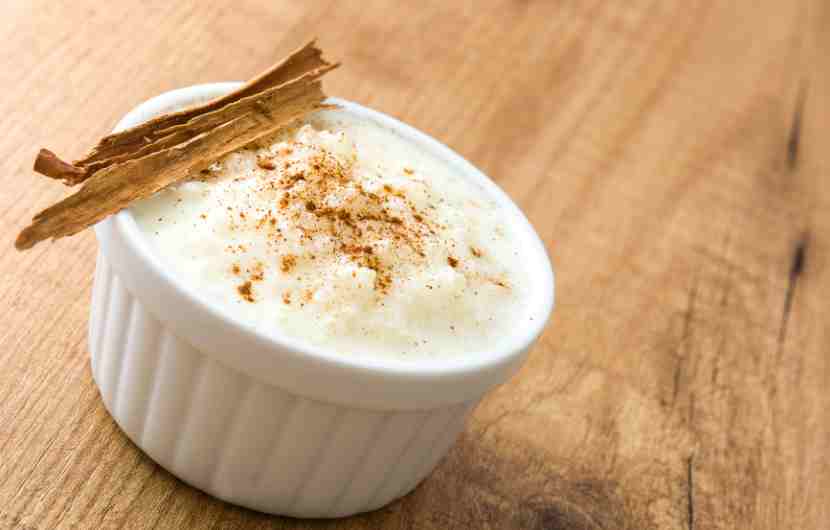
Arroz con Leche is a classic Spanish dessert beloved for its comforting simplicity.
Hailing from the northern regions like Asturias and Galicia, this dish translates to "rice with milk."
The dessert features rice cooked in milk, infused with aromatic cinnamon and lemon zest. It's sweetened with sugar and simmered until the rice becomes tender and creamy.
Popular throughout Spain, Arroz con Leche reflects the country's penchant for turning humble ingredients into indulgent treats.
21. Pintxos

Pintxos are a culinary delight originating from the Basque Country in northern Spain.
These bite-sized delights are similar to tapas but uniquely served on small pieces of bread, often held together with a toothpick or skewer.
Popular toppings range from cured ham and cheese to seafood, olives, and even marinated vegetables.
Pintxos are an integral part of Basque culture, often enjoyed as a social activity at bars and taverns.
Their varied and creative combinations make them a highlight of Spanish cuisine, enticing locals and visitors alike to explore the vibrant flavours of the region.
22. Magdalenas

Magdalenas are traditional Spanish muffin-like cakes, known for their fluffy texture and slightly sweet flavour.
They are a beloved treat often enjoyed for breakfast or as a snack with coffee or tea.
Made from simple ingredients like flour, sugar, eggs, and baking powder, these cakes are typically baked in distinctive scallop-shaped molds.
Magdalenas are popular throughout Spain, but they have a strong association with the region of Asturias.
These delightful pastries hold a special place in Spanish households, offering a taste of comfort and nostalgia.
23. Rabo de Toro

Rabo de Toro, or "Bull's Tail," is a hearty Spanish dish renowned for its rich and tender meaty sauce.
Originating in Andalusia, particularly in the city of Cordoba, this dish utilises oxtail slow-cooked to perfection.
The meat is marinated with wine, herbs, and spices, then braised until it becomes incredibly tender then served with a rich sauce made from its own cooking juices, vegetables, and wine.
This dish is a speciality found in many traditional Andalusian restaurants, showcasing the region's love for robust and comforting flavours.
24. Fideua

Fideua is a delightful Spanish dish that shares similarities with paella but uses short, thin pasta instead of rice.
Originating in the coastal region of Valencia, it has become a beloved staple of Spanish cuisine.
Cooked in a similar style to paella, Fideua features a variety of ingredients such as seafood, meats, and vegetables, all simmered together in a tasty broth infused with saffron and paprika.
The pasta soaks up the delicious juices, creating a delightful mix of tastes and textures.
25. Pisto

Pisto is a traditional Spanish dish known for its simplicity and rich flavours.
Originating in the region of Castilla La Mancha, it is now eaten throughout Spain.
Pisto is essentially a vegetable stew made from sauteed tomatoes, bell peppers, onions, and courgettes, all simmered together to create a harmonious blend of flavours.
Often enjoyed as a main course or side dish, it can be customised with ingredients like eggs, ham, or chorizo.
26. Gambas a la Plancha

Gambas a la Plancha, meaning "grilled prawns" in Spanish, is a mouthwatering seafood dish celebrated for its simplicity and natural flavours.
Originating in coastal regions like Andalusia, it's a popular choice in Spain's culinary scene.
Fresh prawns are grilled on a hot iron plate or griddle often drizzled with olive oil and seasoned lightly with salt. This preparation method ensures the shrimp's succulent texture is preserved, allowing their natural sweetness to shine through.
27. Crema Catalana

Crema Catalana is a popular Spanish dessert hailing from Catalonia, particularly associated with Barcelona.
Resembling creme brulee, it's a creamy custard dessert infused with lemon or cinnamon zest and vanilla.
The key distinction lies in the caramelised sugar topping, traditionally achieved by using a red-hot iron rod.
The result is a delightful contrast between the silky custard and the crisp layer of burnt sugar.
With its origins tracing back to the 18th century, Crema Catalana is a beloved treat served during festivals like Saint Joseph's Day, celebrating the culinary heritage of Catalonia.
28. Pan Con Tomate

Pan con Tomate, or Bread with tomato, is a simple yet incredibly tasty Spanish dish.
Originating from Catalonia, it has become a staple throughout Spain. It consists of toasted bread rubbed with ripe tomatoes, garlic, olive oil, and a pinch of salt.
The result is a harmonious blend of textures and flavours – the crispy bread with the juicy tomatoes and the aromatic garlic.
Often enjoyed as a tapa, Pan con Tomate is often served with Jamon Serrano.
29. Bocadillos

Bocadillos are a quintessential Spanish sandwich, loved for their convenience and diverse fillings.
These sandwiches are typically made by placing various ingredients between a crusty baguette or bread roll.
The fillings can range from cured ham, cheese, chorizo, tortilla, or any combination of savoury delights.
Popular across Spain, bocadillos are enjoyed as a quick snack, lunch, or even as a light dinner.
Bocadillos embody the essence of Spanish street food culture, offering a tasty and satisfying on-the-go treat.
30. Montaditos
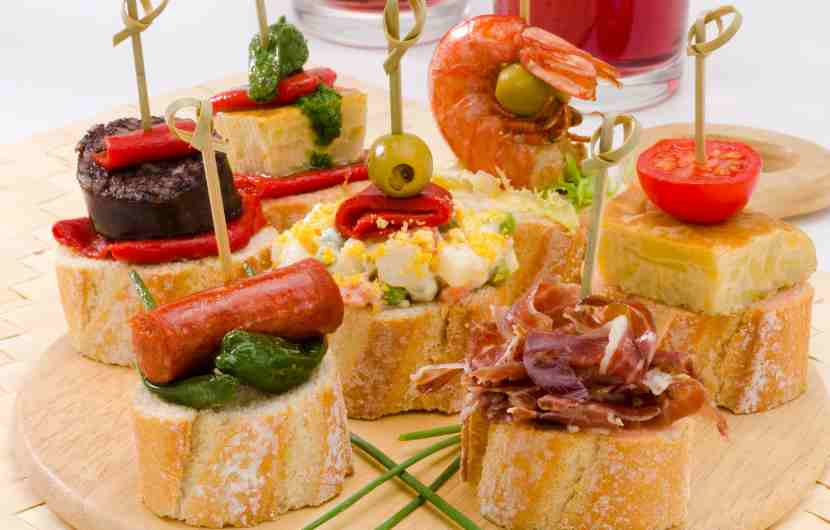
Montaditos are small, traditional Spanish open-top small sandwiches.
The term "montadito" derives from the verb "montar," meaning "to mount" or "to assemble," which describes the construction of these bite-sized delights.
Originating from Andalusia in southern Spain, montaditos have become popular throughout the country and beyond.
These miniature sandwiches are typically made with a slice of baguette-style bread and can be topped with a variety of ingredients, ranging from Spanish ham (jamon), chorizo, and cheese to seafood, vegetables, and even sweet fillings.
31. Mejillones Rellenos

Mejillones Rellenos, commonly known as "Tigres" in Spain, are stuffed mussels, a delectable tapa that showcases the country's love for seafood.
Originating from the northern regions, especially the Basque Country and Asturias, this dish has become popular throughout Spain.
The mussels are steamed open, and their juicy flesh is mixed with a spicy bechamel sauce, often combined with other ingredients like green peppers and onions.
This mixture is then packed back into the mussel shells, breaded, and deep-fried to perfection.
Crispy on the outside and creamy on the inside, Mejillones Rellenos are a gastronomic delight that captures the essence of coastal Spanish cuisine.
32. Empanada a la Gallega
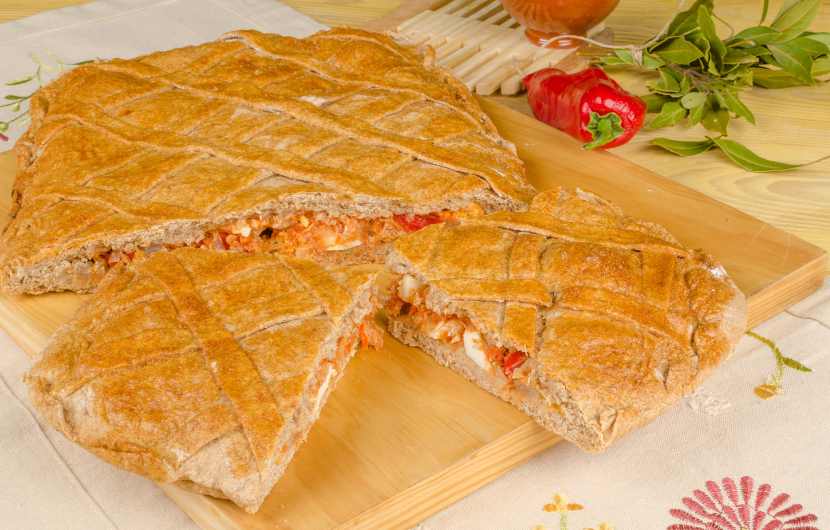
Empanada a La Gallega is a traditional savoury pie hailing from the Galicia region in northwestern Spain.
Unlike the smaller, crescent-shaped empanadas found in Latin America, the Galician version is typically larger and round or rectangular.
The dough is made from wheat flour and is filled with various ingredients, the most traditional being tuna, sardines, or pork, combined with peppers, onions, and seasonings.
The filling is encased in the dough, baked until golden, and then sliced into portions.
33. Caracoles

Caracoles, or snails in English, are a traditional delicacy in various parts of Spain.
Particularly popular in regions like Andalusia, Catalonia, and Murcia, caracoles are typically stewed in a spiced broth made with ingredients like garlic, tomato, chorizo, and various aromatic herbs.
Depending on the region, the preparation and flavours can vary. In some areas, they are enjoyed in a spicy sauce, while in others, a more herby-style broth is preferred.
34. Mariscada
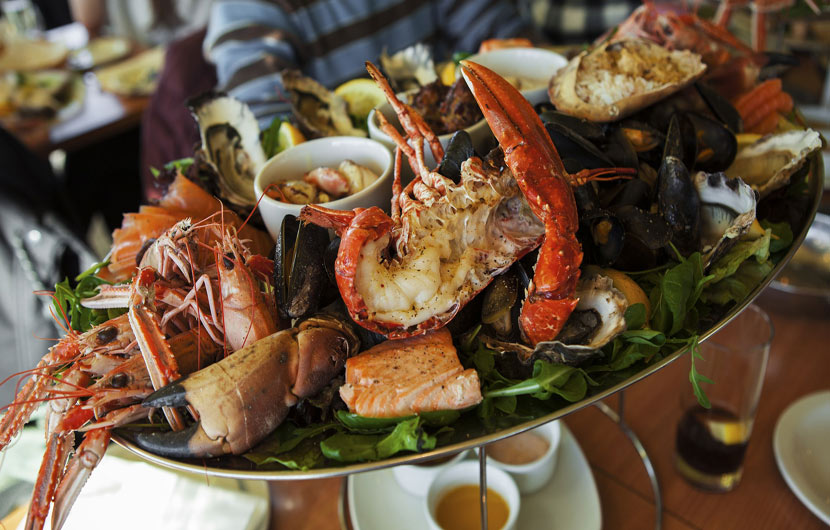
Mariscada is a sumptuous seafood feast that epitomises Spain's coastal culinary prowess.
Predominantly popular in the northern regions like Galicia and Asturias, a mariscada brings together an assortment of the freshest marine delicacies.
This platter can include langoustines, clams, mussels, crabs, and other shellfish, typically steamed or grilled to retain their natural flavours.
Often, it's accompanied by a light sauce or a squeeze of lemon.
Mariscada not only celebrates the abundant seafood offerings of Spain's extensive coastline but also the communal nature of Spanish dining.
35. Chorizo

Chorizo is a distinctive Spanish sausage known for its deep red colour and smoky, spicy flavour.
Made primarily from coarsely chopped pork and seasoned with garlic, pimenton (smoked paprika), and salt, its bold taste has made it a staple in Spanish cuisine.
While popular throughout Spain, and well known around the world, each region boasts its own variation, with differences in spiciness and preparation techniques.
Chorizo can be consumed fresh, fried, or simmered, but it's also commonly dried and cured, allowing it to be sliced and eaten like salami.
36. Cochinillo Asado

Cochinillo Asado is Spain's renowned roasted suckling pig, celebrated for its tender meat and crispy skin.
Hailing from the city of Segovia in the Castilla y Leon region, this dish is a testament to the culinary traditions of central Spain.
The young piglets, fed solely on their mother's milk, are seasoned simply with salt and sometimes herbs, ensuring the natural flavours shine through.
Slow-roasted in wood-fired ovens, the result is succulent meat with a perfectly crisped exterior. Cochinillo Asado is often reserved for special occasions and gatherings, and its presence signifies a grand culinary celebration in the Spanish heartland.
37. Pinchitos Morunos

Pinchitos, often known as "pinchos morunos," are skewered and grilled meat delicacies inspired by Spain's Moorish past.
Predominantly popular in the southern region of Andalusia, these skewers traditionally feature marinated lamb or chicken.
The marinade is a fragrant blend of spices like cumin, garlic, paprika, and sometimes saffron, echoing the flavours introduced by the Moors during their rule.
Once marinated, the meat is threaded onto skewers and grilled to perfection.
Served hot, often with a slice of bread or salad, pinchitos are a common sight in Spanish ferias (festivals) and tapas bars, offering a welcoming bite-sized spicey taste
38. Fabada Asturiana

Fabada Asturiana is a hearty bean stew that's emblematic of the Asturias region in northern Spain.
Centered around large white beans known as "fabes," this dish is complemented with a rich mix of meats, including chorizo, morcilla (blood sausage), and bacon.
The beans are slow-cooked with these meats, garlic, and sometimes saffron, resulting in a flavourful, comforting stew.
Fabada has its roots in Asturian rural tradition, serving as a filling meal to sustain farmers and workers.
Today, it's celebrated throughout Spain and beyond, symbolising the rich, rustic flavours of Asturian cuisine.
39. Zarajos

Zarajos are a unique delicacy originating from the province of Cuenca in the Castilla-La Mancha region of Spain.
This dish consists of lamb intestines, which are thoroughly cleaned, marinated in a mixture of garlic, vinegar, and spices, then wrapped around a grapevine shoot or a wooden stick in a spiral manner and grilled or fried.
When cooked, they achieve a crispy texture on the outside with a tender inside.
Zarajos might seem exotic to many but they're a prized treat in Cuenca, representing the city's tradition of utilising all parts of the animal to create tasty rustic dishes.
40. Chopitos

Chopitos are small, baby squid that are often lightly battered and deep-fried to crispy perfection.
commonly found in coastal regions of Spain, especially in tapas bars of Andalusia and Valencia, these bite-sized delights are a popular seafood snack.
When fried, their tender flesh contrasts beautifully with the crunchy exterior, making them irresistibly moreish.
Typically served with a slice of lemon and occasionally a light drizzle of aioli, chopitos celebrate the simplicity and freshness of Spanish coastal cuisine.
41. Boquerones Fritos

Boquerones Fritos are fried fresh anchovies, a beloved treat in Spain's coastal regions.
Cleaned, lightly floured or battered, and then fried in hot olive oil, these small fish become irresistibly crispy and golden.
Predominantly popular along the Mediterranean coast, especially in Andalusia and Malaga, Boquerones Fritos are often enjoyed as tapas, accompanied by a cold drink.
The simplicity of the dish highlights the anchovy's natural flavour.
Served with a wedge of lemon for a zesty kick, these fried anchovies encapsulate the essence of Spanish seaside dining, with traditions that date back to ancient fishing communities.
42. Mero a la Plancha

Mero a la Plancha translates to "grilled grouper," a simple yet tasty dish that emphasizes the freshness of the fish.
Grouper, known for its mild, sweet flavour and firm texture, is seasoned lightly, typically with salt, garlic, and olive oil, and then grilled on a flat iron plate or griddle.
Predominantly eaten in Spain's coastal regions, especially in areas bordering the Mediterranean and Atlantic, this dish champions the essence of Mediterranean cuisine.
43. Botifarra Sausage

Botifarra is a traditional Catalan sausage, deeply rooted in the culinary heritage of Catalonia.
Made primarily from finely minced pork, it is seasoned with salt, black pepper, and sometimes other spices and herbs, depending on the variant.
There are many types of Botifarra, including raw, cooked, and blood sausage.
While it can be eaten grilled or fried, it's also commonly used in regional dishes like "Botifarra amb mongetes," where it's paired with white beans.
Originating from ancient Roman times, Botifarra has been a staple in Catalan cuisine, representing the flavours and traditions of the region.
44. Torrijas

Torrijas are Spain's answer to French toast, a beloved treat especially popular during the Holy Week (Semana Santa) celebrations.
Made from slices of stale bread soaked in milk or wine, they're then dipped in egg, fried in olive oil or butter, and often sweetened with sugar and cinnamon or honey.
The result is a deliciously soft center with a crispy exterior.
Torrijas are a comforting dessert or breakfast, they capture the essence of Spanish traditional sweets.
45. Ensaimada

Ensaimada is a delicate, spiral-shaped pastry hailing from the Balearic Islands, especially Majorca.
Characterised by its airy layers and dusting of powdered sugar, its main ingredients are flour, water, sugar, eggs, and pork lard, which gives it its distinctive flakiness and name ("saim" means lard in Catalan).
Ensaimada can be enjoyed plain or filled with various ingredients, like custard, chocolate, or sweet pumpkin strands.
Its origins are believed to date back to Roman times, but the Moors' influence is also evident.
A symbol of Mallorcan identity, Ensaimada has become a sought-after treat beyond the Balearic Islands.
46. Caldereta de Langosta

Caldereta de Langosta is a sumptuous lobster stew, a culinary gem from the Balearic Islands, especially Menorca.
This dish showcases the fresh, vibrant flavours of the Mediterranean, combining lobster with ingredients like tomatoes, onions, peppers, and garlic, all simmered in a rich broth often flavoured with a dash of brandy or white wine.
Historically a fishermen's meal, Caldereta de Langosta has evolved into a delicacy enjoyed by locals and visitors alike.
47. San Sebastian Cheesecake
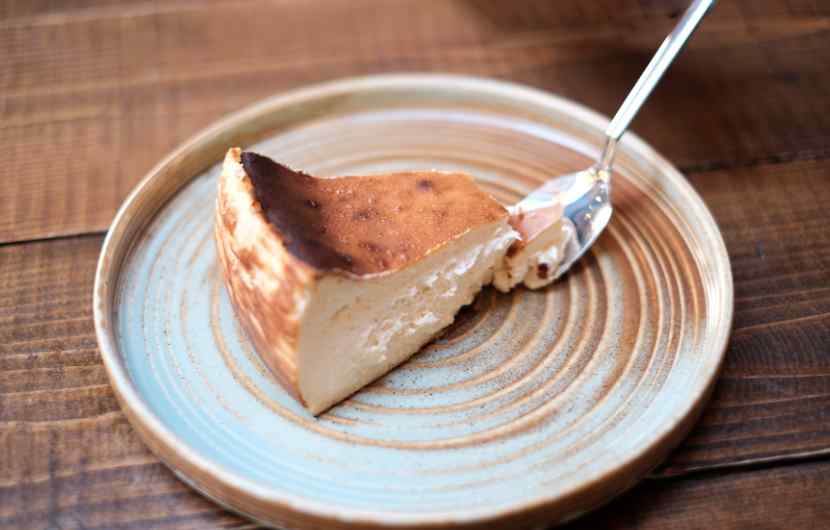
San Sebastian Cheesecake, also known as "La Viña Cheesecake," is a delectably creamy and rustic dessert originating from La Viña, a restaurant in the city of San Sebastian.
Differing from traditional cheesecakes, its unique burnt top and jiggly center are its signatures.
Made with minimal ingredients such as cream cheese, sugar, eggs, heavy cream, and flour, its simplicity is its strength.
The rich, creamy filling contrasts beautifully with the slightly bitter caramelised crust, offering a melt-in-the-mouth experience.
48. Chuleton de Tenera

Txuleta de Tenera is a renowned Basque steak, a culinary highlight of Spain's Basque Country.
The term "Txuleta" refers to the bone-in rib steak or chop, typically sourced from mature, grass-fed cows.
This beef cut is celebrated for its deep flavour and marbled fat.
Seasoned with just salt, it's grilled over open flames, achieving a charred exterior while preserving a tender, juicy inside.
Served in traditional "asadores" (steakhouses) and "sidrerías" (cider houses) throughout the region, Txuleta embodies the Basque people's passion for quality ingredients and simplistic yet masterful cooking techniques.
49. Bunuelos de Bacalao

Bunuelos de Bacalao is savoury cod fritters, a delightful combination of flaked codfish, flour, eggs, parsley, and sometimes garlic or onion.
They're mixed into a thick batter, shaped into small portions, and then deep-fried to golden perfection.
These tasty fritters are especially popular throughout the Iberian Peninsula.
Traditionally associated with Lent, Bunuelos de Bacalao have become a year-round treat, often enjoyed as tapas with a squeeze of lemon or aioli.
50. Xato
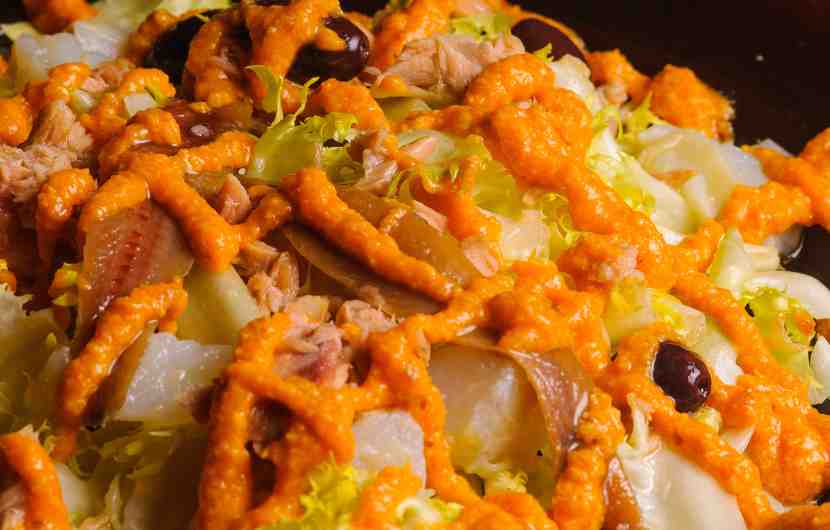
Xato is a traditional Catalan salad, most popular in the coastal regions of Catalonia, especially around Sitges and Vilanova i la Geltru.
The dish combines endive lettuce, desalted cod, tuna, anchovies, and arbequina olives.
But what truly defines Xato is its namesake sauce, made from roasted almonds, hazelnuts, stale bread, ripe tomatoes, garlic, vinegar, olive oil, and peppers.
The ingredients are ground into a rich, nutty paste which is drizzled over the salad.
Its origins are debated, with some attributing it to regional festivals, while others connect it to historic trading routes.
51. Sobrasada

Sobrassada is a spreadable sausage native to the Balearic Islands, particularly Mallorca.
Recognised by its vibrant red colour, it's primarily made from ground pork, paprika, and other spices, then cured for several weeks.
The paprika not only provides its distinct hue but also acts as a preservative. The result is a soft, spicy, and tasty delicacy that can be spread on bread, added to dishes, or even enjoyed on its own.
Sobrassada reflects the agricultural and culinary traditions of the Balearics, being an integral part of their gastronomic identity.
52. Sardines
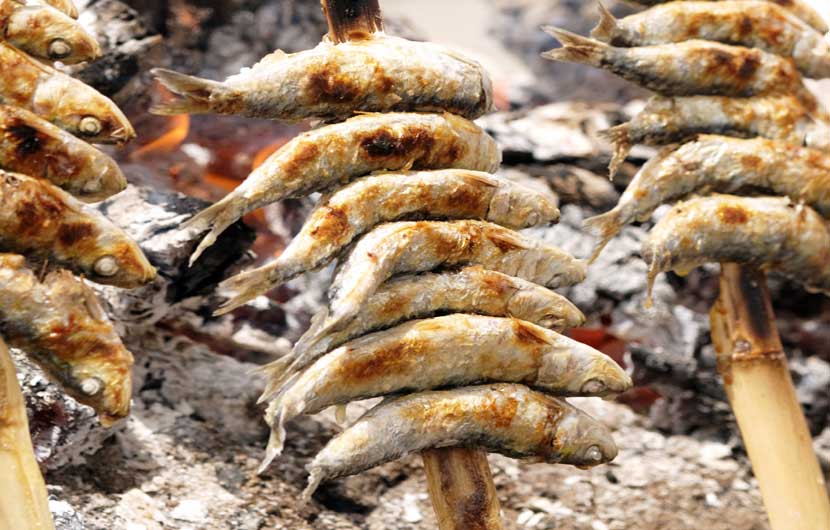
Sardinas, or sardines, are small, oily fish that play a significant role in Mediterranean cuisine.
Especially popular in coastal regions of Spain, these fish are often grilled, fried, or preserved in oil or vinegar.
During the summer, "sardinas al espeto" (sardines skewered and grilled over open fires) is a beloved tradition along the Andalusian coast.
Rich in omega-3 fatty acids, sardines are not only delicious but also nutritious.
53. Orejas de Cerdo
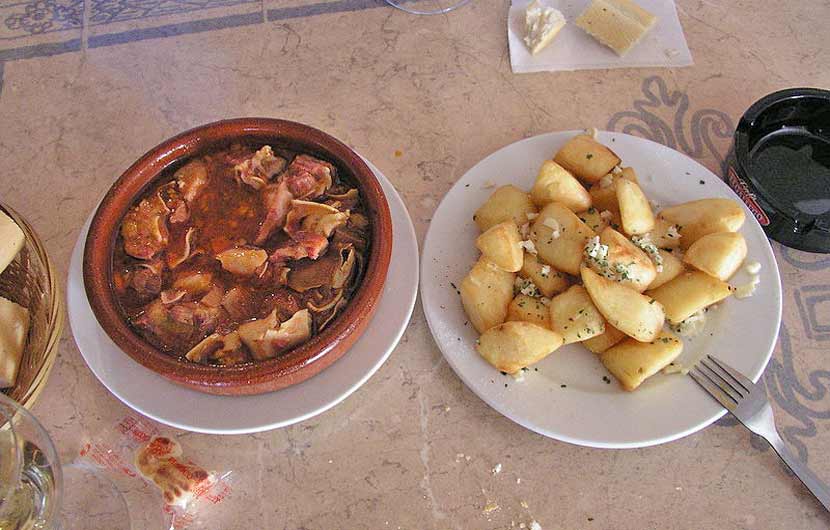
Pigs Ears in Sauce, often termed "orejas de cerdo en salsa," is a dish revered in various parts of Spain, particularly in regions with a strong emphasis on nose-to-tail eating.
As the name suggests, it features pig's ears that have been cleaned, boiled, and then stewed in a tasty sauce made from ingredients such as garlic, onion, paprika, tomatoes, and sometimes spicy peppers.
The ears, having both cartilage and skin, achieve a gelatinous and unique texture.
Over time, this dish has become an appreciated delicacy for its rich taste and texture.
54. Almejas

Almejas, the Spanish term for clams, are a highly valued ingredient in many coastal regions of Spain.
Particularly loved in the north, especially in Galicia and Asturias, and the southern coastlines of Andalusia, these bivalves are typically prepared in a minimalist fashion to highlight their fresh, briny flavour.
One popular preparation is "almejas a la marinera," where clams are simmered in a sauce of white wine, garlic, onion, parsley, and sometimes tomato.
55. Calamar Frito

Calamar Frito, or fried squid, is a beloved delicacy across Spain's coastal regions, particularly in Andalusia.
These are typically rings of squid coated in a light batter and then deep-fried until golden and crispy.
The result is a tender interior encased in a crunchy shell, often served with a squeeze of lemon and occasionally a side of aioli or marinara sauce.
Whether enjoyed as tapas in bustling bars or as main dishes in seaside restaurants, Calamar Frito epitomises the essence of Spanish seafood cuisine.
56. Spanish Olives

Aceitunas, the Spanish word for olives, are an intrinsic part of Spain's culinary and cultural fabric.
Grown extensively across the country, from Andalusia's sun-kissed groves to Catalonia's fertile landscapes, these fruits are consumed both as table olives and pressed for their precious oil.
Varieties range from the small, green "Manzanilla" to the larger, black "Hojiblanca."
Historically, the Iberian Peninsula has been cultivating olives since Phoenician and Roman times.
Whether marinated with herbs and garlic, stuffed with anchovies or peppers, or simply enjoyed on their own, aceitunas represent Spain's age-old love affair with the olive tree and its cherished fruit.
57. Percedes
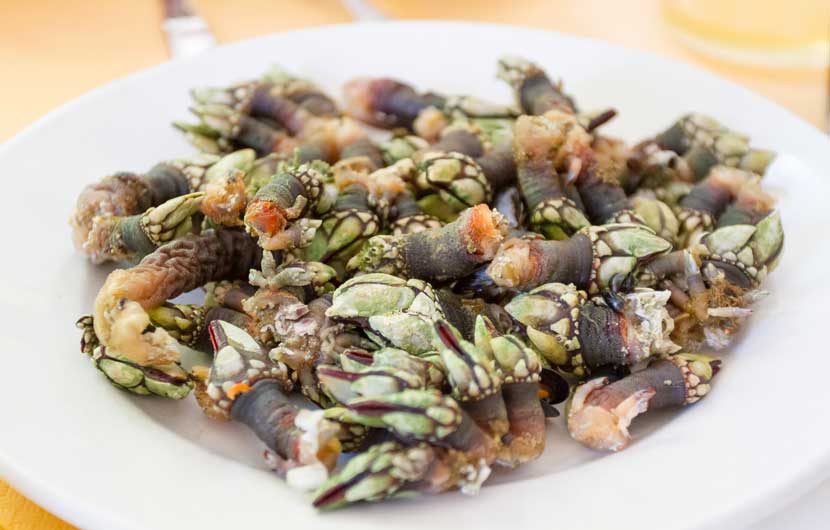
Percebes, known as goose barnacles in English, are a marine delicacy highly prized in the northern regions of Spain, especially Galicia.
These crustaceans, resembling dinosaur claws, cling to rocks in intertidal zones, making their harvest dangerous but lucrative.
Consumed fresh, percebes are typically boiled briefly in salted water, releasing a briny, tender flesh that captures the essence of the sea.
Their unique taste is a blend of lobster and crab with a seaweed undertone.
Originating from the rugged, wave-battered coasts of the Atlantic, percebes have become a symbol of Galician gastronomy.
58. Bocadillo de Calamares
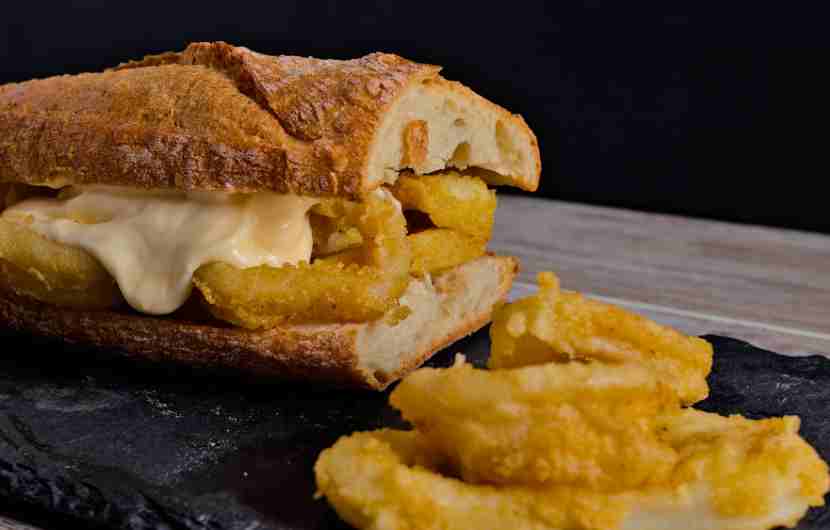
Bocadillo de Calamares is a quintessential Madrid snack, comprising of a crusty bread roll filled with deep-fried squid rings.
Despite Madrid's landlocked location, this sandwich has become a symbol of the city's vibrant culinary scene.
The tender squid rings, coated in a light batter, are fried to crispy perfection and often accompanied by a dab of aioli or a squeeze of lemon.
Found predominantly in Madrid's bustling bars, it exemplifies the city's unique gastronomic identity.
59. Cachopo

Cachopo is a dish that originating from the Asturias region in northern Spain.
It consists of two large veal or beef steaks sandwiching a filling of ham and cheese, then breaded and deep-fried to a golden finish.
The result is a crispy exterior with a molten center, often served alongside fries, peppers, or salad.
Its resemblance to the Wiener Schnitzel hints at potential culinary influences, but Cachopo is uniquely Asturian in its preparation and taste.
Over time, variations have emerged with different fillings, but the traditional ham and cheese combination remains a favourite.
60. Navajas

Navajas, or razor clams, are elongated, thin-shelled molluscs loved for their tender and flavourful meat.
Found along Spain's coastline, they're particularly esteemed in Galicia and the northwest regions.
Often simply prepared to maintain their natural brininess, a popular method is grilling them with a drizzle of olive oil and a sprinkle of parsley and garlic.
Alternatively, they can be steamed with white wine and seasonings.
The name "navaja" draws from their resemblance to a straight razor.
61. Morcilla

Morcilla is Spain's version of blood sausage, a rich and tasty delicacy appreciated across various regions.
While its preparation differs slightly depending on the region, common ingredients include pork blood, rice or breadcrumbs, onions, and spices.
In Burgos, the sausage prominently features rice, while in Leon, onions are dominant. Asturias and Extremadura also have their distinct variations.
Morcilla was created in part as a way to utilise every part of the pig, minimising waste.
It is highly versatile and can be eaten cold, grilled, fried, or incorporated into stews such as "fabada."