


1. Goose Barnacles (Percebes)
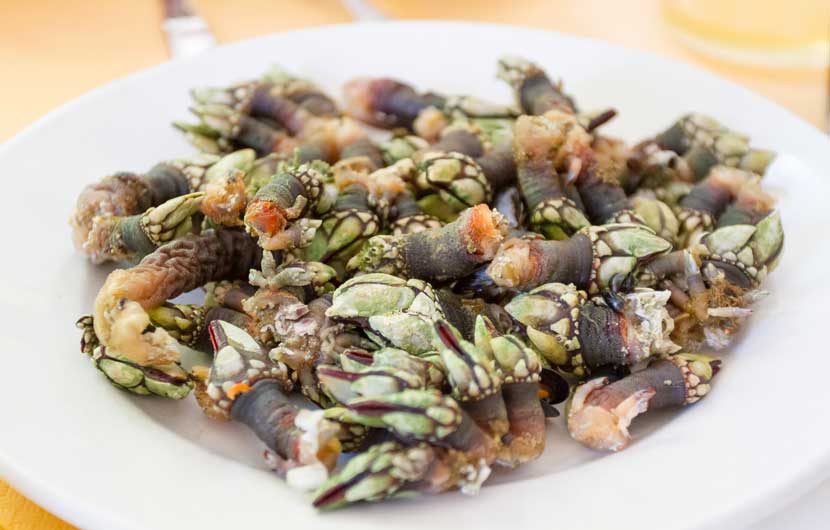
Percebes, aka goose barnacles in English, are a delicacy in Spain. And quite an expensive dish. However, if you’re willing to ‘shell out’ for these crustaceans, it’s worth it.
They can be quite expensive, but it is not surprising when you know how they are harvested. Fishermen risk their lives climbing down steep cliffs battered by high waves to find and harvest them; this makes it an incredibly dangerous task.
The taste of Percebes is so intense that most chefs simply boil them in seawater for a few minutes without any seasoning. Once cooked, twist the barnacle apart and then suck out the orangey-brown flesh within.
It tastes like a combination of fresh sea, crab, shrimp, and oysters. Why not make up your mind and let us know?
2. Pig’s Ears (Orejas de Cerdo)
The Spanish don’t just cook with pig’s blood – they also love to eat pig’s ears!
They’re an acquired taste, so if you’re an experimental eater, you should love these pan-fried snacks. The taste is unmistakably pork-like; most people flavour them with salt and paprika.
The texture is what many people find challenging; you’re effectively chomping on the cartilage (this is the grisly material your ears are made from).
The cartilage is sandwiched between two layers of fat, and the skin on top may still have hairs, so make sure you’re feeling confident.
3. Toasted Breadcrumbs (Migas)

Admittedly, breadcrumbs are a fairly common staple, but they've served as a tasty starter or snack in Spain for decades.
Stale bread is crumbled, soaked with oil, seasoned, and gently roasted. They’re traditionally eaten with garlic, oil, pepper and grapes, but you can make a more substantial meal by adding a fried egg or some tasty chorizo.
4. Octopus (Pulpo)

This innocent-sounding dish is actually cooked octopus tentacles; if you love seafood, you’ll find this rubbery, salty dish rather moreish.
Galicia is the best place in Spain to feast on octopus; ‘pulperias’ are the most common kind of restaurant.
Chefs boil the octopuses whole and then snip their tentacles into bite-size medallions. A liberal dollop of olive oil, salt and paprika is added and served with fresh bread (and hopefully wine).
The meat is great – it’s tender, moist and a little bit like a mix between chicken and calamari. If you don’t like the oily consistency of boiled octopus, look out for pulpo a la brasa ( cooked over an open fire ), which is a grilled dish. It’s got all of the flavour without the stomach-churning gooeyness.
5. Tripe (Callos)

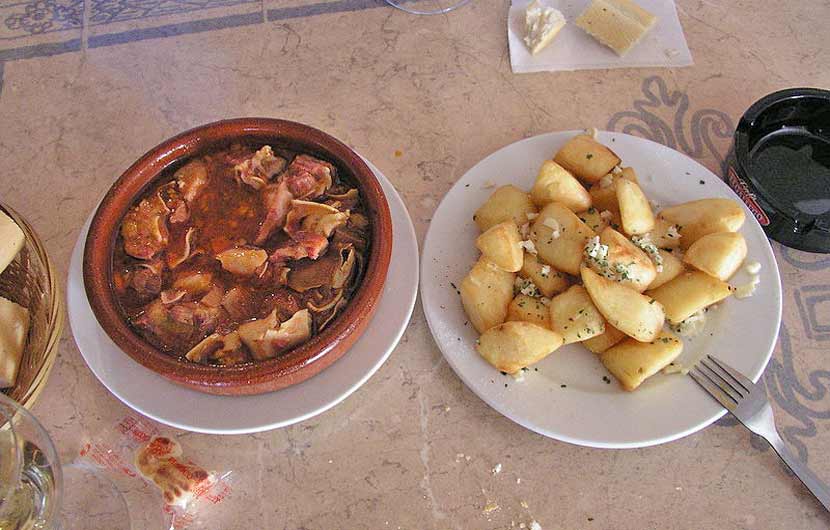
Callos is a hearty, warming stew, made with veal tripe. Before you insist it’s not for you, bear in mind that this is a hugely popular dish, and the meat is cooked to perfection in a tomato and chickpea sauce.
It’s typically thought to be a dish that came from Madrid, but you can find it in bars and restaurants all over the country.
The locals love this inexpensive dish – despite its simplicity, it’s still well-respected and hugely popular. If you’d like to try it in Madrid, it’s worth asking around to see where the best Callos is served.
6. Sweet Grilled Onions (Catalan Calcot's)

Love onions? Make sure that you give calçots a try. They taste milder than onions, but the way that you eat them is a little showier.
They’re grilled over a fire and wrapped in newspaper, then dipped into an accompanying romesco sauce.
The sauce-covered onion is then held up in the air before you lower it slowly into your mouth, comer bien!
7. Black Rice Paella

Although it may seem strange to look at, black rice paella is simply delicious.
Black rice paella gets its distinct colour by adding squid ink. It comes loaded with authentic Mediterranean flavours and is easy to make, total time of around 45 minutes.
The next time you're visiting the Spanish Mediterranean coast and want to try this tasty rice dish, look for a good quality seafood restaurant that makes the dish fresh while you wait.