

Asturias
The Holy Cave of Covadonga

In the Picos de Europa mountains, there is a quaint and unique Christian sanctuary. This small church sits above a waterfall and is tucked within a spectacular natural cave.
Historians believe the cave was a site of prehistoric pagan worship before it became a Christian refuge.
According to tradition, the cave was where Pelagius of Asturias, founder of the Kingdom of Asturias, found a statue of the Virgin Mary.
On your way to the church, you will pass through a tunnel carved out of the mountain. Two large lions sculpted in Carrara marble guide you to the entrance of the sanctuary.
Aside from the cave though, this is part of the larger Covadonga Sanctuary, home to many sites well worth visiting including the Basilica, the San Fernando Religious College, the Companona Bell, The "Married Fountain", Princes Park and the King Pelayo Monument.
The Sanctuary is located about a 1 hour and 15-minute drive east of the city of Oviedo.
If you want to avoid crowds, it may be best not to visit the Holy Cave of Covadonga during mass. Leave yourself at least one whole day to visit the Sanctuary as there is so much to see.
Indianos Houses
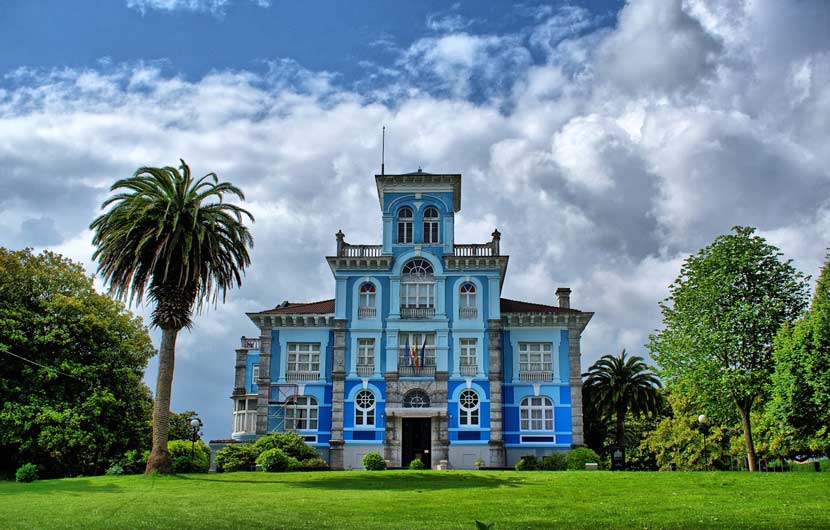
In the 19th century, many Spaniards made their fortune in Mexico, Cuba, and Argentina, upon returning to Spain, some of them built ostentatious mansions to show off their newfound wealth.
The Indianos houses are named as such because the Spanish used to refer to the New World as “Las Indias.”
Traveling through Asturias and Galicia you will come across many of them, many of them now long abandoned.
Most of them were built in modernist or neoclassical designs, they are easily recognisable with their ornate facades and colourful stained-glass windows.
Even though many are now looking worse for wear, they are still fascinating to look at. If you want to ponder the briefly happy history of these decaying buildings, be sure to visit the town of Llanes.
The Cubes of Memory

The Spanish coastline is dotted with many gorgeous beaches, so you may have a hard time believing that the shoreline of Llanes has something special to offer, but indeed it does. Looking like a giant’s playpen, the shoreline of Llanes is astonishing for unexpected reasons.
Llanes is located west of Bilbao and is a typical northern coastal town with a nice little port and home to medieval battlements, a Gothic church and the modernist Llanes Casino building.
The giant cement-cubed blocks strewn across the Llaniscan coast give it an otherworldly beauty.
This masterpiece, known as “Los Cubos de la Memoria,” is one of the most impressive works of public art.
Agustín Ibarrola, the creator of this beautiful work, painted the cubes in such a way that the edges, images, and colours mix to create new forms. The shapes and colours are constantly changing with the water and the light.
The Cudillero Lanes

The quaint fishing village of Cudillero lies on the northwest coast of Spain. Everything about this small village is enchanting. Even the simple activity of watching the fishing boats come will mesmerize you.
Cudillero is famous for its deep-rooted fishing tradition. The seafood here is always delivered fresh from the harbour. So it comes as no surprise that the village is one of the best places to sample all Asturian specialities.
If you want to try various Asturian dishes in a friendly atmosphere, and at reasonable prices, chances are you will like Casa Julio. Serving fresh fish and seafood it is one of the most popular family-run restaurants in the town. I had some of the best tuna I have eaten anywhere in Spain, simply cooked and seasoned, very tasty.
Of all the attractions in Cudillero, the cascading houses stand out the most. Exploring the zigzagging laneways between these white-washed houses is one of the most interesting things to do in Asturias.
Cider Houses
Spain is the second-largest cider market in Europe. Spaniards love traditional cider, especially the one that comes from Asturias. The region produces some of the best cider in the world.
Asturians make an ancient Spanish style of cider, called sidra, and they are quite particular about how they do it. Instead of buying a bottle of Asturian cider at the supermarket, head to one of the many cider houses and farms in Asturia.
There, you can learn how to pour and drink cider in a traditional manner. The Sidra El Gaitero and Sidra Crespo are excellent choices. You can also visit Cider Street in Oviedo, Calle Gascona, to get a taste of the delicious tipple.
Galicia
Cape Tourinan
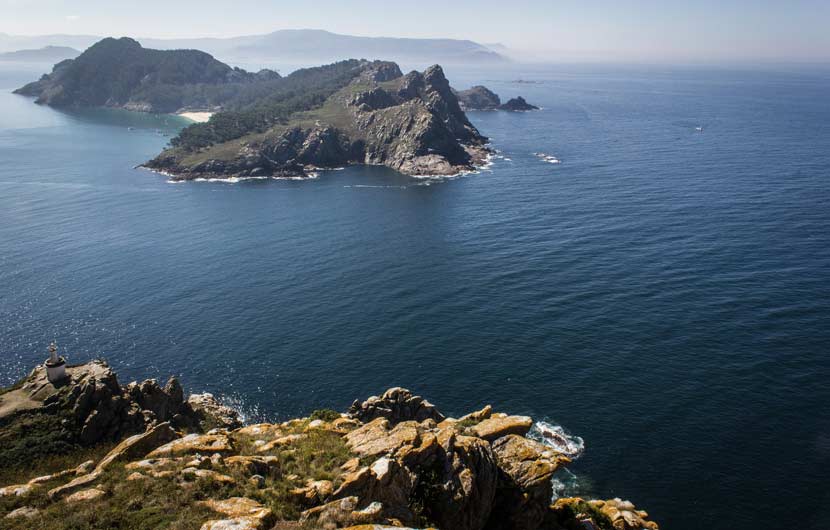
Cape Tourinan is the most westerly point of the Iberian Peninsula and a great place to explore the rugged and wildly beautiful coastline of Galicia.
Twice a year, Cape Tourinan is the place where you can see the last sunset in Europe. If you want to enjoy spectacular views away from the rivers of tourists.
As the waters here are treacherous, the cape is adorned with a small and lonely lighthouse, hike here and you are rewarded with a privileged view out over the Atlantic Ocean. The imposing sandbank that goes into the ocean is also a sight to behold.
The Way of Saint James

The Way of Saint James, locally known as Camino de Santiago, is not your usual tourist activity. The Camino is a network of ancient pilgrimage routes leading to the shrine of Saint James, which lies in the heart of Galicia.
The Camino de Santiago is one of the best ways to explore the hidden gems of Galicia, Asturias, and Cantabria. But If you are not up for a big adventure, you can cut it short and start your pilgrimage in Galicia.
The Camino allows you to see a different side of Spain, one that is not only hidden from international tourists but most Spaniards as well. This is one of the main reasons the pilgrimage is popular among people from all walks of life and not just Christians.
The unique vibe of the trail, gorgeous villages, the special menus offered to the pilgrims, and the system of pilgrim hostels (Albergues) are just some of the reasons to walk the Camino.
The Santiago de Compostela Cathedral, where the relics of Saint James are, has a few hidden gems of its own. On special occasions, a giant thurible ( a metal censer suspended from chains, in which incense is burned during worship services ) swings from the ceiling, dispensing clouds of incense.
Between the edge of the clock tower and the Royal Doors, a trick of the light casts a shadow in the shape of a hunched pilgrim. Wearing a broad-brimmed hat and carrying a staff, this medieval religious pilgrim returns every night.
Betanzos Town

Heading away from the busier city of Santiago there are plenty of small fishing villages to visit, one of those is the historic town of Betanzos. This beautifully preserved inland town has plenty going for it.
Rebecca, a travel writer at Rough Draft says "With its dazzling white balconies, elegant manor houses, and medieval architecture, Betanzos’ Old Town is one of Spain’s finest. Its cobbled streets and squares are perfect for a leisurely stroll since the traffic in the historic town center is very limited".
Betanzos is home to the best Spanish Omelet in the country (but do know that they insist on leaving out the onions). Each place has its own style, so be sure to sample this Galician speciality in a few different restaurants. But, if you have to settle for one eatery, go with Meson O Pote.
Cantabria
Comillas

The picturesque little seaside village of Comillas is special for a few reasons. It is home to the brilliant El Capricho building. It is one of the very few Gaudi masterpieces that are located outside Catalonia.
Inspired by Japanese, Persian, and Indian architecture, El Capricho is full of personality and distinguished style. The colourful minaret is the most representative part of El Capricho.
Comillas is home to a few other important Art Nouveau buildings as well, including the Pontifical University, the Pantheon, and the Sobrellano Palace Chapel.
And while it’s not an architectural marvel, the town cemetery that overlooks the sea is a beautiful sight. The quirky mansions, colourful facades, the Placa del Corro square, and the urban beach also add to Comillas’ appeal.
If you plan on going to Comillas, be sure to visit the Altamira Cave as well. Located about 20 km from Comillas, the Cave of Altamira is home to magnificent prehistoric engravings and paintings.
Comillas also offers one-of-a-kind accommodation. Just outside the village, you can find the La Posada Torre del Milano. It is a boutique hotel decorated with turn-of-the-century furniture. On top of 14 old-fashioned rooms, it has a lovely book-filled salon and a nice restaurant.
Centro Botin

The sparkling, other-worldly creation of Centro Botin juts out above the bay of Santander. It is a contemporary creation by Renzo Piano, an illustrious Italian architect.
With its two cube-like wings, divine waterfront location, and reflective ceramic exterior, this futuristic museum is a combination of a creative learning centre, private art gallery, and an architectural jewel.
Centro Botín is the home of the permanent collection of the Fundación Botín. It includes works by established international artists such as Jannis Kounellis, Joan Jonas, Tacita Dean, and Martin Creed.
In the building, you will also find a contemporary Cantabrian restaurant, called El Muelle. Jesus Sánchez, a two-Michelin-starred chef, runs the place. The rooftop terrace of Centro Botín offers beautiful views across the bay.