


December Festivals in Spain

In Spain, December is truly magical, brimming with holiday cheer and vibrant festivities. This month is jam-packed with customary celebrations, parades, and events highlighting the nation's rich culture and history as Christmas approaches. December in Spain has something for everyone, from exuberant street parties to historic religious ceremonies.
One of the most popular events during December is the Feast of the Immaculate Conception, celebrated on December 8th. Processions, parades, and special masses throughout the country mark this religious holiday. Another important event is the Feast of Saint Lucy, which takes place on December 13th and is celebrated with traditional sweets and pastries.
Of course, the highlight of December in Spain is the Christmas season, marked by colourful lights, lively markets, and an array of cultural events. The streets are decorated, and people gather to enjoy music, dance, and delicious food. The Three Kings Parade, held on January 5th, is a particularly special event, where thousands of people take to the streets to celebrate the arrival of the Magi with parades and fireworks.
We explore the various festivals and fiestas during December in Spain, highlighting the unique traditions, customs, and celebrations that make this month special. From the famous Caga Tio in Catalonia to the unique Christmas traditions in the Basque Country, we will take a closer look at Spain's rich and diverse cultural heritage during this festive season.
Popular December Festivals & Fiestas

Christmas Day: This is a festive day that takes place on December 25th in Spain. It celebrates the birth of Jesus Christ and is one of the most important days of the year for Christians. The day is a national holiday and many people spend it with their family and friends. The day usually involves exchanging gifts, eating traditional food such as turkey, lamb and seafood, and singing carols. The day also coincides with other celebrations such as the Migas Festival in Torrox, a gastronomic festival that features a dish made of breadcrumbs.
Feast of the Immaculate Conception: This religious festival takes place on December 8th in Spain. It celebrates the belief that Mary, the mother of Jesus, was conceived without original sin. The day is a national holiday; many people attend mass and other religious ceremonies. The day also coincides with other celebrations, such as the Fira de Santa Llúcia in Barcelona, a Christmas market that dates back to 1786.
Spanish lottery El Gordo: The biggest lottery draw on December 22nd. One of the oldest and biggest lotteries in the world, it is a part of the Spanish Christmas custom. Millions of viewers and listeners tune in to watch and listen to the draw live as it is broadcast on television and radio. Thousands of winning tickets are split up into rewards, with El Gordo being the ultimate award (The Fat One). Children from a nearby school also sing the winning numbers during the draw.
Spanish New Year's Eve is the ritual good time celebration evening on December 31st. It signals the end of one year and the start of another. All-night parties, live music events, dancing, and fireworks mark the evening. One of the most well-known customs is to eat a grape for every chime of the clock at midnight to bring luck for the upcoming year. The Puerta del Sol in Madrid, Plaza del Ayuntamiento in Valencia, and Plaza de Catalunya in Barcelona are a few of the most well-known locations to spend New Year's Eve.
The Song of the Sibyl: This musical performance takes place on Christmas Eve in Mallorca, in the Balearic Islands. It is a medieval chant that tells the prophecy of the end of the world and the coming of Christ. The performance is staged in every church on the island and involves a soloist dressed in a white robe and a sword, accompanied by a choir and an organ. The performance is a UNESCO Intangible Cultural Heritage.
Día de Los Santos Inocentes: This is a humorous festival on December 28th in Spain. It is similar to April Fool's Day and involves playing practical jokes on unsuspecting people. The jokes are usually harmless and funny, such as sticking paper dolls on people's backs or making fake news stories. The festival also involves different events such as parades, competitions and shows.
Gospel Festival Madrid: This music festival takes place from December 1st to 23rd in Madrid, the capital city of Spain. It features American gospel music and brings joy and spirit to the Christmas season. The festival includes concerts by renowned gospel artists and groups from different styles and backgrounds. It also includes workshops, exhibitions, and talks.
Winter Solstice Bonfires: This is a folkloric festival on December 21st in Robledo de Chavela, in the province of Madrid. It celebrates the winter solstice, the shortest day and longest night of the year. The festival features bonfires, music, dancing and gastronomy. The bonfires are lit to symbolise the rebirth of the sun and the hope for a new year.
On New Year's Eve, a fun run known as Saint Silvestre Vallecana takes place in Madrid, the Spanish capital. One of the oldest and most well-known races in Spain, it draws thousands of runners from around the globe. The 10 km race runs from Plaza de Los Sagrados Corazones to Vallecas Stadium. There is always a great atmosphere, along with music, entertainment, and awards ceremonies.
Nativity Scenes At Christmas
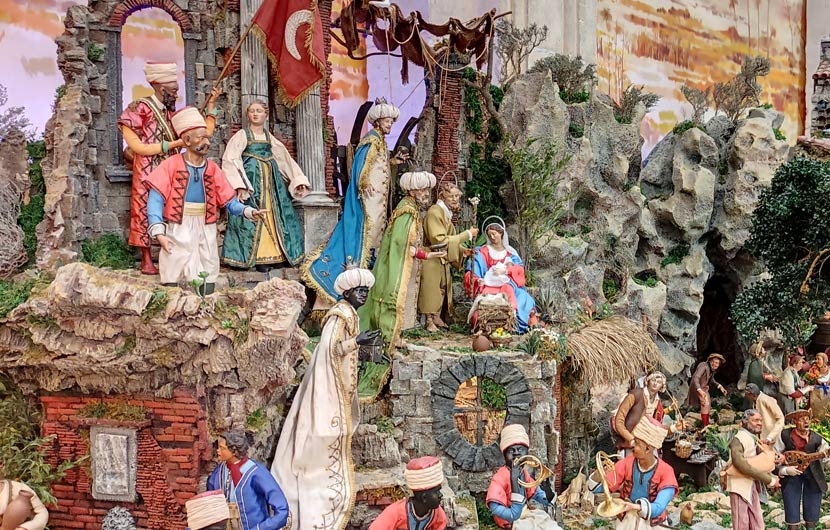
Creating a nativity scene ( Belen ) is an integral part of the Christmas festivities in Spain.
You will find these nativity scenes all around Spain in all shapes and sizes. Some are made from just a few pieces, and others are incredibly elaborate
Check the local tourism office; they will inform you where to find the best local Belen. Many will be displayed and open to the public; most offer free entrance.
Dia de Navidad – Christmas Day
Christmas Day, Dia de Navidad, is when families get together and enjoy a relaxing day of fun and food.
Gifts are not traditionally given out on Christmas Day in Spain, which is reserved for Kings Day on the 6th of January, although it is pretty normal to hand out a few presents to the children on the 24th and 25th.
For most Spanish people, Christmas Eve is the big event. This is where families get together to enjoy lots of traditional Christmas food, such as fish and seafood and a range of cakes and pastries.
The most popular Christmas sweets include Turron, Mantecados, Polverones, Alfajores, Roscos de Vino and Hojaldrinas.
» Christmas in Spain - What you need to know
Migas Festival Torrox Andalucia
The Migas festival Torrox is dedicated to a local dish made of breadcrumbs.
Fira de Santa Lucia Christmas Market Barcelona
The Fira de Santa Lucia market is a great place to pick up a Christmas bargain. It runs from the end of November to the 23rd of December.
Stallholders set up an open-air market around the streets at the Cathedral in Barcelona.
People visit the market to buy Christmas decorations, trees, handicrafts, and other trinkets.
Dia de Los Santos Inocentes
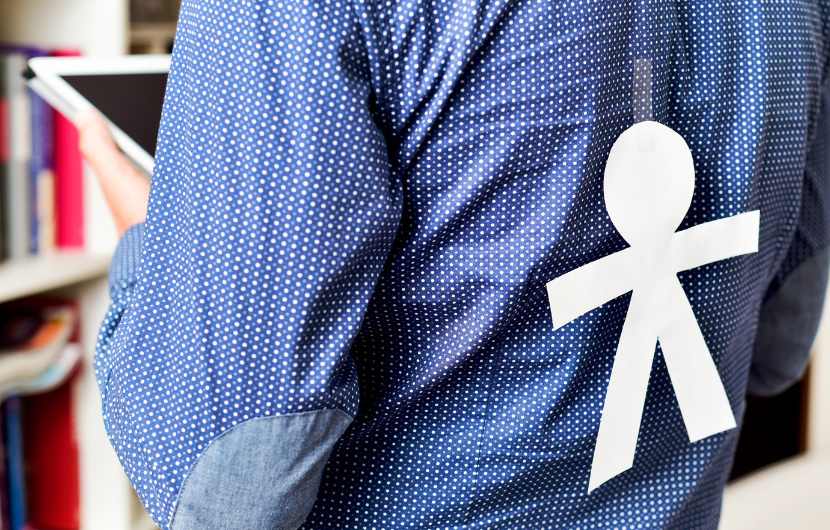
This one is similar to April Fools’ Day and is again a cherished part of Spain's fiestas during December. People use it as an excuse to do some really “silly” stuff.