


Airports in Spain
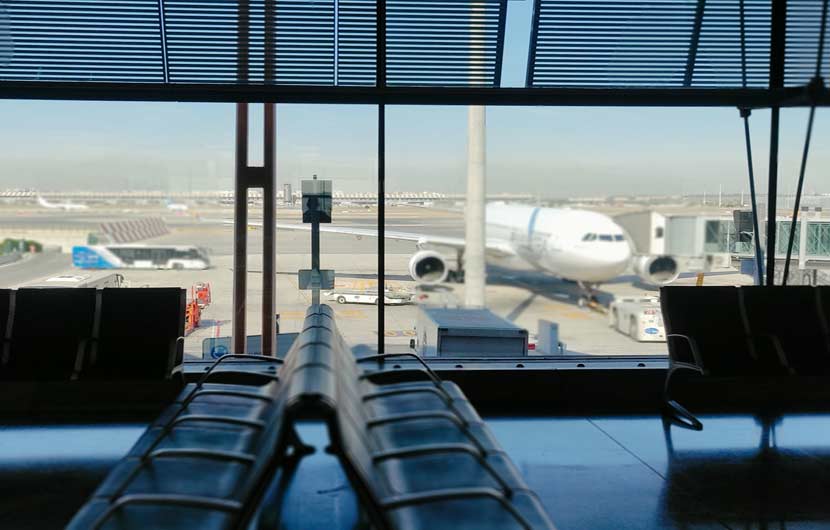
Most airports in Spain are in excellent condition with modern installations and facilities.
Traffic has been steadily increasing since the strict COVID-19 measures were lifted. The Spanish Airport Authority ( Aena ) is ranked among the top four providers of air navigation in Europe and has stakes in London's Luton and Orlando-Sanford airports.
The busiest airport in Spain was Madrid’s Adolfo Suarez Airport ( previously Barajas ), which processed around 68 million passengers in 2025.
The Busiest Airports in Spain in 2025
| Airport | Passengers Processed in 2025 |
|---|---|
| 1. Adolfo Suárez Madrid–Barajas (MAD) | 68,179,054 |
| 2. Barcelona–El Prat Josep Tarradellas (BCN) | 57,483,036 |
| 3. Palma de Mallorca (PMI) | 33,806,427 |
| 4. Málaga–Costa del Sol (AGP) | 26,760,549 |
| 5. Alicante–Elche Miguel Hernández (ALC) | 19,950,394 |
| 6. Gran Canaria (LPA) | 15,826,553 |
| 7. Tenerife Sur (TFS) | 13,969,678 |
| 8. Valencia (VLC) | 11,847,527 |
| 9. Sevilla (SVQ) | 8,573,742 |
| 10. Ibiza (IBZ) | 8,150,000 |
| 11. César Manrique–Lanzarote (ACE) | 7,900,000 |
| 12. Tenerife Norte – Ciudad de La Laguna (TFN) | 6,300,000 |
| 13. Bilbao (BIO) | 6,200,000 |
| 14. Fuerteventura (FUE) | 6,000,000 |
| 15. Menorca (MAH) | 3,900,000 |
| 16. Asturias (OVD) | 1,700,000 |
| 17. La Palma (SPC) | 1,600,000 |
| 18. Girona–Costa Brava (GRO) | 1,400,000 |
| 19. Reus (REU) | 1,300,000 |
| 20. Murcia–Corvera (RMU) | 1,200,000 |
| 21. Vigo (VGO) | 1,100,000 |
| 22. Santander (SDR) | 1,100,000 |
| 23. Jerez (XRY) | 1,000,000 |
| 24. A Coruña (LCG) | 1,000,000 |
| 25. Granada–Jaén (GRX) | 900,000 |
The International Code for all Airports in Spain

- Alicante Airport ALC
- Almeria Airport (LEI)
- Asturias Airport (OVD)
- Barcelona Airport (BCN)
- Bilbao Airport (BIO)
- Burgos (RGS)
- Ceuta (JCU)
- Cordoba (OBD)
- El Hierro (VDE)
- FuerteventuraAirport (FUE)
- Girona Airport (GRO)
- Granada Airport (GRX)
- Gran Canaria Airport (LPA)
- Ibiza Airport (IBZ)
- Jerez Airport (XRY)
- La Coruna Airport (LCG)
- Lanzarote Airport (ACE)
- La Gomera (GMZ)
- La Palma Airport (SPC)
- Leon (LEN)
- Madrid Airport (MAD)
- Malaga Airport (AGP)
- Melilla (MLN)
- Menorca Airport (MAH)
- Murcia Corvera Airport (RMU)
- Palma de Mallorca (PMI)
- Pamplona (PNA)
- Reus Airport (REU)
- Santander Airport (SDR)
- Santiago Airport (SCQ)
- Seville Airport (SVQ)
- Son Bonnet (LESB)
- Tenerife Reina Sofia Airport (TFS)
- Tenerife North Airport (TFN)
- Tenerife South Airport (TCI)
- Valencia Airport (VLC)
- Valladolid Airport (VLL)
- Vigo Airport (VGO)
- Vitoria Airport (VIT)
- Zaragoza Airport (ZAZ)
Major airlines flying into Spanish Airports

The national airline of Spain is Iberia, with major airlines from around the world flying in and out of Spain daily. The top budget airlines continue to increase their market share. The leading pioneers of budget flights to Spain include Easyjet, Ryanair and Vueling.
Telephone numbers for all major airlines based in Spain.
Iberia – Tel. 901 111 500
Air Berlin. Tel. 902 333 335
Air Lingus – Tel. 902 502 737
Air Europe – Tel. 902 401 501
British Airways – Tel. 902 111 333
Easy Jet – Tel. 902 599 900
Lufthansa – Tel. 902 883 882
Qatar Airways. Tel. 917 699 770
Ryanair – Tel. 00 44 871 2460011
United Airlines. Tel. 900 961 266
Vueling. Tel. 807 300 720
US Airways. Tel. 901 117 073
Wizz Air. Tel. 807 444 041
Emirates. Tel. 912 757 792
Alitalia. Tel. 902 100 323
American Airlines. Tel. 902 115 570
Spanish airport security
The EU flight security regulations must always be adhered to when flying from an EU airport. The regulations refer specifically to:
-
You are not allowed to carry items on your person when passing through security checkpoints at airports.
-
The items you are not allowed to carry, even in your checked luggage, onto an aeroplane.
-
You will be subject to security controls before boarding your flight.
Security Boarding
The national Spanish security forces and privately contracted security companies ensure passenger safety at all Spanish airports. The security forces include the national police, civil guard, regional police and local municipal police.
All passengers are required to follow the following procedures and rules when it comes to boarding an aircraft.
- All passengers accessing boarding areas must pass through a security control point metal detector and pass their hand baggage and any other objects they may carry through X-ray screening equipment.
- In line with European Union regulations, extra safety measures are in place at all Spanish airports to reinforce the safety of passengers and flights without affecting the overall quality of service. These measures include inspecting 100% of checked-in luggage and random manual inspections of passengers and hand luggage.
- European Commission Regulation laws lay down measures for implementing the common basic standards on aviation security, list the prohibited articles passengers may not carry into security-restricted areas or the cabin of an aircraft, and those not allowed in checked-in baggage destined for the aircraft hold.
Checking In
Passengers may also be subjected to random manual inspections by officials at the security check-in area.
– All passengers will be asked to show their boarding passes before the security checkpoint.
– To help objects pass through the scanner, especially small items, they must be placed on the trays provided for passengers.
Passengers are required to:
- Remove coats/jackets and/or overcoats, and place them in the provided trays. These items must be examined separately whilst passengers are being inspected.
- Place laptop computers or any other large electrical items out of their cases and place them in the tray to be inspected separately from the cases and the rest of their hand luggage at the security checkpoints.
- Passengers should also remove their belts and other objects from their pockets before passing through the metal detector arch.
Passengers who, for health reasons, have implants (pacemakers, cochlear implants, etc.) or appliances such as metal prosthetics must inform security personnel of their situation before going through the metal detectors so they can be manually inspected.
» Current Covid-19Travel Requirements
» New ETIAS Visa Waiver System
Most Popular Airports in Spain Used By Visiting Tourists
Of the approximately 50 airports currently operating in Spain, a handful handle most of the arriving tourism passengers daily.

Madrid–Barajas Airport Traveller Guide (MAD)
Spain’s busiest airport, handling 68+ million passengers in 2025, is one of Europe’s major international hubs. It sits 12 km northeast of central Madrid and operates four passenger terminals. Sources: AENA official airport guide, Secret Flying airport overview, AENA retail directory
1. Terminal Overview
Terminal 1 (T1)
- Handles a mix of international and Schengen flights.
- Used by many SkyTeam and Star Alliance carriers, plus low‑cost airlines.
- Connected to T2 via walkway.
- Facilities: duty‑free, restaurants, cafés, fashion stores, and lounges.
Terminal 2 (T2)
- Mainly Schengen flights.
- Primary base for Air Europa's short‑haul.
- Direct walkway to T1 and adjacent to T3.
- Good selection of shops, cafés, and services.
Terminal 3 (T3)
- Small terminal used for regional flights and overflow.
- Physically connected to T2.
Terminal 4 (T4)
- Award‑winning, modern terminal — home of Iberia and the oneworld alliance.
- Houses check‑in, arrivals, and many Schengen gates.
- Known for its spacious design and excellent signage.
Terminal 4S (Satellite)
- Connected to T4 by an Automated People Mover (APM) train.
- Handles most long‑haul flights and many non‑Schengen departures.
2. Getting to and from Central Madrid
Metro (Line 8 – Pink Line)
- Connects all terminals to the city.
- T1–T2–T3 station and T4 station.
- Journey to Nuevos Ministerios: 15–25 minutes.
- Airport supplement: €3.
Cercanías Train (Renfe C‑1)
- Serves T4 directly.
- Fastest route to Atocha, Chamartín, and Príncipe Pío.
- Atocha in ~25 minutes.
Buses
- Express Airport Bus (Exprés Aeropuerto): 24‑hour service.
- Stops at Atocha, Cibeles, O’Donnell.
Taxis
- Fixed fare to central Madrid: €30.
Ride‑hailing
- Uber, Cabify, and Bolt operate at designated pickup zones.
3. Shopping, Duty‑Free & Dining
Madrid–Barajas has over 100 brands and 200+ retail and dining locations across all terminals.
Duty‑Free
- “Madrid Duty Free” and “Express Duty Free” stores in all terminals.
- Perfume, cosmetics, alcohol, tobacco, confectionery.
Shopping Highlights
- Carolina Herrera
- Mango
- Lacoste
- Longchamp
- Armani & Max Mara
- Real Madrid Official Store
- Technology shops (Betelphone, La Casa de las Carcasas)
Dining Highlights
- Arzábal (tapas & wine)
- Kabuki (Japanese)
- Flax & Kale (healthy cuisine)
- Burger King, McDonald’s
- Cañas y Tapas
- Hard Rock
- Numerous cafés and bakeries
4. Airlines Operating at Madrid–Barajas
Major Carriers
- Iberia (hub carrier, T4/T4S)
- Air Europa (T1/T2)
- Ryanair (T1)
- Vueling (T1)
- easyJet (T1)
- Lufthansa, Air France, KLM, British Airways, American Airlines, Qatar Airways, Emirates, and many others.
5. Security & Passenger Flow
- Each terminal has multiple security checkpoints.
- T4 and T4S have the largest and most efficient security areas due to high long‑haul volume.
- AENA’s digital guide system helps passengers navigate to the nearest checkpoint.
6. Useful Traveller Tips
- Arrive 2 hours before European flights, 3 hours for long‑haul.
- T4S requires extra transit time due to the underground train.
- The AENA app provides real‑time gate, queue, and route guidance.
- Free Wi‑Fi throughout the airport.
- Plenty of charging points in all terminals.
Palma Airport

Palma Airport is a great choice for travellers who want to experience the beauty of Mallorca. With its convenient location just 8km to the east of the city, it's an easy trip to and from the airport.
The airport is large and modern, featuring four boarding modules (A, B, C & D).
The great thing about Palma Airport is that all four modules are linked and located in one central area, so you don't have to worry about taking a shuttle bus to transfer between them like some other major airports.
Palma Airport
Palma de Mallorca Airport (PMI) – Traveller Guide
Palma Airport is Spain’s third‑busiest holiday airport, handling over 33 million passengers a year. It’s modern, well‑organised, and designed to move large volumes of travellers smoothly during peak summer months. The airport sits 8 km east of Palma city, making transfers quick and easy.
1. Terminal Layout & How the Airport Works
Palma Airport has one main terminal building divided into four modules (A, B, C, D). All check-ins happen in the central terminal; passengers are then directed to their module.
Module A – North Side
- Mainly non‑Schengen flights (UK, Ireland, etc.).
- Recently renovated with wide gates and good seating.
- Used heavily in summer.
Module B – Smallest Module
- Mostly regional and inter‑island flights.
- Quietest area of the airport.
Module C – Largest Module
- Handles a huge volume of Schengen flights, especially to Germany.
- Many gates, lots of seating, and good food options.
Module D – South Side
- Mix of Schengen and non‑Schengen flights.
- Popular with low‑cost carriers.
2. Getting to and from Palma Airport
Bus
- A1 Bus: Airport ↔ Palma city centre
- Runs every 15–20 minutes
- Approx. €5
- A2 Bus: Airport ↔ S’Arenal / Playa de Palma
Taxi
- 10–15 minutes to Palma
- Typical fare: €20–€25 depending on time of day and luggage.
Car Hire
- All major companies operate on‑site: Avis, Hertz, Europcar, Sixt, Enterprise, Record Go, Goldcar.
Private Transfers
- Widely used by holidaymakers heading to resorts across the island.
3. Shopping, Duty‑Free & Dining
Palma Airport has excellent shopping, especially for a holiday airport.
Duty‑Free
- Large walk‑through duty‑free after security.
- Perfume, cosmetics, alcohol, tobacco, confectionery.
Shops
- Mango
- Desigual
- Natura
- Parfois
- Sunglass Hut
- Football club stores (Mallorca & Barcelona)
- Electronics & travel accessories
Food & Drink
- Cafés: Costa Coffee, Lavazza, Illy
- Restaurants: Burger King, Upper Crust, Enrique Tomás (jamón), Cañas y Tapas
- Plenty of grab‑and‑go options for early flights.
4. Airlines Operating at Palma Airport
PMI is a major base for European carriers, especially in the summer.
Major Airlines
- Ryanair
- easyJet
- Vueling
- Iberia / Iberia Express
- Eurowings
- Lufthansa
- Condor
- TUI (UK, Germany, Belgium, Netherlands)
- Jet2.com
- British Airways
- Air Europa
5. Security & Passenger Flow
- Palma has multiple security lanes that expand during peak season.
- Summer mornings can be busy — arrive 2 hours before European flights, 3 hours for long‑haul.
- Security is generally efficient, with digital queue management screens.
6. Useful Traveller Tips
- Module A handles most UK flights — allow extra walking time.
- The airport is large; walking from check‑in to gates can take 15–25 minutes.
- Free Wi‑Fi throughout the airport.
- Plenty of charging points near gates.
- The AENA app provides real‑time gate updates and walking times.
Malaga Airport

Malaga Airport is one of the busiest airports in Spain, serving as the leading international gateway to the Costa Del Sol. The airport offers two runways, located 8 km (5 miles) southwest of Malaga and 5 km (3 miles) north of Torremolinos.
85 per cent of its traffic is international, with various popular destinations from countries within the European Union and the United Kingdom, such as Belgium, the Netherlands, and Denmark.
To ensure a pleasant experience for all passengers, Malaga Airport strives to provide excellent customer service, efficient amenities, and modern facilities for all travellers.
Alicante - Elche-Miguel Hernandez Airport
The 6th largest airport in Spain is the Alicante Airpor, located just 9 kilometres from the centre of Alicante. The Alicante Airport is the best airport to fly into when visiting the main tourist resorts of Benidorm (40km), Denia (75km), Calpe (60km), and Torrevieja (45km).
Once you arrive at the airport, there are 11 car hire companies to choose from, and you can pre-book your car before you fly to save time and potentially get the best deal.
The airport is known for its new terminal, which opened last March and is made almost entirely of glass with a ceiling that looks like “boats in full sail” and large skylights at the sides.
The new terminal is six times the combined areas of the old Terminals 1 and 2.
Lanzarote Airport
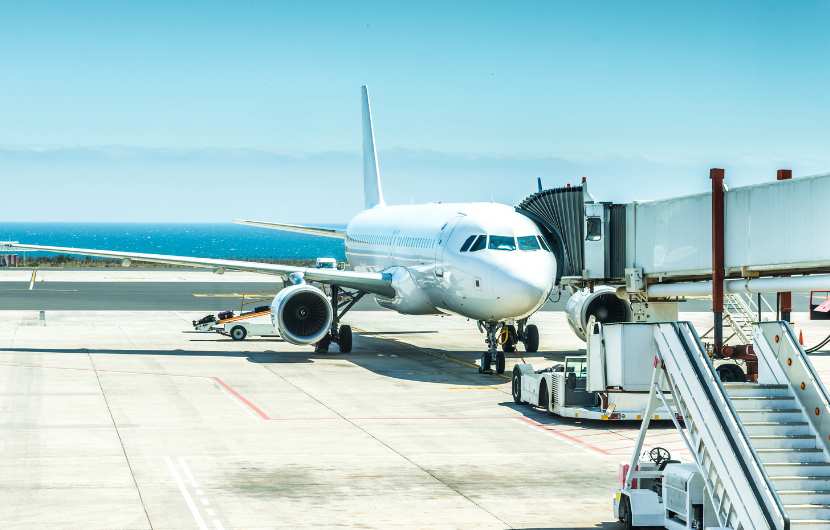
Lanzarote Airport (official code ACE, ICAO code GCRR) is located on the island of Lanzarote, the northernmost and largest Canary Islands. The airport is situated in the town of San Bartolome, on the south-eastern coastline of the island, and is only five kilometres from the capital of Arrecife. It is a popular tourist destination and is served by various airline companies, offering flights to several destinations.
The airport has well-organised terminal buildings, offering all the necessary facilities for arriving and departing passengers.
Nearby attractions include Playa Honda, Güime, Playa del Cable and Casas de Guasimeta, making it a great starting point for exploring the island.
South Tenerife Airport
Tenerife South Airport is located in the southern portion of the Canary Island of Tenerife and is the largest of the two airports on the island. It is a popular destination for holidaymakers, with many international connections.
The airport is close to popular holiday resorts such as Los Cristianos, Playa de las Américas, and Costa Adeje.
For those wishing to travel between the two airports, a direct bus service, line 343, takes 50 minutes.
Valencia Airport

Valencia Airport, also known as Manises Airport, is located 10km to the west of the city centre and can be easily accessed via the N220 and the main A3 motorway, as well as the Autovia A3 highway, which connects to Madrid and the Autovia-7 coast route to Barcelona.
There are two terminals, T1 and T2, each spread over multiple floors. Once you have arrived, you will find four air bridges to access the terminal and four baggage reclaim halls with various carousels.
For public transport, the Metrobus 150 runs at 20-minute intervals from outside the arrivals hall to the city centre. Metro line 3 also runs to the city centre, port and other main locations, while the railway station in the regional flight terminal takes around 25 minutes to get to the city centre.
Ibiza Airport

Ibiza Airport is an excellent option for anyone visiting the island of Ibiza. It is conveniently located 7.5 km south-west of the town of Ibiza (Eivissa) near San José and 5 km from the San Jorge area. To get to the airport, travellers can take the PM/801 motorway or the PM/803 San José motorway taking the Km4 exit.
The airport is equipped with a modern single-storey terminal that can accommodate a variety of both domestic and international flights. The majority of passengers come to Ibiza during the months of May-October.
When it comes to transportation once you arrive, there are several options to choose from. There are several car rental desks in the arrivals hall, and buses are also available. The number 10 buses run a shuttle service from the airport to the central bus terminal in Ibiza Town.
No matter what your plans are for the island, the airport offers visitors a convenient, comfortable way to get to their final destination.
New Airport For Murcia

Corvera in Murcia is the newest addition to the airports in Spain. It opened just before COVID hit and is in the process of recovery. Although very quiet at the moment the airport is a convenient way to travel to the South Valencia region, Alicante, Torrevieja and the main Murcia coastal resorts.
At the moment the flight prices to Corvera may be a little more than Alicante but it's well worth checking websites such as Skyscanner for special deals.
Corvera Airport Murcia (RMU ) replaces the existing one at San Javier which fed the Mar Menor, Cartagena and Murcia areas. Initial figures suggest Murcia’s new airport will eventually receive around four million passengers annually, which would give a huge boost to the region's economy and tourism industry.