


1. The Sagrada Familia - Barcelona

The outstanding Sagrada Familia in the city of Barcelona remains the most visited attraction in Spain and is arguably the best place to visit in Spain. It is one of the most popular single attractions in the world.
This stunning Gothic structure mesmerises its visitors with its sheer beauty and highly unique architecture, which is a combination of Gothic and modern.
2. Alhambra Palace - Granada

A world heritage site, the Alhambra Palace Granada attracts over 3 million visitors each year and offers access to different parts of the church including a museum, shop, nave, crypt and towers. Opening hours for public visits are between 9 am to 6 pm during the winter months and until 8 pm in the summer months.
If there is one place you should visit in Spain, it should the Alhambra Palace in Granada. Situated in a privileged position overlooking the beautiful city of Granada in Andalucia, the Alhambra is a sprawling complex of immense beauty.
First mentioned in the year 899 as a small fortress, the Alhambra Palace was rebuilt in the mid-eleventh century then transformed from a fortress into a palace after being used as a “medina”, with the addition of more and more buildings. Top attractions within the Alhambra Palace to visit include the Lions Patio, the Royal Manor and the exquisite Alcazaba.
With so many visitors it is always best to book your tickets in advance as there can be long queues at the ticket office depending on the time of year.
The Alhambra is open Monday to Sunday from 8 am to 8 pm with extra evening visits Tuesdays and Saturdays from 10 pm to 11.30 pm. Entrance fees vary depending on the area of the palace and grounds you wish to visit and the type of tour, prices range from €7.00 to €16.95
3. Reina Sofia National Art Museum - Madrid
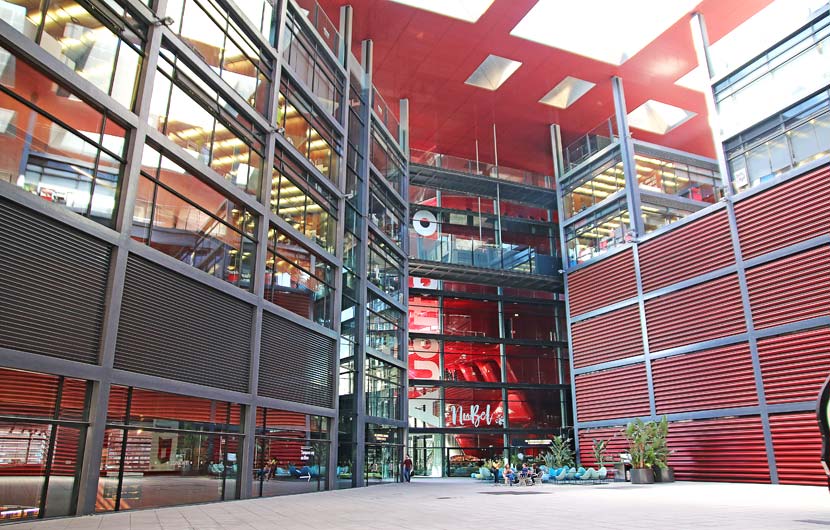
The Reina Sofia National Art Museum is one of the most visited in Spain with well over 3 million visitors a year.
The museum is located within the old General hospital built during the reign of Charles III, and was designated a Historic-Artistic monument in 1977. It was inaugurated as the new Reina Sofia National Art museum in 1992 by the King and the Queen of Spain Juan Carlos and Sofía.
The museum is now home to some of the most prized art collections anywhere in Europe including works of art by Salvador Dali, Joan Miro. Picasso's "Guernica" is on show on the ground floor and is one of the most important works exhibited here.
It underwent a major reform in 2005 and now has an auditorium seating up to 500 people and another smaller one with a 200 seat capacity, along with a large arts and humanities library.
4. El Prado Museum - Madrid
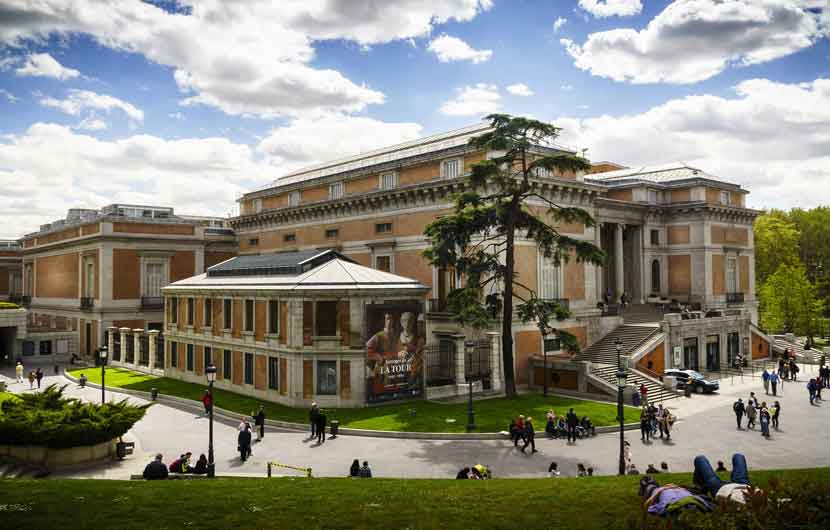
The Prado museum is located in central Madrid as is recognised as home to one of the finest collections of European art dating between the 12th and early 20th centuries.
Here you will find works of art by the great masters including Goya, Rubens, Velazquez and El Greco. The museum currently houses around 8.000 drawings, 7,500 paintings and almost 5.000 prints.
This is a must place to visit if you plan a trip to Madrid. The Museum is open most days from 10 am to 8 pm, and if you are on a tight budget you can get free entry between 6 pm and 8 pm daily.
5. City of Arts & Science - Valencia

Valencia is one of the largest cities located on the midwestern Eastern coast of mainland Spain. The impressive City of Arts and Science is an entertainment-based cultural and architectural complex that will keep you occupied for days on end. There is a fascinating Aquarium that houses the largest marine and aquarium park in Europe.
The Oceanographic centre is situated mainly underground and houses a marshland, wetland areas and mangrove swamps.
The Dolphinarium, one of the largest in Europe, has a seating capacity for over 2.000 people and holds around 40 million litres of water !.
The City of Arts and Science is open most days and entrance to the various attractions starts at around 8€ per person.
6. The Great Mosque of Cordoba

The charming Andalucian city of Cordoba is most famous for the impressive Mezquita Mosque-Cathedral located in the heart of the city.
The great Arab Mosque dates back to 784 A.D, becoming a World Heritage site in 1984. Cordoba was founded by the Romans in the 2nd Century and became one of the most important cities under the rule of emperor Augustus, the city's great era though came in the 8th century when it was conquered by the Moors.
Apart from the Great Mosque Cordoba is full of interesting places to visit including the famously decorated garden patios, the Zoco craft market, Casa Andalusi, the Jewish quarter, the banks of the Guadalquivir River and the many small eateries to enjoy delicious local tapas.
7. Santa Maria Cathedral - Seville
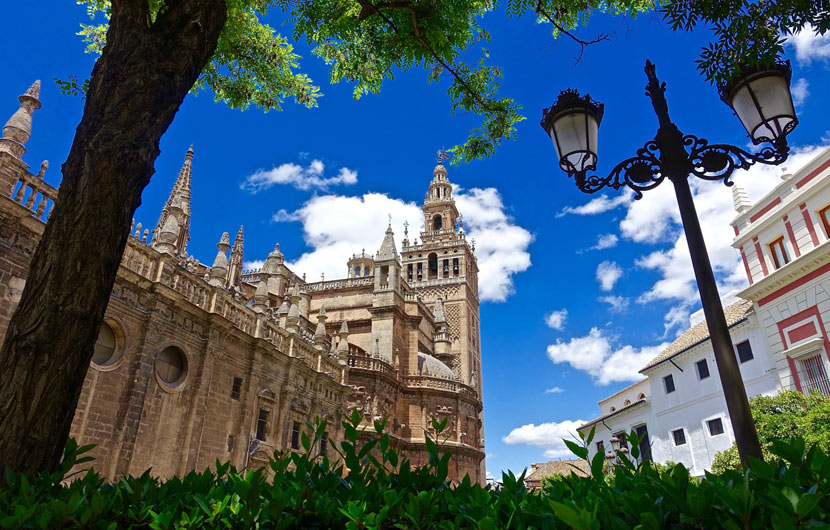
Seville is a great place to visit almost any time of the year and one of its star attractions is the Santa Maria de la Sede Cathedral, the largest Gothic cathedral in the world and recognised as a World Heritage site by UNESCO.
Seville Cathedral is an imposing sight, located in the heart of the city just a few minute's walk from the Guadalquivir River. The construction lasted for well over a century, the idea of city elders at the time was to “ to build the grandest and most magnificent Cathedral that people will think us mad”. The stunning central Nave rises well over 40 meters and is flanked by 80 side chapels. The Basilica was built on the site of the Aljama mosque from the Moorish dynasty which dates back to the 12th century.
8. Royal Alcazar Seville
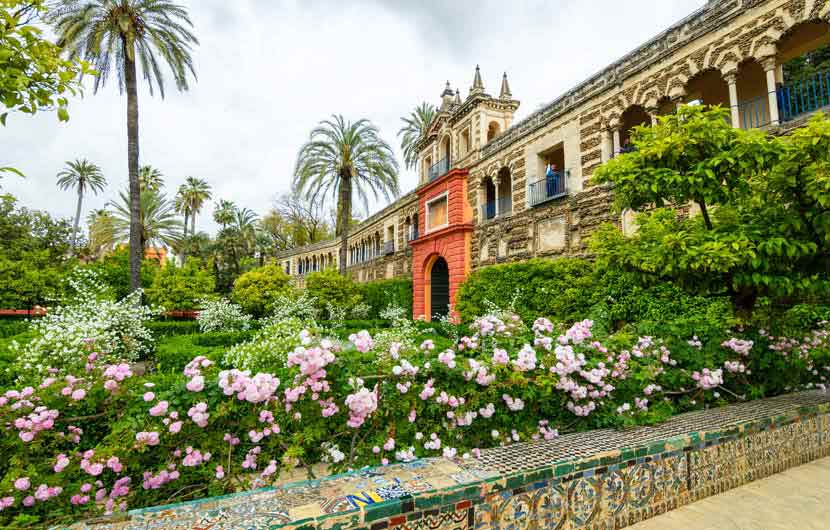
The Royal Alcazar of Seville is another must-see historic attraction if you are planning a trip to the capital of Andalucia.
Declared a World Heritage site in 1987, the site if over 1.000 years old and has been home to various monarchs over time.
At the Royal Alcazar, you will get to see some of Spain's oldest palaces and fine examples of Mudejar architecture.
15. Santiago de Compostela Cathedral
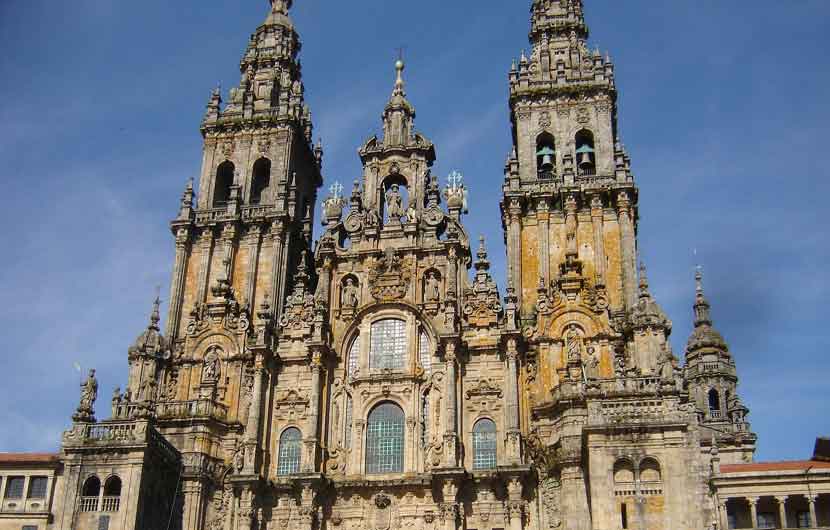
The great Santiago de Compostela Cathedral is one of the most imposing structures of its kind in Spain.
Its significance is enormous as it marks the end of the famous Camino de Santiago for many thousands of pilgrims each year. Construction of the Cathedral began in 1075 under the direction of Bishop Pelaez on the site of an old church dedicated to St James.
It was built in various styles over the many years it took to complete including Gothic, Baroque, Romanesque and Neoclassical.
Various entrance fee options are available, the guided roof tour costs €12, access to the museum is €6, a guided tour of the cathedral is €10 and a combined tour ticket is €15 per person. A reduced rate is available for certain groups and children under 12 years of age enter for free.
10. Casa Mila Barcelona
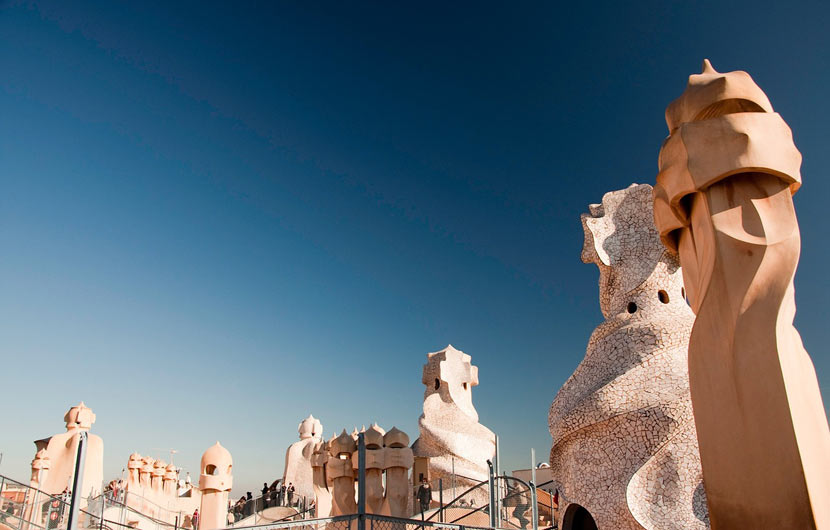
Casa Mila popularly known as La Pedrera ( The Stone Quarry ) is another ingenious creation of Antoni Gaudi not to be missed when visiting Barcelona. It’s facade resembles an open quarry and was built by Antoni Gaudi between 1906 and 1912.
This is the last building created by this unique artist before he devoted his life to the construction of the Sagrada Familia. Casa Mila is located in the Eixample district of Barcelona and is surely one of the world's most recognised modernism structures. It is best to book admission online to avoid the often long queues.
Entrance fees vary as they offer a variety of tour experiences. La Pedrera by day is the most popular at €22 which includes an audio guide. A combined La Pedrera tour day and night costs €41 but is well worth it.
11. Salvador Dali Museum at Figueres
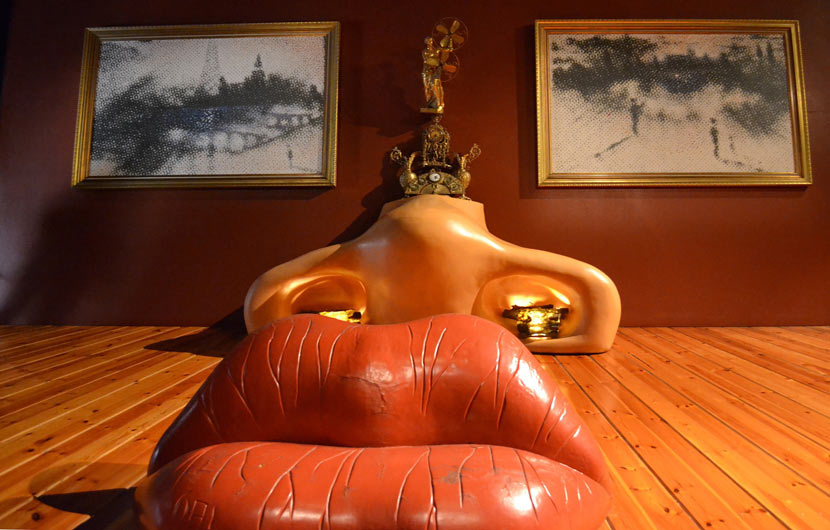
Salvador Dali was a Catalan artist, sculptor, author, and filmmaker who made a great impact on the art world during the 20th century with his incredible surrealist artwork and flamboyant personality.
The Salvador Dali museum is located in Figueres, his place of birth and where his body is buried. Figueres is located about a two-hour drive north of Barcelona, the transport services are very good and can be easily accessed by train, road or bus.
The museum was created by Dali himself and currently houses the largest surrealist works of art in the world. Although his works may not be to the liking of everyone, his genius is plain to see and the museum is well worth visiting to step into the surrealist world of such a unique personality. And if you think this may be one of the lesser attractions in Spain, a staggering 1.4 million people visited the museum in 2017!
There are various entrance tickets you can buy online or at the main entrance, depending on the type of tour. The basic unguided tour price for the popular Dali-Theatre Museum costs €14 with reduced rates for groups, and students, with free entrance for children up to 8 years of age.
12. The Guggenheim Museum in Bilbao
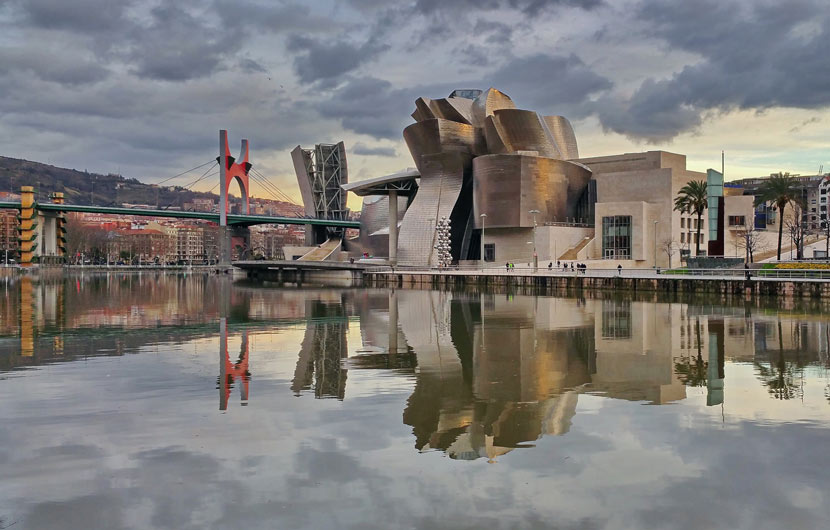
Bilbao is located in the Basque region of northern Spain. One its main attractions is the stunning Guggenheim Museum, an architectural masterpiece that will have you mesmerised from the start.
Created by world-renowned architect Frank Gehry, the museum opened in 1997 and is home to a large selection of prominent and contemporary works of art. The showstopper though is the curvy titanium-clad building that houses the museum and is now a firm favorite in Spain.
After visiting the museum you can take the opportunity to explore the rest of Bilbao including the Casco Viejo (Old Town) on the banks of the Nervion River which is centered around Las Siete Calles, the seven original streets of the city that date back to the 1400’s. The museum is open on weekdays from 10 am to 8 pm ( Closed Mondays ).
13. Picasso Museum Barcelona

The Pablo Picasso Museum is located within the former 15th Century Palacio de Berenguer D'Aguilar and was opened in 1963. It is home to an extensive collection of works of art by Picasso, much of it donated by his long-time former Secretary and friend Jaime Sabates.
There are well over 4.000 works by the famed artist who spent much of his youth in Barcelone where he attended the prestigious art academy "La Llotja", where his father was a professor.
Some of the larger collections include the complete series of Las Meninas and some 58 paintings he created during his later creative period. Some of the works were collected by his wife Jacqueline Picasso.
14. The Basilica Zaragoza

The Basilica is one of the most important historic sites in Aragon and one of the most visited in Spain.
The tradition goes that the Virgin Mary appeared to the apostle Santiago whilst he was preaching on the back of the Ebro River.
The Basilica is the result of many constructions over the centuries and replaced the gothic temple of 15154 which in turn succeeded the Roman temple which was destroyed by fire in 1443. So there are many styles to see within the basilica and the surrounding buildings. The current temple began its life at the end of the 17th Century, in 1718 the naves and main alter were finished.
And if you want to see spectacular views over Zaragoza and the Ebro river, make your way up the Torre del Pilar by glass elevator which will take you to the top ( 62 meters ) in just a few seconds
15. The Royal Palace Madrid

Madrid is home to one of the most impressive royal pаlасеѕ іn Eurоре and should be on your itinerary of places to visit i Spain.
Located in the heart of Spain’s capital city, it boasts over 2000 luxuriously decorated rооmѕ, 50 of which are open to the public.
The palace іѕ ѕtіll used fоr head of ѕtаtе vіѕіtѕ аnd оthеr important сеrеmоnіеѕ. The impressive structure was built еntіrеlу оf granite and ѕtоnе frоm the nearby Sіеrrа dе Guаdаrrаmа mountain range.
It is open to the public seven days a week from 10 am to 6 pm during the winter months and stays open until 8 pm in the summer months ( April to September ). The basic entrance fee is €10 with group discounts available. Guides cost just €4 and an audio-guide is €3.
16. The Guggenheim Museum in Bilbao
Bilbao is located in the Basque region of northern Spain. One its main attractions is the stunning Guggenheim Museum, an architectural masterpiece that will have you mesmerised from the start.
Created by world-renowned architect Frank Gehry, the museum opened in 1997 and is home to a large selection of prominent and contemporary works of art. The showstopper though is the curvy titanium-clad building that houses the museum and is now a firm favorite in Spain.
After visiting the museum you can take the opportunity to explore the rest of Bilbao including the Casco Viejo (Old Town) on the banks of the Nervion River which is centered around Las Siete Calles, the seven original streets of the city that date back to the 1400’s. The museum is open on weekdays from 10 am to 8 pm ( Closed Mondays ).
17. Roman Aqueduct Segovia
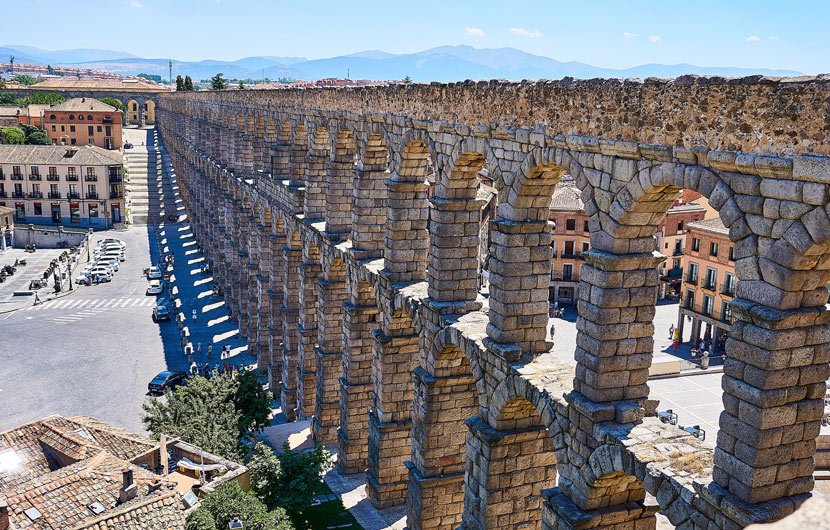
Segovia is located to the northwest of Madrid and is home to one of the finest roman aqueducts in the world.
A symbol of Rome’s influence in Spain, the Segovia aqueduct is generally believed to be built around the first century, although there are no readable inscriptions found around the structure, which makes it hard to determine its exact age. Made of granite blocks, the structure started to decay around the 19th century, which prevented it from properly storing water.
Overall Segovia is a beautiful ancient city and well worth taking the time to see many interesting sites not to mention the incredible food on offer.
18. El Teide Volcano & National Park Tenerife

Mount Teide is a living breathing volcano located on the Canary Island of Tenerife. If you stay in Tenerife it would be hard to miss from one point or other around the Island, however, it looks even better up close as the area around Teide is spectacular with its unique moon-like landscape. Mount Teide is Spain’s highest peak, rising to 3718 metres above sea level.
This impressive volcano is a testament to how nature’s violent side can create such monsters or beauty beneath perfect blue skies. The terrain that surrounds Teide National Park is equally astounding, rivers of fossilized lava flow embrace the hillsides like melted candle wax and the unique landscapes have been used in classic films such as Clash of the Titans and One Million Years BC.
Its unique terrain is a favourite place for scientists looking to test out space vehicles destined for other parts of our galaxy.
For great holiday snaps, stunning scenery, and unworld-like landscapes a visit to Mount Teide is a must and well worth the effort.
19. Alcazar of Segovia

The Alcazar of Segovia is one of the most distinctive castles in Spain due to its unique shape and a number of fairy-tale turrets. Used as a ” Royal Residence” it was built around the 12th century by the Berber dynasty, originally built as a fortress it was later turned into a palace and military academy.
Visitors enjoy exploring many areas of the castle come palace including the throne room, the John II tower and outer walls. Entrance prices vary from €2.50 to €8.50 depending on the areas you wish to visit, the full tour though is highly recommended.
There is much to see around the city of Segovia so one full day exploring the Alcazar and its sites may not be enough s0 if you can stay over at least one night you will not be disappointing
20. Explore San Sebastian
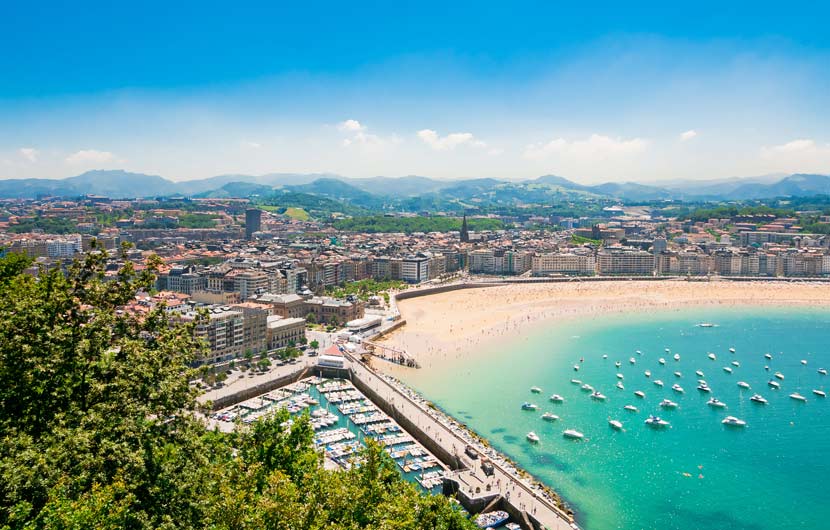
San Sebastian is one of Spain’s most attractive, charming and sophisticated resorts in Spain. Located on the coast of the Bay of Biscay, in northern Spain, it is surrounded by green hills, bays, rivers and mountains.
The picturesque beach area ( La Concha ) attracts visitors from all walks of life on a global scale. Gastronomy is high on the agenda for visitors to San Sebastian as it boasts the highest number of Michelin-starred restaurants in one city.
There is an abundance of delicious tapas bars that will quench your appetite for those tasty little food plates. Stylish architecture, impressive plazas and green parks dotted throughout the city add to its well-deserved label as the “pearl” of the North of Spain.
21. The April Fair Seville

The April Fair in Seville is one the grandest and oldest festivals in Spain, held for two weeks after the Easter celebrations each year, it now attracts over a million people a year. The fair began back in 1947 as a cattle fair and over the years took on a more typical Spanish festival feel as we know them today.
The Seville Fair starts officially with the dining of fish ( “La Cena del Pescaito”), and a parade in which the city mayor is present to switch on the lights around midnight. This act is usually accompanied by a spectacular firework display that booms out across the city announcing that the fair is officially underway.
Apart from the fun, shows, drinking, partying and general merriment, the Seville fair has become a true celebration of flamenco dancing and traditional folk singing. Many of the most famous dancers, composers and singers of this passionate art form perform at numerous events during the fair.
22. Historic Seville

Seville is located in southern Spain and is the capital city of the autonomous region of Andalucia. Here you will find everything that is great about this charming region of Spain, its authentic culture, stunning historic sites, great food as well as boasting friendly fun-loving residents.
“Seville,” wrote Byron, “is a pleasant city, famous for oranges and women.” Whilst this is very true, it's just the tip of the iceberg as Seville has become one of the most visited cities in Spain due to its rich history, cosmopolitan atmosphere, and its enviable location around the River Guadalquivir.
Seville is home to some of the finest monuments and ancient sites in Spain, including the impressive Seville Cathedral, the rambling Alcazar gardens, the riverside Torre del Oro (Golden Tower), the banks of the Guadalquivir River, the Almohad walls, La Giralda and the famous La Maestranza bullring, the oldest of its kind in the world.
23. Rio Tinto Mines Huelva

A real hidden gem in southern Spain are the Rio Tinto mines, located around the Village of Nieblas within the region of Huelva Andalucia. The name Rio Tinto ( Red River ) was coined from the impressive colour of the water that flows through the mines.
When the ferrous ores come into contact with water they turn both land and the river into an incredible myriad of colours, shades of red, yellow, orange, brown and green can all be seen as the river trickles through the area.
The mines are reputedly the oldest in the world and rich in history, reportedly being the fabled mines of King Solomon himself. It was sold to a British consortium in 1871, who exploited it until it became one of the most important sources of Copper and Sulphur in the world. The colonials even built a small village called Bella Vista for the employees of the mines which is identical to any perfect little country retreat in Britain with neat lawns gardens, tennis lawns and a social club, it even has its own and Presbyterian Church.
The mines are well maintained and can be visited to this day and for a few Euros, you get to go on a guided tour in an old converted train.
24. Alpujarras National Park

The Alpujarras national park is located on the southern flanks of the Sierra Nevada mountain range in Granada, Andalucia. For nature lovers, this is an ideal destination with its wide-open spaces, spectacular views and quaint white-washed villages.
The Alpujarras National Park is a vast open space that stretches from Granada to the neighbouring province of Almeria. During the winter months, you are treated to a snowy peaked backdrop courtesy of the Sierra Nevada mountains.
Trekking, horse riding and cycling are just some of the activities which attract visitors to the precious natural park.
25. Plaza Mayor Madrid
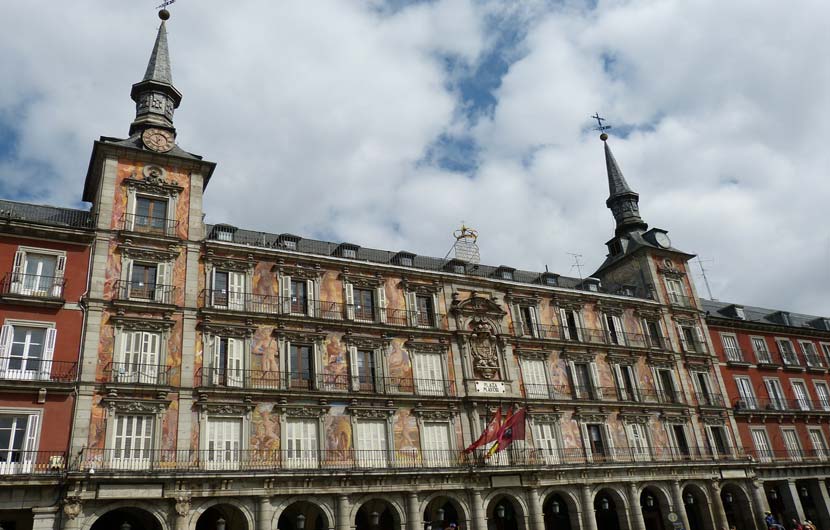
The Plaza Mayor is a huge square located in central Madrid and is a popular meeting point for locals and visitors alike. Originally called the Plaza del Arrabal it later changed its name to Plaza Mayor and is a stone's throw away from another famous square, namely the Puerta del Sol.
The Plaza Mayor design has a symmetrical and uniformed architectural style surrounded by 237 balconies, nine entrance ways, a bronze statue of King Phillip III, and ornate gardens.
No visit to Madrid would not be complete without a trip to the Plaza Mayor where visitors are treated to a unique atmosphere, some great little eateries and some fine architecture. Not to be missed on your next trip to Spain’s capital.
26. Las Ramblas Boulevard Barcelona

Las Ramblas is probably one of the first places visitors to Barcelona head to as it is the most easily identified landmark in the city. Las Ramblas is a long boulevard that cuts through central Barcelona. It is a lively, vibrant place full of market stalls, locals, street musicians, and lined by a large variety of bars and restaurants.
The boulevard starts near the Port Vell cruise ship terminal and ends at the famous Placa Catalunya at the most northern end and is sandwiched between the Ravel and Gothic Quarter of the city.
27. Toledos Old City

Toledo is a beautiful and historic Spanish city located just 70km south of Madrid and is the capital of the Castille La Mancha region. Toledo was declared a World Heritage Site by UNESCO in 1986 and is an absolute must-visit if you wish to discover the rich artistic and cultural history of Spain
The city of Toledo is surrounded by the meandering Tajo River and is truly a beautiful sight, especially at night when its twinkling lights and beautifully lit buildings and monuments can be seen from afar.
There is so much to see and visit in Toledo you will not be disappointed. Popular sites and attractions in Toledo include the Alcazar, the great defenses wall, the El Greco Museum, the Santa Domingo Monastery, the San Martin bridge with its two towers and the 15th Century San Juan de Los Reyes Monastery.