


Ronda's Cliffside Secrets: Beyond the Bridge - Unearth Ancient Legends, Wine Country Wonders, and the Soul of Andalusian Romance

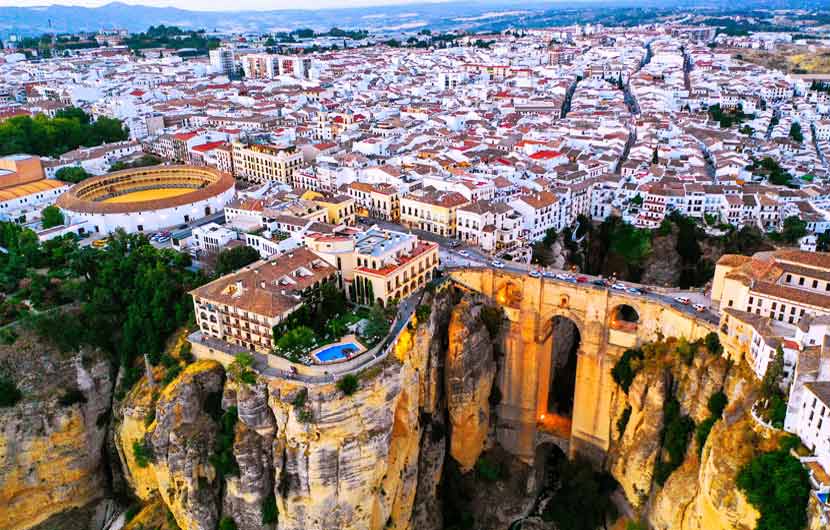
Town Hall Rondaou’re not really ready for how jaw-dropping Ronda is until you’re standing there, right on the edge of the gorge, with that incredible view dropping away beneath you. It’s dramatic in the best possible way – perched high up in the hills of Andalucía, split in two by the El Tajo gorge, with that famous stone bridge, Puente Nuevo, connecting the old and new parts of the town. It’s the kind of place that makes you slow down and just stare.
What’s lovely about Ronda is that it’s got this quiet buzz – not sleepy, but not hectic either. You’ll wander through the cobbled streets of the old town, past whitewashed houses and little courtyards with orange trees peeking over the walls. There’s history everywhere, but it doesn’t feel like a museum. It’s lived-in and full of little surprises – like the secret viewpoint just off the path near the bridge, where hardly anyone goes but the view is even better than the main one.
You’ll feel like you’ve stepped into another era when you explore the old Moorish baths or walk the ancient city walls. The Arab influences here are strong and give the whole place this slightly exotic twist. Then you’ve got the bullring – Plaza de Toros – one of the oldest in Spain. Even if bullfighting’s not your thing, it’s worth a wander round. It’s more about the atmosphere and the sense of tradition that still lingers.
The food in Ronda is rustic and proper – slow-cooked stews, local cheeses, and red wine that tastes even better because it’s grown just down the road. Some of the best places aren’t on the main drag either – peek down the side streets and you’ll stumble across cosy tapas bars where the staff treat you like family and the menu’s written on a chalkboard.
And the sunsets here? You’ll want to make time for those. Head to the edge of the cliff near the Alameda del Tajo park and just watch the colours change over the hills. It’s peaceful, romantic, and honestly one of those moments that stays with you long after you’ve left. Ronda’s the kind of place that feels like a secret – and once you’ve been, you’ll totally get why it’s so special.
Top Things To Do in Ronda
Explore the Puente Nuevo:
Start visiting Ronda by marvelling at the iconic Puente Nuevo, the city's most famous landmark. This stunning bridge spans the deep El Tajo gorge and offers breathtaking views of the surrounding countryside. Walk across the bridge or admire it from one of the nearby viewpoints.
Visit the Mondragon Palace:
Step back at the Mondragon Palace, a beautifully preserved 14th-century Moorish palace. Explore its lush gardens and elegant courtyards, and discover the archaeological museum that is housed within, which showcases artefacts from Ronda's rich history.
Discover the Bullring:
As the birthplace of modern bullfighting, Ronda is home to one of the oldest bullrings in Spain, the Plaza de Toros. Take a guided tour of the bullring to learn about the history and traditions of this controversial sport.
Explore the Old Town:
Wander through the narrow streets of Ronda's Old Town (La Ciudad) and immerse yourself in its historic charm. Admire the well-preserved Moorish architecture, visit the beautiful churches and squares, and discover hidden gems around every corner.
Visit the Arab Baths:
Step into the past at the Arab Baths, a fascinating archaeological site that glimpses Ronda's Moorish heritage. Explore the different chambers and learn about the ancient bathing rituals.
Enjoy the View from Mirador de Aldehuela:
Head to Mirador de Aldehuela, a scenic viewpoint that offers panoramic vistas of Ronda's countryside and the Puente Nuevo. It's the perfect spot to capture stunning photographs and soak in the beauty of the landscape.
Explore the Wine Cellars:
Ronda is renowned for its excellent wines. Take a tour of one of the local wineries and indulge in wine tastings to discover the region's flavours. Learn about the winemaking process and sample some of the finest wines produced in Ronda.
Visit the Church of Santa Maria la Mayor:
This impressive church, dating back to the 15th century, showcases a mix of Gothic, Renaissance, and Baroque architectural styles. Admire its ornate interior, beautiful altarpieces, and intricate artwork.
Discover the Cueva de la Pileta:
Just outside Ronda, you'll find the Cueva de la Pileta, a fascinating cave with prehistoric cave paintings. Take a guided tour to explore the chambers and marvel at the ancient artwork that dates back thousands of years.
Enjoy Local Cuisine:
Don't miss the opportunity to savour Ronda's traditional cuisine. Indulge in delicious tapas, try local specialities such as rabo de toro (bull's tail stew), and enjoy the regional wines that perfectly complement the flavours of the dishes.
Ronda perfectly blends natural beauty, historical landmarks, and gastronomic delights.
Whether you're exploring its ancient streets, admiring the breathtaking views, or immersing yourself in its rich history, Ronda promises a memorable experience that captures the essence of authentic Andalusia.
Marvel at the View from the Mirador de Ronda:

The Mirador de Ronda is a breathtaking viewpoint that offers a mesmerising town panorama. Perched atop the dramatic El Tajo Gorge, this vantage point provides an awe-inspiring view of the Puente Nuevo, the iconic bridge that spans the deep gorge below.
As you stand at the Mirador de Ronda, you'll be captivated by incredible views of the surrounding landscapes. The rugged cliffs, the lush greenery, and the flowing Guadalevín River create a picturesque setting perfect for those dramatic holiday snaps.
Top Historic and Cultural Sites of Ronda

Ronda is divided into three parts: on the near (northwest) side of the gorge is the most significant modern Mercadillo quarter; across the bridge is the old Moorish town, the Ciudad, and further south is the San Francisco suburb.
The town has retained its Moorish heritage, with many intact buildings and several fine Renaissance mansions still in use today.
Make your way across the Tajo bridge along with Calle Santo Domingo, also known as Calle Marques de Parada, which winds around to the left. At no. 17, you will find the Casa del Rey Moro, an early eighteenth-century mansion built on Moorish foundations.
The gardens ( but not the house itself ) have recently been opened to the public (daily 10 am-8 pm). From here, a remarkable underground stairway, the Mina, descends to the river; these 365 steps guaranteed a water supply in times of siege.
Further down the same street is the Palacio del Marques de Salvatierra, a splendid Renaissance mansion with an oddly primitive, half-grotesque frieze of Adam and Eve on its portal. The house is still used by the family ,who closed it to visitors in 2000, though hopefully, visits may resume.

Just down the hill, you reach the two old town bridges – the Puente Viejo of 1616 and the single-span Moorish Puente de San Miguel; nearby, on the south-east bank of the river, are the distinctive hump-shaped cupolas and bizarre glass roof-windows of the old Banos Arabes ( Arabic Baths ).
Dating from the thirteenth century and recently restored, the complex is based on the Roman system of cold, tepid and hot baths and is wonderfully preserved; note the barrel-vaulted ceiling and brickwork octagonal pillars supporting horseshoe arches, all underlining the sophistication of the period.
At the centre of the old quarter is Ronda’s most picturesque square, the Plaza Duquesa de Parcent, home of the cathedral church of Santa Maria La Mayor originally the Arab mosque. Externally it’s a graceful combination of Moorish, Gothic and Renaissance styles with the belfry built on top of the old minaret.
Slightly west of the square on Calle Montero lies the Casa de Mondragon, probably the real palace of the Moorish kings. Inside, three of the patios preserve original stucco work, and there’s a magnificent carved ceiling. There is also a museum covering local archaeology and aspects of Moorish Ronda.
Near the end of the Ciudad are the ruins of the Alcazar, destroyed by the French in 1809 (“from sheer love of destruction”, according to Richard Ford), and now partially occupied by a school.
The principal gates of the town, the magnificent Moorish Puerto de Almocabar, through which passed the Christian conquerors (led personally by Fernando), and the triumphal Puerta de Carlos V, erected later during the reign of the Hapsburg emperor, stand side by side to the southeast of the Alcázar at the entrance to the suburb of San Francisco.

The other is the eighteenth-century Plaza de Toros, close by the Plaza de España and the beautiful cliff-top walkway from which you get breathtaking views of the old and new bridges. Ronda played a leading part in the development of bullfighting and was the birthplace of the modern corrida (bullfight).
At its September festival the Corrida Goyesca, honours Spain’s great artist Goya, who made a number of paintings of the fights at Ronda, which take place in eighteenth-century costume. You can visit the bullring to wander around the arena, and there’s a museum inside.
The Puente Nuevo bridge’s bar (now closed) was originally the town prison and last saw use during the Civil War when Ronda was the site of some of the south’s most vicious massacres. Hemingway, in For Whom the Bell Tolls, recorded how prisoners were thrown alive into the gorge.
If you like exploring every nook and cranny of historic towns on foot, then Ronda is for you. Apart from the Puente Nuevo there is a long list of must-visit places around Ronda including the bullring, the Cathedral, the Minaret of San Sebastian, Mondragon Palace, the prehistoric paintings of the Pileta cave, Arabic Baths, Museo Lara and the Mercado quarter of the town.
And for something different why not walk down ( and up again !) the 365 steps of the Mina stairway which was cut by the Christian slaves in the fourteenth century.

Ronda Gastronomy

Ronda offers plenty of dining options if you are looking for local authentic cooking, there are numerous eateries from budget tapas to more upmarket restaurants. Local dishes include “ajo blanco” a cold garlic soup, “Conejo a la Rodeña” a rabbit and almond soup, and “Salmorejo” a thicker type of Gazpacho soup topped off with local olive oil and cured jam.
And for those of you with a sweet tooth, you must try “Yemas Rondenas” (sweet egg yolk flans) which are very addictive, “Queso de Almendras” (almonds and cheese) and the organic, “Tortitas de Miel” ( large honey biscuits ).
Discover the Fascination Parador Hotel

The first luxury Parador hotel was built in 1926 and created by King Alfonso X111 to promote high-quality tourism as a guardian of Spain's national and artistic heritage and to assist regions with fewer economic resources.
Approximately 90 luxury Parador hotels are scattered throughout Spain and are located in the most privileged settings, such as Castles, Palaces, Fortresses, Convents, Monasteries, and other historic buildings.
One of these unique paradors is located in the centre of Ronda, some 60 km northwest of Marbella on the Costa del Sol. The Ronda Parador offers private balconies in each of the 78 rooms, many with spectacular views of the surrounding mountains.
The hotel was formerly the city's town hall and is located right next to the Puente Nuevo, one of Southern Spain’s most visited national monuments. The views, though, are incredible, especially if your room looks directly down to the bottom of the gorge, some 120 meters below.
Search Hotels and Rental Homes In Ronda