


Seville Cathedral & La Giralda
Info, Tours & Tickets
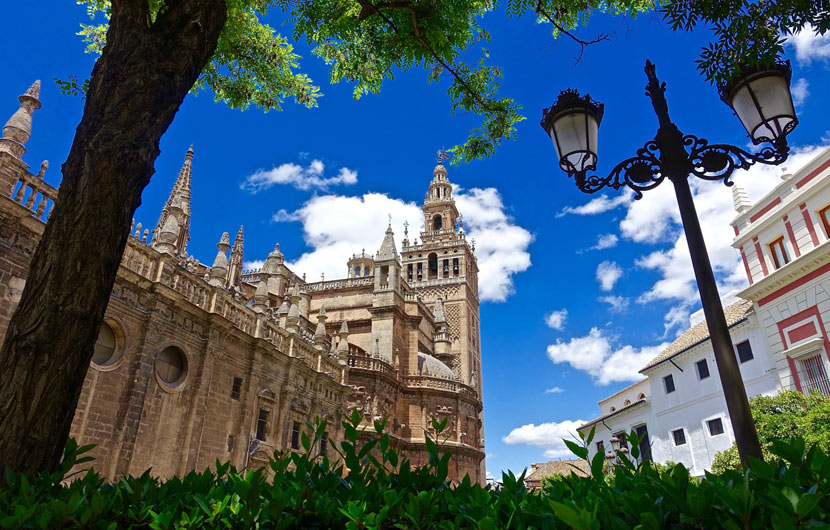
Seville is an astonishing place to visit any time of the year and one of its star attractions is the Cathedral of Santa Maria, the largest Gothic cathedral in the world and recognised as a World Heritage site by UNESCO.
Seville Cathedral is an imposing sight, located in the heart of the city just a few minutes walk from the Guadalquivir River.
The construction lasted for well over a century, the idea of city elders at the time was .. “to build the grandest and most magnificent Cathedral that people will think us mad”.
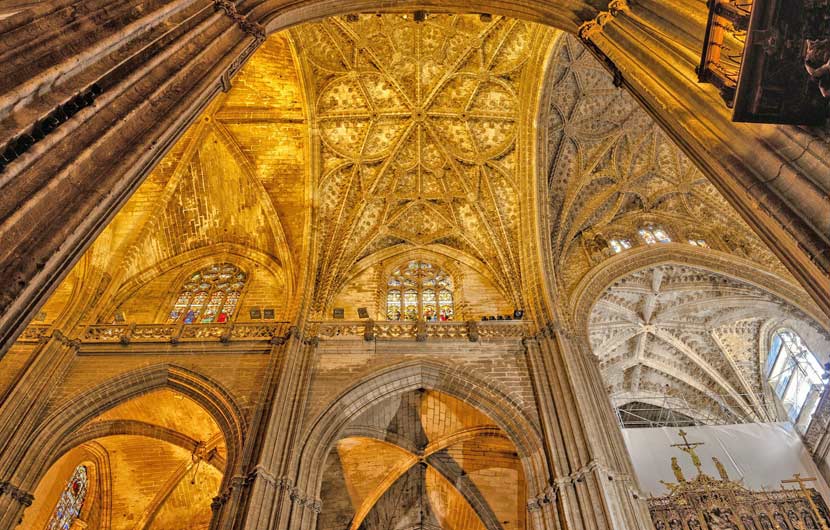
The stunning central Nave rises well over 40 meters and is flanked by 80 stunning side chapels.
The Basilica was built on the site of the Almohad mosque from the Moorish dynasty which dates back to the 12th century.
The History of The Cathedral & La Giralda

When the Catholic King Ferdinand III conquered Seville in 1248 the place where the Cathedral now stands was the Almohad Mosque, built nearly a century earlier.
As the Catholic Kingdom grew the cities elders want to build the largest Cathedral in the world to show off their power and wealth.
Construction started on the Seville Cathedral ( Catedral de Santa Maria ) in 1402 and wasn’t finished until over a century later.
More additions were added over time resulting in a mixture of several architectural styles that give the Cathedral its’ unique and stunning beauty.
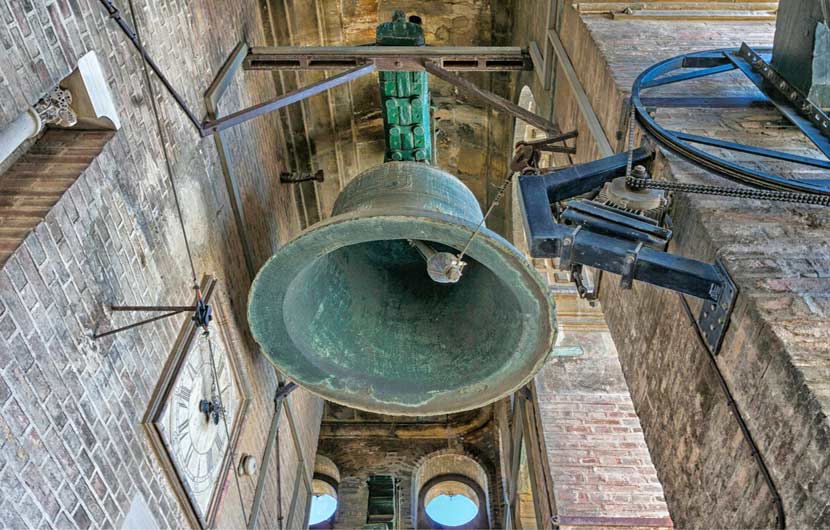
La Giralda Bell Tower

The tower is a mixture of Christian and Moorish architecture.
The Muslim section of the body is the oldest part, started in 1184 by order of ruler Abu Yaqub Yusuf. It was the minaret of the Almohad mosque.
The current Christian part of the tower was added in the 17th century and was once covered in gold tiles.
The Giralda was declared a National Heritage site by UNESCO in 1987 and was once the tallest tower in the world.
Main Chapel ( Capilla Mayor )

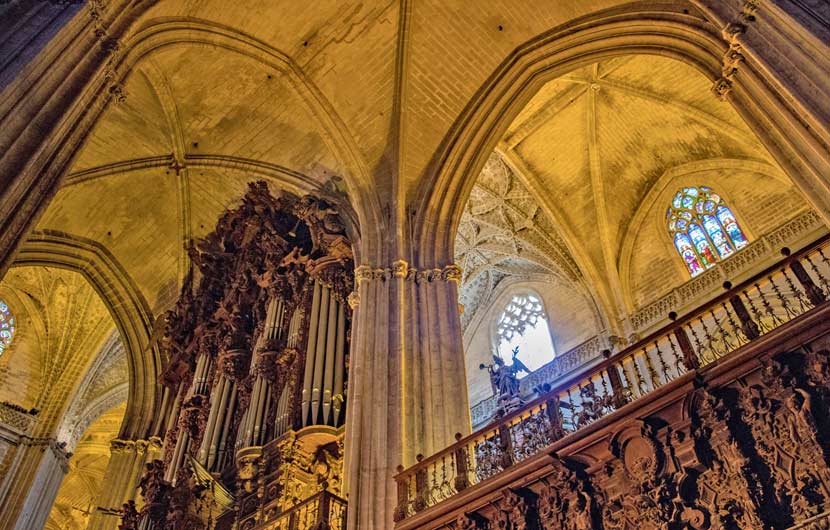
The main chapel ( Capilla Mayor ) is a shining masterpiece with its awe-inspiring vaulted ceiling which rises up to the sky at 36 meters in height.
The focus of the chapel is a huge Gothic woodcarving that towers over 32 meters high and 20 meters wide.
It was created in the 15th and 16th centuries and features the Virgen de la Sede surrounded by scenes depicting the life of Christ. There are 44 reliefs and over 200 intricate carvings of saints.
The glittering alter was built during the age of discovery and is covered with real gold brought back from the Americas.
Royal Chapel ( Capilla Real )
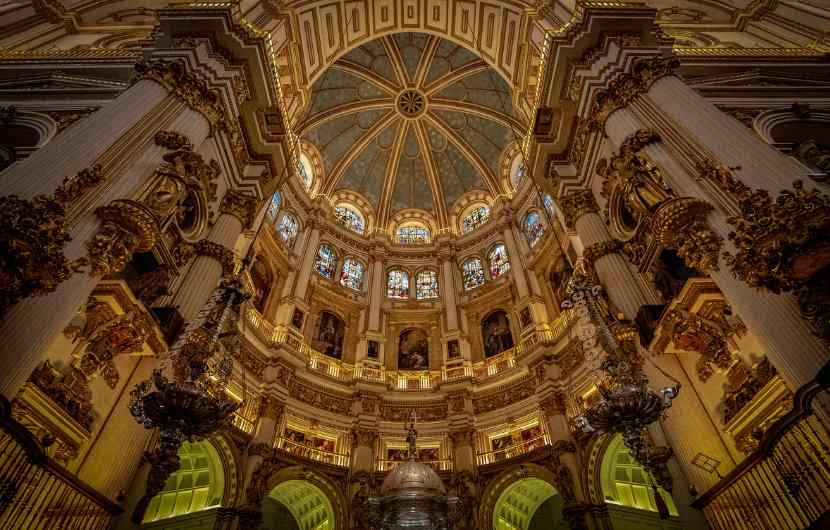
The lavishly adorned Royal Chapel is located just beyond the Main Chapel ( Capilla Mayor ).
The stunning Renaissance chapel contains numerous royal tombs.
The asp has two altars, one with a silver shrine and the other with a 13th-century figure of the Virgen de Los Reyes, the patron Saint of Seville.
Tomb of Christopher Columbus

The cathedral is home to numerous tombs with the most famous being that of Christopher Columbus.
His ornate coffin is carried by large pall-bearing statues representing the kingdoms of Aragon, Castile, Leon and Navarre.
Wealth in the City of Seville was guaranteed for centuries after Columbus discovered the Americas. He has always been regarded as a local hero of Seville.
After his death in 1506, he was buried in Valladolid but was moved to Seville in 1509. Following on his wishes though, his remains were moved to Santo Domingo in the Dominican Republic. In 1778 the Spanish moved his bones to Cuba. The final resting place came in 1898 when some of his bones were moved back to Seville.
Strange to think though that Columbus died in near poverty in Valladolid without having received the recognition, money, or stature de so richly deserved from King Ferdinand at the time.
Recent research has pretty much proved that the bones are those of Columbus although they only represent about a fifth of a size of a normal human skeleton. What happened to the rest is unknown and may well remain that way forevermore.
The Orange Tree Courtyard/Patio (Patio de Los Naranjos)
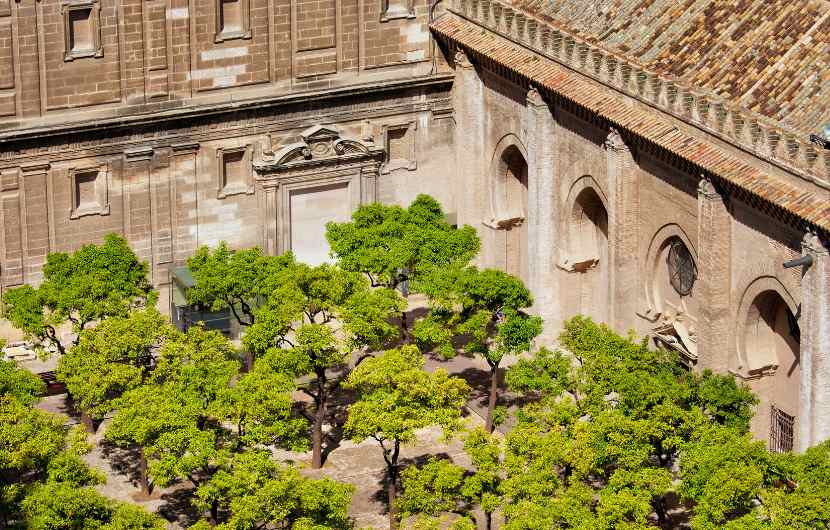
The Patio de Los Naranjos or orange tree courtyard is located just through the Puerta del Perdon, which was the main entrance gate to the cathedral.
This and the Giralda Bell Tower are the survivors of the Moorish Mosque construction from the 12th Century.
Visit the patio in spring when the orange blossom is at full bloom and you will be greeted by a beautiful fragrance of sweet-smelling citrus blossoms.
The patio is a relic from the Islamic period when the courtyard was used for ritual washing before entering the Mosque.
There is an ornate fountain at the center of the courtyard, a remnant from the Visigoth period, this sits above an original fountain that the Muslims used for ritual washing before entering the Mosque.
The courtyard is a perfect place to spend a few moments to digest and contemplate all that you have seen.