


Costa de la Luz: Where Wild Winds Meet Untamed Beaches - Discover Spain's Authentic Coast (Before Everyone Else Does)

The Costa de la Luz feels like one of Spain’s best-kept secrets. It’s got everything—endless golden beaches, whitewashed villages, delicious seafood, and a relaxed, authentic vibe. You won’t find the high-rise resorts of the Costa del Sol here. Instead, you get wide-open landscapes, unspoilt coastline, and some of the most stunning sunsets you’ll ever see.
If you’re a beach lover, you’re in for a treat. The sand here is soft and golden, and the beaches stretch for miles. Bolonia Beach is a dream—wild, untouched, and backed by sand dunes that seem to go on forever. And if you wander a little further, you’ll stumble across Baelo Claudia, an ancient Roman city right on the shore. Imagine standing among the ruins of a Roman forum with the sea as your backdrop—it’s magical.
Then there’s Tarifa, the kind of place where you can’t help but slow down. It’s the windsurfing capital of Europe, but even if you’re not into watersports, you’ll love the laid-back feel. The old town is a maze of narrow streets, quirky shops, and hidden tapas bars where you’ll eat some of the freshest tuna you’ve ever tasted—seriously, the seafood here is on another level.
And if you’re after a bit of history, Cadiz is an absolute gem. It’s one of the oldest cities in Europe, and you can feel the history in every corner. Walk along the sea walls, climb the Tavira Tower for a bird’s-eye view, and grab a drink in Plaza de la Catedral—a perfect spot for people-watching.
The Costa de la Luz isn’t just about the coast, though. Drive inland, and you’ll find the white villages of Andalusia, each one more charming than the last. Vejer de la Frontera is a personal favourite—perched on a hill, with stunning views, cobbled streets, and little family-run restaurants where you’ll eat some of the best tapas of your life.
The thing about this coast is that it doesn’t try too hard. It’s effortlessly beautiful, welcoming, and full of hidden spots that make you feel like you’ve discovered something special. Whether you’re watching the sunset over the Atlantic, wandering through an ancient town, or just lying on the sand listening to the waves, you’ll feel like you’ve found a little slice of real Spain. And trust me, you won’t want to leave.
Costa de la Luz Attractions
Spend a Day at the Donana National Park

Doñana National Park is one of the most important wetlands in Europe and has been a UNESCO World Heritage site since 1994. It is home to diverse flora and fauna, including many rare and endangered species like the Iberian Lynx.
Doñana National Park is situated at the mouth of the Guadalquivir River, where the river meets the Atlantic Ocean, and is made up of several distinct ecosystems, including dunes, beaches, marshes, and forests. It is an important stopover site for migratory birds travelling between Africa and Europe and a breeding ground for many waterbirds.
There is a vast network of trails and paths to explore as they wind through the park. Here, you can go birdwatching or take a guided tour. The park is also home to several charming villages and towns, such as El Rocío, where you can experience traditional Andalucian culture and cuisine.
If there is one national park you should visit in Southern Spain, it has to be Donana National Park. To get the most out of your visit, join one of the many guided tours, which will make the whole experience exciting and unforgettable.
See the famous horse festival in Jerez

The famous horse show at the "Royal Andalucian School of Equestrian Art" is one of Costa del Luz's most popular tourist attractions. The show is in a stunning 19th-century palace, displaying traditional horsemanship and Spanish culture.
The performance showcases the horses' abilities to perform intricate manoeuvres, such as the Spanish walk and the pirouette, while riders wear traditional Andalucian costumes.
Witnessing the horses' and riders' impressive skill and discipline is incredible. There is also a museum where you can learn about the history of the Andalucian horse breed and its cultural significance in Spanish history.
Visit historic Cadiz

Cadiz is divided into two main parts: the modern and the old. Although the newer part has all the trappings of modern-day living, the marinas and fine dining restaurants in the historic quarter reveal the true history of Cadiz.
The old town centre abounds with character and an authentic Andalusian atmosphere. The Casco Antiguo ( old town ) comprises three neighbourhoods (barrios) : the Barrio La Viña, home to the fishing district; the Barrio El Populo, said to be the oldest part of the city; and the Barrio Santa Maria.
A good time to visit Cadiz is during the February carnivals each year. It is one of Spain’s best carnivals, with ten days of street processions and an unrivalled party atmosphere.
Cadiz Carnivals

The Carnivals of Cadiz are one of the most popular and festive events in Spain; they are known for their colourful and lively celebrations, which attract visitors from all over the world.
The origins of the Carnivals of Cadiz date back to the 16th century, and they have since become an essential part of the city's cultural heritage.
If you love street parties, colourful processions, and being part of one of Andalucia's great historical traditions, the annual Cadiz carnival is for you.
One of the big highlights of the carnival season is watching the singing groups known as Chirigotas compete against each other in a musical competition. These groups perform satirical and humorous songs that poke fun at current events and political figures. Even if your Spanish is limited, it's still great fun to see. Another popular part of the carnival is the costume contest, where participants dress up in elaborate and creative outfits.
The carnival celebrations include parades, street parties, and various cultural events. Participating is a unique and unforgettable experience, offering a chance to let loose, have fun, and celebrate one of Spain's most fantastic, colourful attractions.
Visit the whitewashed village of Vejer de la Frontera

Vejer de la Frontera is one of the stunning white-washed villages of Andalucia. It dates back to at least 850 BC when Phoenician traders visited it. It was later occupied by Romans, Moors, and Christians, who left their mark on its architecture and culture.
Vejer is perched high above Barbate, offering spectacular countryside and sea views. Its cobbled streets are full of charm and history, leading to hidden patios, ancient towers, churches and a castle.
The Plaza de Espana is one of the prettiest village squares in Spain, with a fountain decorated with ceramic frogs. Vejer de la Frontera is a picturesque white village and a great destination for outdoor activities and cultural experiences. You can hike the windmills route, visit the Museum of Culture, or relax at the hammam baths.
Spend a day at the nearby beach at El Palmar, where you can surf, windsurf, water-ski, or fish.
And when you are hungry, take a stroll down to the town's eastern area close to the old castle, where you can have your fill of delicious local cuisine at one of the many restaurants in the area.
Discover Huelva

Huelva is a charming city located in the southwestern region of Spain. Visitors often overlook it to the Costa de la Luz, but it is well worth a day trip to explore its attractions.
The city has a rich history, beautiful architecture, and cultural attractions. One of the main places you should visit is Huelva Cathedral, an impressive Gothic-style cathedral dating back to the 15th century.
The city also has several museums, including the Museum of Huelva, which showcases the region's history and culture.
Huelva is a great place to enjoy authentic Spanish cuisine, focusing on fresh seafood and traditional Andalucian flavours.
Here, you can enjoy a range of local dishes, such as Pescaíto Frito (deep-fried fish ), choco ( Sepia ) Iberian Cured Ham, Seafood Rice, Paella, and the famed white shrimp (Gambas Blancas).
Have fun windsurfing at Tarifa

Tarifa is located at the eastern end of the Costa de la Luz and is known as the windsurfing capital of Europe.
The town is a paradise for windsurfers and water sports enthusiasts, attracting the world's top surfers.
Tarifa's unique location at the meeting point of the Mediterranean Sea and the Atlantic Ocean creates an environment with constant winds, making it perfect for windsurfing, kitesurfing, and other water sports.
Tarifa has many beaches for all experience levels, from beginners to advanced water sports specialists. The most popular beaches for windsurfing and kitesurfing are Playa de Los Lances and Valdevaqueros, which have long stretches of golden sand and perfect sports conditions.
Apart from windsurfing and kitesurfing, Tarifa offers many other water sports activities, such as paddleboarding, kayaking, and surfing. The town's scenic location is ideal for hiking, horseback riding, and cycling.
In addition to its impressive range of water sports and outdoor activities, Tarifa has a decent nightlife scene and laid-back atmosphere that are perfect for enjoying your after-water activities.
Excellent restaurants are abundant, serving fresh seafood and traditional Andalucian cuisine.
Enjoy a round of golf

The Costa de la Luz is fast becoming one of the leading golf holiday destinations in Spain. It now boasts over 20 golf courses located along its picturesque, pine-clad coastline.
Golf courses Huelva: La Monacilla, Isla Canela, Islantilla, El Rompido Golf Resort, Bellavista and Nuevo Portil.
Golf Courses Cadiz: Novo Sancti Petri Golf, La Estancia, Montenmedio, Shery Giolf, Monte Castillo, Villa Nueva and Golf La Estancia.

Best beaches on the Costa de la Luz
Barbate

Barbate is a historic fishing town on the Costa de la Luz and is known for its beautiful beaches, which are among the best in the region. The town has a long stretch of coastline, with sandy beaches and crystal-clear waters, perfect for swimming, sunbathing, and watersports.
One of the most popular beaches in Barbate is Playa del Carmen, a long, wide beach with golden sand and plenty of facilities, including showers, toilets, and restaurants. Another popular beach is Playa de la Hierbabuena, a quieter and more secluded beach, surrounded by cliffs and pine forests.
Overall, Barbate is a great destination for beach lovers and those looking to relax and unwind in a picturesque coastal town.
Chipiona

Very popular with the Spanish tourist, again lovely long sandy beaches. Chipiona has a very Spanish ambiance about it and is a great family beach.
The town is located on the lower reaches of the Guadalquivir river and is a centuries-old fishing village. There are a few well-kept monuments to keep the history buffs happy, notably the Roman-built lighthouse, the highest in Spain, a 12th-century castle, and a 16th-century parish church.
Explore the back streets and you will be rewarded with finding some of the cheapest fresh fish restaurants and tapas bars anywhere in the area. Head for the bars busy with the local trade to find the best deals.
Conil

Conil de la Frontera is a former fishing village that has become a popular, low-rise resort. It's a long fine white sandy beach and the authentic Andalucia village feel are well worth a visit.
You will find a fine selection of fish restaurants along the Paseo Maritimo ( beachfront area ) which buzzes nicely with a Spanish vibe at night as the locals join the holidaymakers in enjoying the catch of the day.
The smallish white prawns ( Gamba Blanca ) are a delicacy along this coast and although can be on the pricier side are well worth trying for their excellent flavour.
Also for fish lovers, June is a good time to visit when the catching of Tuna is celebrated and many restaurants offer this locally caught fish at discount prices.
Barrosa

Barrosa is another popular small coastal town that boasts an incredibly long stretch of fine golden sand called Playa de la Barrosa.
It has plenty of amenities, such as restaurants, bars, and shops, and is popular with the water sports crowd who flock here to enjoy windsurfing and kitesurfing.
Isla Cristina
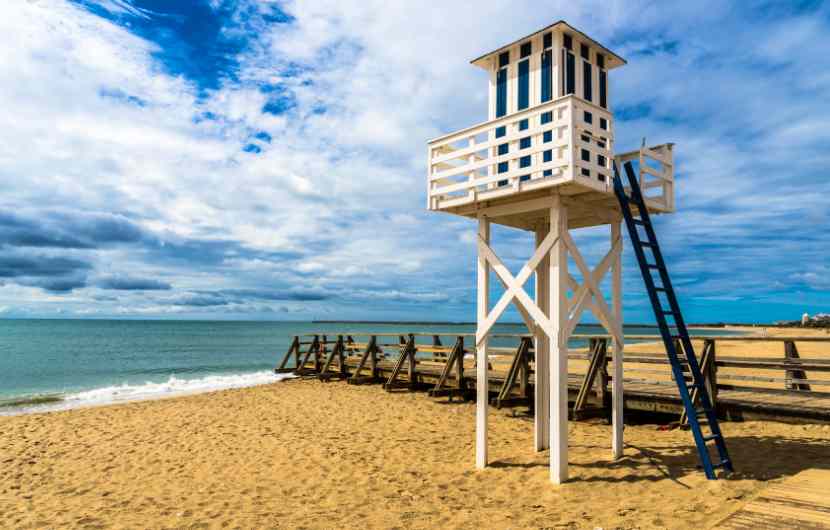
Isla Cristina is a beautiful town on the Costa de la Luz, it is known for its various long stretches of unspoiled beaches, which are some of the most beautiful in Spain.
There are over 12 kilometers of golden sand beaches, the main one is called Playa Central, a wide and pristine beach, with a long promenade filled with restaurants, bars, and shops.
Other popular beaches in Isla Cristina include Isla Moral, a peaceful and secluded beach surrounded by pine forests, and Islantilla, a stunning beach with fine golden sand and excellent facilities.
Zahara de las Atunes

Zahara de Los Atunes is a small town located in the province of Cadiz on the Costa de la Luz. It boasts over 9 kilometers of pristine white sand beaches, turquoise waters, and breathtaking natural landscapes.
One of the most popular blue flag beaches is Playa de Zahara, a wide and long beach with soft sand and clear waters. It is ideal for sunbathing, swimming, and watersports, such as windsurfing and kitesurfing.
Another popular beach is Playa de Los Alemanes, a smaller and more secluded beach with turquoise waters and stunning rock formations. It is an excellent spot for snorkeling and diving.
You can also explore the nearby beaches of Bolonia and Valdevaqueros, which are considered some of the best in Spain.
Islantilla

Islantilla is a sleepy coastal town located between the provinces of Huelva and Cadiz in southern Spain.
The main beach here is Playa de Islantilla is a long and wide beach with fine golden sand and clear blue waters. It is a popular spot for swimming, sunbathing, and watersports such as windsurfing, paddleboarding, and kayaking.
Another beach worth visiting is Playa de la Antilla, a lively and vibrant beach that offers a variety of amenities, including beachside restaurants and bars, watersports facilities, and beach volleyball courts.
For those seeking a quieter and more secluded beach, Playa de la Redondela is a great option. It is surrounded by pine forests and offers a tranquil and relaxing atmosphere.
Punta Umbria

Punta Umbria beach is one of the most popular in the area, attracting both locals and tourists who flock to enjoy its clean golden sands and clear waters.
The beach has been awarded the Blue Flag on many occasions for its quality and environmental management.
There are a number of good services and facilities, such as sunbeds, parasoles, umbrellas, showers, toilets, lifeguards, disabled access via ramps and plenty of parking.
The beach is also ideal for water sports, such as surfing, windsurfing or sailing. Along the beachfront promenade, there are many bars, restaurants and shops where you can taste the local cuisine or buy souvenirs.
Punta Umbria beach is a perfect place to relax and enjoy the sun and sea on the Costa de la Luz.
Mazagon

Mazagon Beach is a beautiful and secluded beach on the Costa de la Luz and forms part of the Doñana Natural Park, a protected area that hosts a rich biodiversity of flora, fauna, and wildlife.
The beach stretches for about 20 km, from the mouth of the Tinto River to the town of Matalascañas. It is surrounded by pine forests and sand dunes that create a natural and peaceful environment.
The beach has fine white sand and crystal-clear water that invites you to swim or snorkel. The beach is also popular for surfing, kite surfing, or fishing.
There are some facilities and services available on the beach, such as sunbeds, umbrellas, showers, or toilets.
Mazagon beach is simply stunning, most of the beach is unspoiled and quiet, perfect for relaxing or enjoying nature. Mazagon Beach certainly is a hidden gem amongst all the beaches located along the Costa de la Luz.
The gastronomy of the Costa de la Luz

The Costa de la Luz is known for its fresh seafood, locally grown produce, and traditional Andalucian flavours. The region's proximity to the Atlantic Ocean provides access to a wide range of fresh ingredients used to create unique and flavourful dishes.
One of the most famous dishes in the region is Pescaíto Frito, a selection of small fish, such as anchovies, sardines, and squid, that are lightly tossed in seasoned flour and fried until crispy. This dish is often served as a tapa or appetizer in local bars and restaurants and is best enjoyed with a cold beer or a glass of sherry and a dollop of garlic mayonnaise ( Aioli Sauce ).
Another firm favourite you will find in many eateries in this region is Arroz con Marisco, a flavourful rice dish made with local seafood, including prawns, clams, and mussels, and seasoned with saffron, garlic, and paprika. This dish is a coastal Andalucian cuisine staple best enjoyed with a glass of local cold crisp locally produced sherry.
The Costa de la Luz is famed for its Gambas Blancas, or white prawns, a local delicacy in these parts. White prawns are known for their delicate, sweet flavour and bright white colour. They are often served grilled and boiled and are a must-try for seafood lovers visiting the region.

Gazpacho is a refreshing and healthy soup popular in the region. This cold soup is made with ripe tomatoes, cucumber, bell pepper, onion, garlic, olive oil, and vinegar, and is often served with croutons and diced vegetables.
Other cured meats, such as Chorizo and Salchichón, are also popular in the region and often served as a tapa or in a traditional Spanish breakfast.
And for those with a sweet tooth, the region is known for its Pestiños, which are small, fried pastries made with honey, cinnamon, and sesame seeds. Another is Tocino de Cielo, a rich custard made with egg yolks, sugar, and sherry, often served with a sprinkling of caramelized sugar on top. Delicious!