


The Splendour of the Segura River

The River Segura gives Orihuela a unique atmosphere as it cuts its way through the city.
The river begins in the province of Jaen in Andalucia, passing through numerous towns such as Blanca, Murcia, Orihuela and Rojales, ending its journey at the Mediterranean Sea near Guardamar del Segura on the Costa Blanca.
There are pedestrian walkways on both sides of the river, which stretch from one end of the city to the other, which makes for a perfect stroll to take in the historic ambience of such a unique city.
Puerta de Crevillente ( The Crevillente Gate )

The Crevillente Gate is located at the western end of the city, offering an OK welcome to visitors getting ready to explore the historic centre. It is the only gate monument in Orihuela that remained intact after the collapse of the rest of the city's walls.
The city's shield is visible on the facade, and the image of San Miguel ( Saint Micheal ), the protector of the town.
Miguel Hernandez Museum

One of the most significant and best-known Spanish poets, Miguel Hernandez (1910-1942), was born in Orihuela. A museum is dedicated to his life, built within the modest home he grew up in.
The house is well-preserved, and inside, you can see some of the photos, furniture, and personal objects that surrounded the life of this great literary figure.
Although life, in general, was not easy for the young poet, you can imagine how he was inspired by the peace of his walled garden and surroundings.
Born into a poor agricultural background, the solitary working life he led profoundly influenced him, and this, along with his love of nature, was reflected in his poetry.
Hernandez was arrested several times during the Civil War for his anti-fascist views and died of tuberculosis three years into a 30-year jail sentence.
His most renowned poem, ‘Onion Lullaby,’ was written by him in response to his wife’s letter, which tells of how he had to live on bread and onions during his time at the prison.
The Miguel Hernandez Museum is open Tuesday to Saturday: 10:00 to 14:00 and 16:00 to 19:00. Sundays, feast days and bank holidays: 10:00 to 14:00. The entrance is FREE.
The Salvador and Santa Maria Cathedral

The magnificent Orihuela Cathedral, built on the remains of an old Moorish mosque, started as a church in the 14th century and became a cathedral in the 16th century. It is now a cultural heritage site.
Built in a Gothic style, the plain exterior belies a stunning interior and is well worth visiting.
It has a grand bell tower, an 18th-century Baroque organ, and significant, dark Renaissance and Valencian paintings that adorn most of its walls, adding to the opulent atmosphere. One of the significant works to be appreciated is ‘The Temptation of Saint Thomas Aquinas' by Velazquez.
There are also medieval works, including ‘The Enthroned Virgin ‘, which dates back to the 13th century, along with textile items, manuscripts and early printed books such as ‘The Nuremberg Chronicle ‘ (1493).
The Salvador and Santa Maria Cathedral is open to the public daily and costs €2 to visit the whole site.
The Parish Church of Santa Justa and Rufina

It was also built on the site of a former mosque in honour of the city’s patron saints, Justa and Rufina. The date of their martyrdom coincides with the period when the Christians regained control from the Moors.
The church is a Gothic structure which features elements from the Renaissance and Baroque periods.
The remarkably slender bell tower has the accolade of housing the oldest clock in the Valencia region, dating back to the 15th century.
Marvel at the sculptures of mythical beasts and gargoyle-shaped drains and visit the ‘La Luz de la Imagen exhibition (The Light of Images).
Convento y Iglesia de Trinidad ( Trinity Church Convent)

This is a working convent home to seven Dominican nuns who sell sweets and biscuits to earn a living, using traditional recipes passed from one convent to another.
The convent, founded in 1557, has a tranquil baroque cloister in its heart.
The church is open for mass, but the convent is usually closed. However, the tourist office offers ‘Ruta de Dulces' (the route of sweets), where you can take the chance to sample the delicious biscuits and sweets on sale.
The nuns faced a dilemma in recent years. A major retail chain, Corte Inglés, wanted the nuns to supply them with their unique biscuits for sale. However, after some contemplation, the nuns chose prayer over profit and continued to sell in small quantities from their shop at the side of the convent.
San Juan de Dios Museum

The famous Diablesa sculpture can be seen at this museum. A winged devil in female form, it is unique to Spain and is the only demon to take part in the Easter processions.
Created by the sculptor Nicolas de Bussey in the 17th century, the piece shows how faith can overcome the evil of the Devil and explores the theme of good fighting evil. It gave the people of its time a focal point for worship.
During the Easter procession in Orihuela, the sculpture is preceded by torchbearers who head the procession up to the Cathedral. The Diablesa must wait outside, joining the procession at the far end of the Cathedral, as no representations of the devil are permitted inside Spanish churches.
The San Juan de Dios museum is open to the public Tuesday to Saturday: 10 am to 2 pm and 4 pm to 7 pm. Sundays, feast days and bank holidays: 10 am to 2 pm. From June 1st to September 30th, the afternoon schedule is 5 pm to 8 pm. The entrance is FREE.
Seminario Diocesano de San Miguel Orihuela ( The Diocesan Seminary )

The Diocesan Seminary of San Miguel is an impressive building above the city. It was built in the eighteenth century at the request of the Bishop of Orihuela Juan Elías Gomez de Teran to provide proper training for Catholic priests and ministers.
Although it is currently closed to the public, a walk around the outer buildings and grounds is well worth visiting as the views of the city and the surrounding countryside are spectacular.
Colegio Diocesano Santo Domingo ( Diocesan School of Santo Domingo )

Santo Domingo College is housed in this impressive building in the heart of Orihuela. The city's prodigal son, Miguel Hernandez, was once a student here until he was forced to leave due to the financial situation of his parents at the time.
Museo de Semana Santa ( Easter Musuem )

If you want to see a fantastic collection of stunningly ornate “floats” used in the holy week processions, then the East Week Museum is the place for you.
The museum was built on the site of the Le Merced Church with its 16th-century ornate Renaissance facade. The old Church of La Merced, part of the Mercedario Convent of the 15th Century is where San Vicente Ferrer stayed in 1410, it was he who communed the Catholic Monarchs during their visit to the City in the year 1488 to celebrate General Cortes of the Kingdom and Felipe V.
The museum consists of four floors with over 1,200 meters of permanent exhibitions; each float is decorated with gold-embroidered fabrics and silver artefacts.
The Easter Holy Week museum is open to the public Tuesday to Saturday from 10 am to 2 pm and 4 pm to 7 pm. Sundays: 10 am to 2 pm. Normally, feast days and bank holidays are closed; check with the museum previously. From June 1st to September 30th, the afternoon schedule is 5 pm to 8 pm. Entrance costs €2 or €1.50 for groups of more than 20 people.
Easter in Orihuela

This remarkable, dramatic event, in which the public participates, dates back to the 16th century.
‘El Silencio' (The Silence) takes place on Good Friday. Over 10,000 people participate in the solemn procession that passes through the old town. The night is lit up with lanterns. A chant from the 18th century breaks the silence as the Statue of Christ passes.
The city is transformed into a scene of passionate devotion as Christ’s death is relived.
The Palm Groves
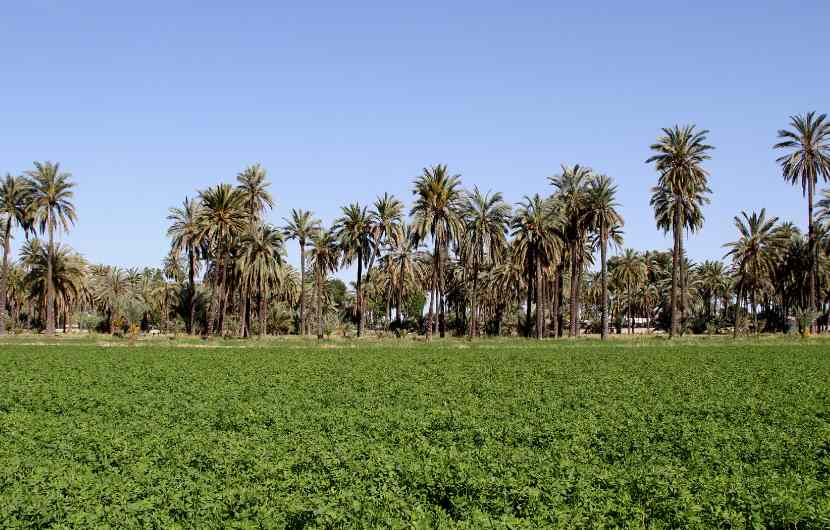
The large palm grove ( Palmeral de Orihuela ) borders the urban and historical centre of the city.
The primary type of palm found in the grove was originally planted by the Muslims when they occupied the Iberian Peninsula. It is the second-largest palm grove in Europe and has been declared a Site of Community Interest by the E.U.