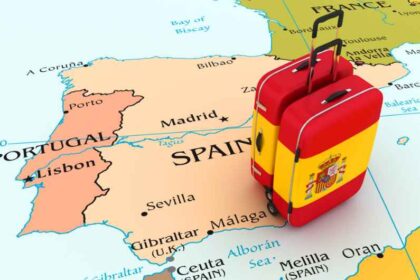



Spanish is a beautiful language with a long and complex history. It's the second most spoken language in the world, with over 460 million native speakers. It's also the official language of 21 countries.
If you're interested in learning Spanish, or if you already know some Spanish but want to expand your vocabulary and find out just how much Spanish you really know, here are 24 essential phrases to get you started.
1. Hola - Hello
This is probably the first word you'll learn in Spanish, and it's essential for starting any conversation. You can use it when you meet someone new when you're ordering food or drink, or just to get someone's attention.
2. ¿Cómo estás? - How are you?
Another essential phrase for making small talk and starting conversations. You can use this phrase to ask someone how they are, how their day is going, or how they're feeling.
3. ¿Qué tal? - How's it going?
This phrase has a similar meaning to "¿Cómo estás?", but it's more informal. You can use it with friends, family, and people you know well.
4. Gracias - Thank you
This is an important phrase to know for obvious reasons. You can use it to express your thanks for anything from a favor to a gift.
5. Por favor - Please
This phrase is essential for making requests and asking for favors. It's also used before some verbs as a way of being polite. For example, "¿Puedes pasarme la sal?" (Can you pass me the salt?).

6. Lo siento - I'm sorry
This phrase is useful for apologizing in any situation, whether you've made a mistake or someone else has.
7. ¿Cuánto cuesta? - How much does it cost?
Use this phrase when you're shopping to find out the price of an item. It can also be used to ask how much something costs in a more general sense, such as when you're considering a purchase or estimating a budget.
8. ¿Dónde está? - Where is it?
This phrase is useful for asking for directions or finding your way around. It can also be used to ask where something is in a more general sense, such as when you're looking for a specific place or thing.
9. ¿Cuál es tu nombre? - What's your name?
This phrase is essential for introductions. You can use it to ask someone their name, whether you're meeting them for the first time or not.
10. Me llamo... - My name is...
This phrase is the Spanish equivalent of "My name is...". You can use it to introduce yourself or give your name in response to someone asking you what it is.
11. ¿De dónde eres? - Where are you from?
This is a great question to ask someone when you're getting to know them. It's also a useful phrase for asking for someone's nationality or country of origin.
12. Soy de... - I'm from...
This phrase is the Spanish equivalent of "I'm from...". You can use it to respond to someone asking you where you're from, or to give your location in response to someone asking for it.
13. ¿Hablas inglés? - Do you speak English?
This phrase is essential for anyone who doesn't speak Spanish as their first language. You can use it to ask if someone speaks English, and hopefully, they'll be able to help you out.
14. ¿Entiendes? - Do you understand?
This phrase is useful for making sure that someone understands you. You can use it when speaking Spanish to ensure that the person you're talking to understand what you're saying.
15. No entiendo - I don't understand
Use this phrase when you don't understand something that someone has said to you. It's also a good way of indicating that you don't speak Spanish very well.

16. ¿Puedes hablar más lento? - Can you speak more slowly?
This phrase is useful when someone is speaking too quickly for you to understand them. You can use it to ask them to slow down so that you can better understand what they're saying.
17. ¿Puedes repetir? - Can you repeat?
This phrase is similar to "¿Puedes hablar más lento?", but it's used when you didn't catch something the first time, rather than when the person was speaking too quickly. You can use it to ask someone to repeat what they said.
18. ¿Qué significa...? - What does...? Mean
Use this phrase to ask for the meaning of a word or phrase that you don't know. It's a great way of expanding your vocabulary and learning more about the Spanish language.
19. ¿Cómo se dice...? - How do you say...?
This phrase is similar to "¿Qué significa...?", but it's used when you want to know how to say a word or phrase in Spanish, rather than what it means. It's a great way of expanding your vocabulary and learning more about the Spanish language.
20. ¿Eres americano/a? - Are you American?
Use this question to ask someone if they're from the United States of America. It can be used as a way of starting a conversation or getting to know someone.
21. ¿Hablas español? - Do you speak Spanish?
This is an important question to ask someone if you're trying to learn Spanish. It can also be used as a way of starting a conversation or getting to know someone.
22. ¿Qué hora es? - What time is it?
This phrase is useful for telling time and keeping track of appointments. It can also be used as a way of starting a conversation or breaking the ice with someone.
23. ¿Cuál es la fecha de hoy? - What is today's date?
This phrase is useful for keeping track of days and dates. It can also be used as a way of starting a conversation or getting to know someone.
24. ¿Cómo te va? - How are you? / How's it going?
This is a great question to ask someone when you're catching up with them or getting to know them. It's also a good way of starting a conversation.

Things you should know about the Spanish language
Now that you've learned some essential Spanish phrases, there are a few things you should know about the Spanish language.
- There are two types of Spanish - European Spanish and Latin American Spanish.
- European Spanish is the official language in Spain, while Latin American Spanish is the official language in all other Spanish-speaking countries.
- There are slight differences between European Spanish and Latin American Spanish, but both types of Spanish are mutually intelligible.
- The best way to learn Spanish is to immerse yourself in the language by living in a Spanish-speaking country or taking online or offline classes.
- Learning basic phrases in Spanish can be useful for travelling in Spain, doing business, or simply interacting with native speakers. However, if you want to become fluent in Spanish, you'll need to put in a lot of time and effort.
- Spanish is a beautiful language with a rich history and culture. Learning Spanish can be a rewarding experience that will enrich your life in many ways.
And that's a wrap! These are just some of the most important Spanish phrases to learn. By mastering these phrases, you'll be well on your way to becoming a proficient Spanish speaker. So what are you waiting for? Start learning Spanish today!

Spanish To English Food Glossary
One of the things you will be doing a lot of when you visit Spain is eating out, from fine dining to tasty tapas bars you are never far away from delicious food.
With that in mind, we created a Spanish-English food glossary that contains all the most important words and phrases you will need when dining out.
- aceite de oliva – olive oil
- aceite de girasol – sunflower oil
- aguacate – avocado
- ahumados – smoked foods
- ajo – garlic
- albaricoques – apricots
- albondigas – meatballs
- alcachofas – artichokes
- alcaparras – capers
- almejas – clams
- almendras – almonds
- alubias – beans
- anchoas – anchovies
- angulas – baby eels
- arroz – rice
See More...