

Imagine a city in the Middle Ages with more public baths than most modern capitals. A place where water flowed so intelligently, so abundantly, that it transformed Córdoba into the cultural superpower of Al‑Andalus. This wasn’t luxury — it was a way of life, and it changed the city forever.
In the mid-10th century, much of Europe was undergoing fragmented urbanism and the retreat of public infrastructure. But during this time, Córdoba, in southern Spain, stood out as the "Jewel of the World."
Under the Umayyad Caliphate, an Islamic Caliphate based in North Africa, it was at its glory. All around were paved, illuminated streets and an incredibly advanced level of hygiene and civic planning.
Central to this sophisticated society was a philosophy known as the "Culture of Water." We all know water means life - this is precisely the excitement of finding it in places like the moon. And to the citizens of Al-Andalus, water was not just a utility; it had to be the lifeblood of the city.
Water was a symbol of divine purity and the foundation of the hammam - Islamic public baths.
Leading up to the Córdoba hammam
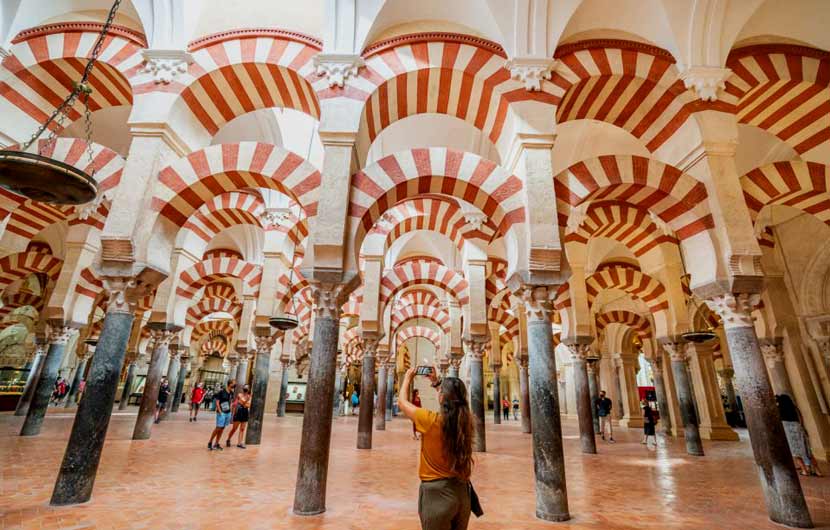
It is perhaps the sheer scale of urban development in Caliphate-era Córdoba that is still widely regarded as wildly impressive, especially for the medieval world. Historical records and archaeological surveys estimate that, at its peak, the city had between 300 and 600 public hammams.
Yes, Córdoba was the largest city in Spain at this time, but it was not like modern-day Madrid. The sheer density of these baths made it arguably the most cultured city in Europe, in fact, and was evidence that the bathhouse was a core part of societal functions, as much as the mosque or souk (markets).
It meant that no citizen was ever very far from purification. The proliferation of the hammam served as a tool of social stability, an institution, as the Caliphate knew that providing universal access to hygiene was the most effective way to prevent the urban plagues that regularly crippled less developed cities around the continent. Hygiene was civilisation.
These structures were an evolution of the Roman thermae. Generally, the Dark Ages elsewhere saw the decline of public bathing, meaning that Roman baths died alongside the retreating Roman empire. But the Umayyads preserved and sophisticated Roman hydraulic engineering.
The best example of this is the Baños del Alcázar Califal, which sat directly adjacent to the Caliph’s palace and the Great Mosque. This proximity was, of course, no coincidence; it simply shows the link between the state, the faith, and the ritual of the bath. They came as a trio.
Engineering these spaces wasn’t easy, but it wasn’t about brute-force science either. It was instead about learning your environment and leaning into it.
Using sophisticated aqueducts and massive waterwheels (norias), water was drawn from the Guadalquivir River. The Cordovans created a system of consistent flowing water for a population that kept growing and growing.
It’s important to note that today, Arab baths in Córdoba are a luxury. They’re high-end, luxurious and indulgent spa-like experiences. But one millennium ago, these were not isolated luxuries. They weren’t for the elites. They were public institutions that defined the Islamic city’s commitment to health and cleanliness, akin to a modern-day public playground for children. It was a standard of living that took centuries to catch up on in much of Europe.
Social architecture

The hammam in 10th-century Córdoba was far more than a place of hygiene, even though, on first glance, it served this function. It functioned as the ultimate third space, like a pub in Britain or a college game BBQ in the US. Third refers to a space that isn’t the home or the mosque, but is the next place people will go for shelter, socialising, and comfort.
Its humid, marble-clad walls housed people on a fairly equal footing, thereby subtly softening the rigid social hierarchies of the Caliphate. Clothing was minimal, so the street's status symbols were somewhat stripped away. It allowed for a unique form of egalitarianism, even as the rituals of service and the presence of private chambers maintained certain distinctions of rank. It wasn’t perfect in achieving this goal because it wasn’t the goal; it was a functional byproduct that the masses saw value in.
The al-wastani, or warm room, was the main theatre for this social architecture. Known as the site of the culture of talk, it was here that the city’s networking was felt.
In the warmth, business contracts were negotiated here, and news from the edges of the Mediterranean was exchanged.
Because it was a fairly mixed group mingling, like any truly great third space, political alliances were forged in one corner, while jokes and working-class stories were shared in the other.
For the scholars and philosophers of Córdoba, it was often a place to debate the latest translations of Greek texts while locals gossiped.
It’s clear the bath functioned as a democratic pressure valve - a space to lubricate the flow of information in a time long before more established communication channels.
This social hub was, unsurprisingly, a strictly gendered environment, making it a rare and essential public outlet for women.
Men typically occupied the baths from dawn until midday, then women took over the space in the afternoon.
For the women of Córdoba, the hammam was a safe space of social freedom where they could gather outside their domestic space. They may have discussed family matters and community events, or politics and news.
The architecture of the senses

While talking about the warmth of the hammam, it’s clear that it was also about escaping the Mediterranean sun. The transition was not just thermal but architectural, though.
The most striking visual elements are the vaulted ceilings, which have claraboyas (star-shaped skylights carved into the stone). They remain today and are a big reason for visiting in 2026.
Again, and as with any great architecture, it’s not just about aesthetics but experience and life. These stars provided the only source of natural light in an otherwise windowless environment, casting patterns across the marble floors while simultaneously acting as adjustable valves to regulate the density of the steam.
So the physical space was all about the sequence of temperatures, designed in rhythm in tune with the body’s response. It began in the al-bayt al-maslaj (the cold room) - this is a completely separate space for disrobing and adjusting. Then they moved to the al-bayt al-wastani (the warm room), which was the largest space. Here, the body then began to adjust to the moisture.
Finally, the journey ends in the al-bayt al-sajun (the hot room), a steam-heavy chamber where the heat is at its most intense. As we know now, modern trends in ice baths and saunas offer fantastic health benefits, such as anti-inflammation.
Under the marble floors was a network of furnace channels. They’re still there today, though they aren’t used functionally as they were in the 10th century.
A central furnace (al-burma) would circulate smoke and hot air all throughout the subterranean channels, heating the stone from underneath. The air would have been thick with the scents of the Caliphate: amber, musk, and the floral notes of rose and jasmine. And some smoke, perhaps. Even the sounds were intentional, as the domes would swallow the city's echoes, which were no doubt bustling, helping mindfully focus on the drips of water. This is already bliss in 21st-century life, but back then it would have been even more welcome respite.
Today, the liminal spaces are something people are increasingly interested in, and purposely disorientating the bather’s senses can put them into a state of stillness.
The culture of silence
The concept of hygiene is closely tied to ideas of holiness. The hammam was the main site for ghusl, the full-body ritual purification required before prayer. This religious practice meant that the bath was never viewed as a secular luxury, but as a spiritual practice. This is precisely why the city was designed as it was, with the baths beside the mosque.
It gave rise to a culture of silence that contrasted sharply with the rowdy public baths of the earlier Roman era. While the warm rooms were certainly places to socialise, the atmosphere was one of respect for the Water of Life.
Water was a divine gift, and its use in the hammam was meditative. It gave them a unique atmosphere, one where many were transitioning their minds and stripping away the noise of the souks they had just come from.
As the bather moved through the final cold rinse, the intent was to restore mental clarity. It was a holistic approach to health that tied in literal hygiene with mental hygiene. Today, we call it integrated wellness, but for them, it was just daily life.
The hammam lives on today to help serve us, even in a now-secular Córdoba, a reminder that our bodies must be taken care of, that water is sacred, and the importance of silence underneath the light of the stone stars.
Experiences at Hammam Al Ándalus Arab Baths take you back in time by playing on your senses. With the flickering shadows and calm waters, they transport us to a space of Arab roots that was flourishing over a thousand years ago - a truly intimate way to connect to a past culture.